Look in any movie guide and I'll guarantee you won't find an entry for a 1956 film adaptation of Ian Fleming's James Bond novel Moonraker, aka Hell Is Here, directed by none other than Orson Welles.
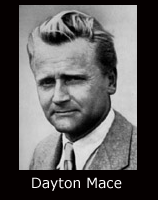
The full story of the Forgotten Bond Film begins with a flashback to June of 1955 when, as is recorded in John Pearson's The Life of Ian Fleming, actor Ian Hunter expressed an interest in optioning the Moonraker film rights. (Fleming's own initial verdict on 007's third literary adventure had been: "In my opinion it isn't much of a book, but it should make a good film." And Hollywood actor John Payne had already toyed with the notion of producing and starring in a Moonraker adaptation.) Hunter's payment of �1000 secured the option, and a further �9000 bought the rights after flamboyant London-based American producer Dayton Mace stepped in as Hunter's partner. The ageing Hunter was shrewd enough to see Bond's cinematic potential, sensible enough to leave the role to younger blood, and sufficiently cautious to insist that Mace defer his directorial ambitions and hire a helmsman with more of a track record.
 Two attempts to set up the film fell through before Mace happened to bump into an old acquaintance at the Cannes Film Festival. An idle skim through the Moonraker script outline (penned by Fleming himself) was enough to instil Orson Welles with a boyish enthusiasm for this "ripe old slice of blood-and-thunder", and the role of the monstrous Hugo Drax was immediately earmarked as another addition to the Wellesian gallery of grotesques, an enjoyably baroque version of the Nazi villain he had played in his 1946 thriller The Stranger.
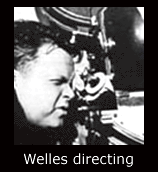 In fact, Welles had already rubbed shoulders with James Bond. A couple of years earlier, his old pal Gregory Ratoff had purchased the rights to Casino Royale and there had been whispers of a Welles adaptation. Ever on the lookout to put paid to a profligate image, and still two years away from his pulp masterpiece Touch of Evil, Welles now insisted that he was the right man for Moonraker and, what was more, it would require only a modest budget. Mace - who once said of Welles' The Lady From Shanghai: "What goes on in that picture I don't know from f**k. But I love it" - had no objection to Orson taking the megaphone. Yet all this movie talk would almost certainly have remained among the ninety-five percent that comes to nothing had Mace not been in partnership with Ian Hunter, who had a production deal with Rank. Nevertheless, it took all of Mace's legendary gift of the gab to get Welles okayed as director.
But who would play the secret agent?