![]() |
|||||||||||||||||||||||||||||
| Astronomy Notes | |||||||||||||||||||||||||||||
| 1) Light: gathering information from the Universe | |||||||||||||||||||||||||||||
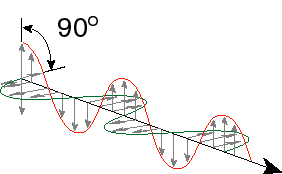
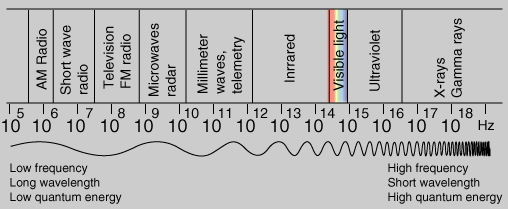
| Light in its different wavelengths is the main mean through which we gather information about the Universe (we also get some information through cosmic rays, neutrinos and hoefully soon gravitational waves). Light has very important and fundamental characteristics: 1) Its speed is very high but not infinite: it is about 3x10^8 m/s (it can go around the Earth about 7 times in just a second). 2) Because the speed is finite it takes time for light to travel to us from distant objects in space. For example it takes almost 1 second for light to arrive from the Moon, 8 1/2 minutes from the Sun, 4 years from the closest star and 30.000 years from the center of the Milky way, and about 2 millions from the closest galaxy, Andromeda. The light from the farthest farthest object recorded so far had to travel about 12 billions to arrive to Earth. Light works as a kind of "Time Machine" for the astronomer allowing him to see back in time as he looks at distant objects in space. 3) Light is an Electromagnetic Wave. It is made of the oscillations of Electrical and Magnetic Fields (forces) traveling is space without the aid of a medium (the underlying material that makes oscillations possible in material waves like the ocean waves or sound). As normal waves a has different ranges of frequencies and wavelengths. |
|||||||||||||||||||||||||||||
![]() |
|||||||||||||||||||||||||||||
| Learn More about Frequency and Wavelenght | |||||||||||||||||||||||||||||
| There is a fundamental relationship between speed, wavelength and frequency of a wave. | |||||||||||||||||||||||||||||
|
c = f l where f is the frequency of the wave and l is the wavelength and c is the speed of light. Example: if your favorite radio station has a frequency of 9.7 MegaHertz or 9.7 106 Hertz (Hertz is cycles per second or Hertz=1/s), then the wavelength for such a wave is l=c / f = 3 x 10⁸ m/s / 9.7 x 10⁶Hertz= 37 m. This is a typical wavelength for radio waves. |
|||||||||||||||||||||||||||||
| Do calculations with frequencies and wavelength here ! | |||||||||||||||||||||||||||||
![]() |
|||||||||||||||||||||||||||||
| 4) Light carries Energy. The light spectrum of a an astronomical object can give to the astronomer unvaluable information about the Energy and Temperature of the object. To continue click here. | |||||||||||||||||||||||||||||
| Do Calculations using the Doppler Effect here ! | |||||||||||||||||||||||||||||
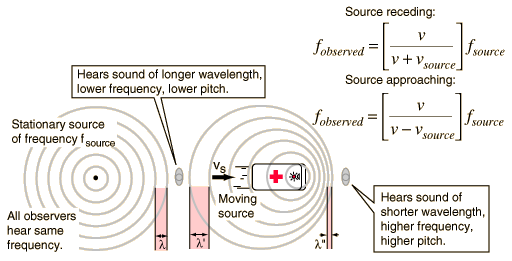
| 5) We can determine how fast an objects moves using the Doppler Effect. This is the familiar phenomenon of the change in pitch of a fast moving object appoaching or receding from the observer. When the object approaches the pitch is high (higher frequency) when it goes away the pitch is low (lower frequency). The Doppler effect applies to any wave and any fast moving object emitting light will have its light shifted to the blue (if it approaching) or red (if it is moving away). Click here for workout example. | |||||||||||||||||||||||||||||
![]() |
|||||||||||||||||||||||||||||
| Back to Lecture Index | |||||||||||||||||||||||||||||