 |
|
 |
|
 |
 |
| Community Education Programs make sense if we think of schools as more than institutions, rather as an extension of the citizens. Schools can't simply be institutions like a distribution center for a chain of retail stores. Schools are meant to be an integral part of the public, so strengthening the community by providing school based Community Education Programs is actually one way in which the Enid school district has provided services to over four hundred of its citizens. |
| COMMUNITY EDUCATION |
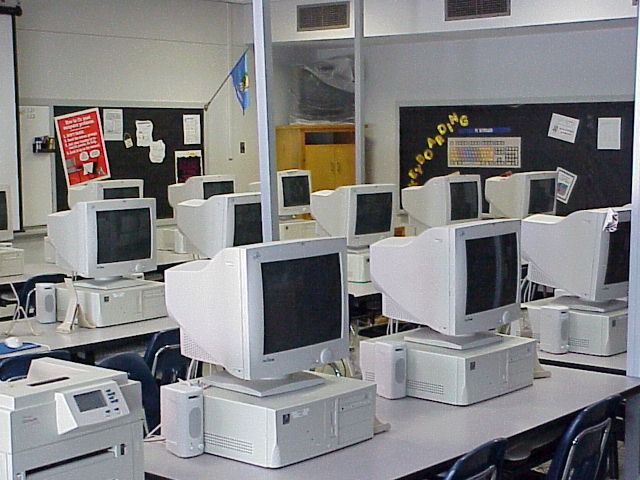
| Enid has always been admired for its progressive and effective public school system. Now, in addition to its outstanding academic programs, Enid Public Schools is dedicated to offering its community improved technological services. One of the most far-reaching improvements has been the development of the Community Resource Learning Center. The Community Resource Learning Center located at Waller Junior High School has been developed to serve the community by providing free educational course offerings in computer technology and Internet search nights. The Community Resource Learning Center was open to the public in January 2000 which provided twenty- two state-of-the-art computer stations connected to a T- 1 line. The following is a list of courses provided by the CRLC through funds granted by the Oklahoma State Department of Education: |
| Three Characteristics for |
|
| ENID COMMUNITY EDUCATION |
| Nevertheless, many educators see community involvement as an answer to many of the problems plaguing the schools. Community involvement implies that everybody works together without conflict, and has the same beliefs and goals. Fundamental to community involvement is finding in the public schools the means for the school program to enrich the life of the community, to serve the community, and to enlist the community in service to the school. The major goal for the school's involvement in community relations is to develop support for efforts aimed at the improvement and enhancement of local education. This goal is accomplished when parents and the community take part in school life by contributing time, talent, and materials to the school. School staff members can positively contribute to the public's understanding of education when they interact with members of the community on matters concerning the school's educational program. What we must never forget is that time and again in this country the active participation of local citizens has solved problems and brought about needed change. We, as educators, have to build the necessary bridges of trust in our own communities so that we can come together in an effort to make the schools better for everyone. These bridges of trust will bring us a sense of ownership in our schools, and from that will come a renewed sense of community. |
| The fundamental purpose of any community involvement initiative is to channel a community's concern into informed and constructive action. It calls upon the citizens to invest not only their money but also their time, energy, and commitment. Three characteristics are common to a successful community involvement strategy: The first is inclusiveness: Community involvement must actively and intentionally seek to engage all citizens from all segments of society. The second is a focus on change: Community involvement focuses on those changes that will improve the quality of education and thus the quality of life in the community. The third is consensus: Community involvement builds, informs, and expands local support for education. |
 |
|
|
| Achieving Community Involvement |
| An excellent way to achieve constructive community involvement is through the formation of a Community Education Advisory Council, which will then have an important voice in establishing the objectives of the program, determining educational needs, weighing priorities, committing resources, formulating policy, and evaluating accomplishments. An Advisory Council should usually meet four times a year to provide input regarding the needs of the school. Their accomplishments can range from the improvement of after school programs, community service activities, or communication about program goals. The purpose of the advisory council is to provide the most up-to-date information to the community about the school and its programs, to allow for procedural development, to provide communications about important projects, to dispel myths about the school's purpose, and to establish goals for school improvement. |
| The Community Education Advisory Council action plan can serve as a road map to meaningful change. As the members progress through a plan, they learn more about the workings of the school, its staff, and the community. For many, the team building involved in creating it will greatly influence their perceptions of the school community. The following strategies are important for Advisory Council members to remember as they work on the development of their action plan: |
| ACTION PLAN DEVELOPMENT |
| Use knowledge about community educational needs. What are their interests? What are the personal educational goals of the community? Involve patrons in planning. Ask community members for ideas and use as many of them as possible. Show respect for individuals whose ideas are not used by taking the time to explain why their ideas did not become part of the plan. Use evaluation information from each advisory meeting to assess what each person involved in the process has learned in order to determine the next most meaningful step in the process. Help community members tie their individual needs to school and district goals. A positive community climate that supports individual growth is provided when community members collaborate to determine goals and development of the activities necessary to meet the goals. |
| helping all children achieve their highest academic level offering proper supervision of children during the summer months and after school assisting students in career counseling and curriculum planning making activities available for disadvantaged children offering technology education classes for the community providing an opportunity for disadvantaged children to experience the fine arts assisting suspended students with educational support supporting at-risk students through tutoring and mentoring programs providing additional time in math and science for minority and female students providing parent educational classes. You are invited to visit our Community Education program and observe the difference we are making in the Enid school district. |
 |
 |
|
|
|
 |
|
|
|
|
|
|
|
 |
|
|
|
|
| COMMUNITY EDUCATION GOALS |
| When these three characteristics are present, the school and the community are able to work cooperatively, to make difficult decisions, and to formulate solutions to the school's toughest problems. |
| The continuation of community education programs in the City of Enid will allow us to address identified needs. |
| Links To Community Building |
 |
| Beginners� Internet Advanced Internet Web Page Creation Power Point Digital Scanning Really Cool Web Sites Best Sites for Kids Word Processing After School Programs |
|
|
|
|
|
|
|
|
|
| If you are interested in advancing your knowledge, you might want to visit our LEARNING LINKS PAGE. |
 |
 |
| The community of today usually involves a group of people who share a common interest concerning work, church, social activities, or a special issue or concern. These special interest communities are not heterogeneous in nature but instead are defined by the sameness of the members. Most neighborhoods are now created and defined by a certain lifestyle, ethnicity, race, age, and/or profession. With our communities becoming so fragmented, people are finding it harder and harder to bridge the gaps and get together to solve problems. |
|
| VIEWS ON COMMUNITY |
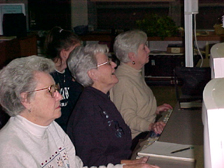
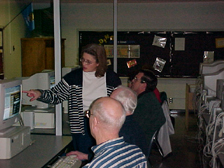
| Community Ed.Beginners Internet Class |
|
| Mrs. Painter Community Ed Instructor |
 |
| One of the problems with public schools is that they frequently do not correctly perceive the school's role in the community. For various reasons, schools often isolate themselves from their communities, and this isolation creates misperceptions about schools on the part of the community. The key to achieving real community involvement in the public schools lies in first overcoming the isolation and then dispelling the misperceptions that it has caused. There are many different methods that schools can employ to build community involvement. One especially effective method is a community education program, which enables community members to become involved in the educational process of the school. |
|
| ADVISORY COUNCIL |