
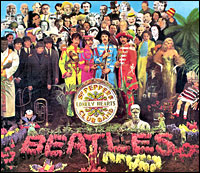
I personally experienced the timeless appeal of Pepper about fifteen years after its release. Prior to listening this album in its entirety, I was merely an accidental Beatle listener, like everyone else in the '70s that grew up within range of a radio. But after hearing the orchestral crescendo of A Day In The Life for the first time, I passed into the realm of serious Beatle fandom. So happy fortieth, Sgt. Pepper, and thanks for helping a young Jamaican music acolyte understand what the fuss was about an English group that had disbanded before he'd even made it to kindergarten...
Last month saw the staging of the 25th anniversary edition of Sunfest, West Palm Beach's popular downtown music/art festival. A four-day event that draws large crowds with diverse musical tastes, it's the type of occasion that warrants crowd-pleasing shows, but not all of this year's performers seemed to get that. Take veteran rocker Todd Rudgren, for example. An artist whose work is a staple of classic-rock radio, Todd could have easily put together a set with enough hits to keep the concertgoers happy while they endured the blistering South Florida early-afternoon sun to hear him. Instead, the most recognizable song he played that day was "I Saw The Light", not one of his bigger hits, then later commented before doing a cover that he was doing so because the crowd didn't seem to like his original material. At least folk-rocker Stephen Stills, the next artist on the bill, performed classic hits such as "Southern Cross" and "Suite: Judy Blue Eyes", songs he'd penned for the legendary group Crosby, Stills and Nash. But it was still surprising that Stills would leave out his biggest solo hit, "Love The One You're With."
Contrast that with some of the other bands performing that weekend. It may have been a while since good-natured '80s popsters Huey Lewis and the News dominated the charts, but clearly the band has kept up their chops through continous touring. and The large festival crowd was treated to a proficient broadly-appealing performance featuring all the hits they had expected to hear, delivered in a fashion energetic enough to make up for the less-than-perfect weather conditions. Frontman Huey blew a vigorous harmonica on several songs, and even lead the band in an a capella doo-wop segment.
Also relentlessly upbeat was the pop-punk outfit All-American Rejects, surely one of the biggest radio darlings of the past year. Frontman Tyson Ritter knew exactly who his main audience was (mostly high-schoolers, mainly of the female persuasion) and gave them plenty of attention, at one point up coming down from the stage to set up shop just in front of the barrier between the cheap seats (i.e. the grass) and the reserved-seating section. Some blues fans worried that y?outhful guitar veteran Johnny Lang might have lost his edge after embracing born-again Christianity, but no such lack of fire was evident in his singing or playing that weekend.Similarly, Bob Marley's old band The Wailers may have been missing their legendary frontman, but performed a skillful mix of classics and lesser-known material to an appreciative afternoon crowd.
Obviously, artists need to gain satisfaction on some level from their live performances, but at a popular festival where the crowd in attendance might only be vaguely familiar with the artist's material, if at all, surely the emphasis should be on giving the people what they want. Todd Rundgren started his performance by saying that he'd just woken up; he was probably kidding, but iall of his subsequent words and actions seemed to imply that he would rather have been somewhere else. Given the higher prices for Sunfest tickets this year, West Palm festival-goers deserved better.
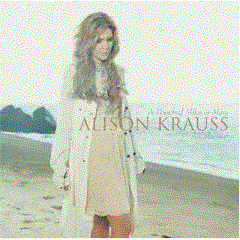
Of the album's sixteen tracks, five are previously unreleased, with four of these songs opening the album with probably its best sequence of tracks. Despite its title, the piano ballad "You're Just A Country Boy" tends more towards jazz than country, with its subtle string accompaniment and soft percussive brushwork. The follow-on track "Simple Love" is a sprightly mix of piano arpeggios, folk-guitar picking and dobro slide work. But the arresting "Jacob's Dream" is performed Irish-folk style, with all the simplicity, intricacies and contradictions that genre entails. Here Krauss' sweet vocals are accompanied by guitar strumming and upright bass as the lyrics relate a chilling 19th-century tale about pioneer children lost in the mountains. The tension is dissipated by a return to jazz territory with "Away Down The River", probably the best of the previously-unreleased tracks.
Krauss' fiddling finally shows up on the only bluegrass track of the collection, "Sawing on the Strings." But the switch back to her trademark sound seems jarring in contrast to the ballad sequence that preceded it. A more successful fit is the a cappella track "Down to the River to Pray" from the hit soundtrack O Brother, Where Art Thou? This stirring gospel hymn is delivered by Krauss backed by a Baptist choral group.
The rest of this collection is mostly composed of selections from other soundtracks and/or duets with other performers. Krauss provides a lilting vocal to the traditional Irish ballad "Molly Ban", performed with The Chieftains, partners with James Taylor on "How's The World Treating You", a gentle tune with Tex-Mex overtones, and is joined by Sting on the stark "You Will Be My Ain True Love", performed for the film Cold Mountain . But her most impressive feat might be stealing the spotlight from John Waite on a cover of his signature hit "Missing You" with a dynamic vocal performance ranging from breathy tones on the verses to quiet strength on the chorus.
Essentially, this album is an effective showcase for Krauss both as a vocalist and as an artists capable of performing in a variety of styles beyond her normal country and bluegrass genres.
"Someone asked me the other day would I ever have changed anything. No. I would never have changed one thing."
Geoff Emerick, Beatles sound engineer, on the Sgt. Pepper album [St. Petersburg Times, May 31, 2007]