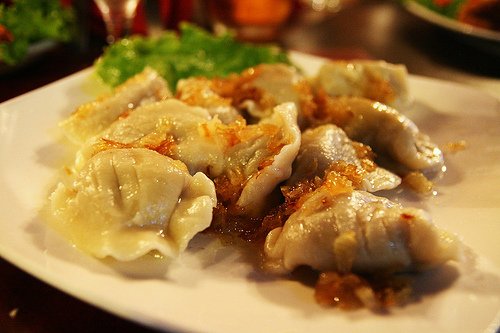
Sauerkraut Pierogies
for the dough:
- 2 cups flour
- 1 large egg
- 2 tablespoons sour cream
- 1/2 teaspoon salt
- 1/2 cup water (as needed)
for the filling:
- 1 tablespoon butter
- 1/2 small onion, quartered and thinly sliced
- 1 14-ounce can sauerkraut, drained and rinsed
- 4 -6 dried mushrooms, soaked in hot water until soft, then finely chopped
- Several generous grinds of black pepper
For cooking and serving:
- Butter
- Sauteed onions
- Cooked, crumbled bacon
- Sour cream
To make the dough:
Combine all of the ingredients (holding back a couple tablespoons of water) and knead until you have a soft, stretchy dough. Add the extra water, if you need it. More, if you need that. If the dough is too wet, add flour as you knead. The dough should be soft and pliant, but not at all sticky or tacky. Wrap the dough in plastic and set aside while you make the filling. You can also refrigerate it and assemble the pierogi the next day.
For the filling:
Heat the butter in a medium frying pan and add the onions. Cook until they soften. Add the finely chopped mushrooms and stir to combine. Cook for another minute. Add the sauerkraut. I like my sauerkraut well-cooked - until it softens and browns a bit, but that's up to you. If you want extra mushroom flavor, add some of the mushroom-soaking liquid. Cook, stirring as needed, until all the liquid is gone and the sauerkraut is as done as you like it. Taste for seasoning. You shouldn't need salt, since the sauerkraut is salty. Add pepper. Allow the mixture to cool completely before filling the pierogi.
To assemble the pierogi:
Divide the dough into several pieces to make it easier to work with. Flour your work surface and roll the dough very thin - less than half as thick as a corn tortilla. The dough will get thicker when you cook it, just like any noodle dough. You want it thick enough to hold the filling, but not so thick that you're eating a dumpling instead of a filled pasta.
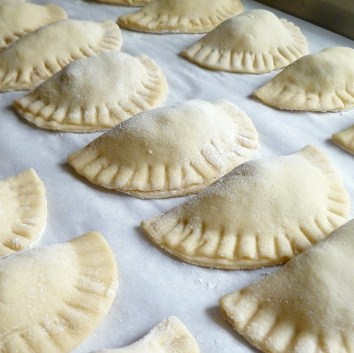
Using a large biscuit cutter, or a drinking glass, cut circles from the dough. Place about a teaspoon of the filling in the center of your dough circles. Wet the outside edge of the dough circles, fold the dough over, and press to seal, pressing out as much of the air in the center as possible. Crimp the edges with a fork to seal completely.
Continue with the rest of the dough and filling. You can reroll the scraps of dough and use it to make more pierogi.
To cook the pierogi:
Heat salted water to boiling and add the pierogi. Since this is a fresh pasta and the filling is already cooked, these cook very quickly. Once they come to the surface, let them cook another 30 seconds and remove them.
You can serve them as-is, or heat a bit of butter in a pan and cook the pierogi until they are browned on the bottom. Flip them over and cook until they're lightly browned on top.
Top with sauteed onions and/or cooked, crumbled bacon if desired. Serve with sour cream.
Note: uncooked pierogi freeze very well. Just lay them out on a sheet pan and freeze until solid. Then place them in a zip-top bag for storage. Cook the frozen pierogi in boiling water, just as you would cook the fresh ones. They take just a little bit longer.