THE DHAMMAPADA
(An Anthology of Verses)
An anthology of 423 Buddhist verses embodying ethical and spiritual precepts arranged by subject.
Translated from Pali by John Richards.
Copyright (c) 1993 John Richards, Pembrokeshire (UK)
The Dhammapada - Information
The Dhammapada is an anthology of verses, belonging to the part of the Theravada Pali Canon of scriptures known as the Khuddaka Nikaya, and consists of 423 verses.
Something like a quarter of the verses are to be found in other parts of the Pali Tipitaka, particularly in the other verse parts of the Khuddaka Nikaya such as the Sutta Nipata and the Thera- and Theri-gatha.
The Dhammapada is probably the most popular book of the Pali Canon, with the possible exception of the Satipatthana Sutta, or the Sutta on the Turning of the Wheel of the Law (Dhamma-cakka-ppavattana Sutta). It is certainly the most frequently translated portion.
Teachings
of the
Buddha
The Dhammapada
Of paths the Eightfold one is best, and of truths the Fourfold. Dispassion is the best of mental states, and of human beings the best is the seer. 273
This indeed is the Way - there is no other - for the purification of one's vision. Follow this way. It leads to Mara's confusion. 274
Following this Path you will put an end to suffering. I have taught you the Way after realizing the removal of the arrow myself. 275
Making the effort is your affair. The Buddhas have pointed out the Way. Those who are on the way and practicing meditation will be freed from Mara's bonds. 276
All processes are impermanent. When one sees this with understanding, then one is disillusioned with the things of suffering. This is the Path of Purification. 277
All processes are painful. When one sees this with understanding, then one is disillusioned with the things of suffering. This is the Path of Purification. 278
All processes are out of my control. When one sees this with understanding, then one is disillusioned with the things of suffering. This is the Path of Purification. 279
Since he will not exert himself at the time for exertion, and although young and strong is full of indolence and irresolution and idleness, the lazy man is incapable of recognizing the way of wisdom. 280
Be guarded in speech, restrained of mind and not doing anything wrong physically. Perfect these three forms of action, and fulfill the way taught by the sages. 281
From meditation springs wisdom. From lack of meditation, loss of wisdom. Recognizing these alternative roads of progress and decline, one should so direct oneself so that one's wisdom will increase. 282
 Cut
down the forest, not just a tree. Out of the forest of desire
springs danger. By cutting down both the forest of desire and the
brushwood of longing, be rid of the forest (pun on the word "nirvana"),
bhikkhus. 283
Cut
down the forest, not just a tree. Out of the forest of desire
springs danger. By cutting down both the forest of desire and the
brushwood of longing, be rid of the forest (pun on the word "nirvana"),
bhikkhus. 283
So long as the least desire of a man for women has not been eradicated, he is fettered in mind, like a sucking calf to its mother. 284
Pluck out your desire, like one does an autumn lotus with one's hand. Devote yourself to the path of peace, the nirvana proclaimed by the Blessed One. 285
"Here I will spend the rainy season, and here the hot season." This is the way a fool thinks. It does not occur to him what may happen in between. 286
Death comes and snatches away the man infatuated with children and livestock, while his mind is still full of desire, like a great flood sweeping away a sleeping village. 287
There are no children to take refuge in then, no father or any other relative. When a man is seized by that terminator, Death, there is no taking refuge in family. 288
When he has seen the implications of this, a wise man, restrained by morality, should quickly develop the path leading to nirvana. 289
If he sees that by sacrificing a slight happiness he can obtain a greater happiness, then a wise man should sacrifice the lesser happiness with a view to the greater happiness. 290
He who seeks his own happiness by inflicting suffering on others, does not reach freedom from hatred, caught as he is in the toils of hatred. 291
What IS their affair is put aside. What is NOT their affair gets done. The inflow of thoughts in such brazen and careless people just goes on increasing. They whose recollection of the body is always well established, however, have nothing to do with what is not their affair, always persevering in what IS their affair. The inflow of thoughts in such recollected and aware people simply dies away. 292, 293
After killing mother (desire), father ("I am" conceit) and two warrior kings, and destroying the kingdom along with its subjects, the brahmin goes on his way unperturbed. 294
After killing mother, father and two priestly kings, and killed a tiger as his fifth victim, the brahmin goes on his way unperturbed. 295
A good awakening have ever Gotama's disciples, whose recollection is always established, day and night on the Buddha. 296
A good awakening have ever Gotama's disciples, whose recollection is always established, day and night on the Teaching. 297
A good awakening have ever Gotama's disciples, whose recollection is always established, day and night on the Order. 298
A good awakening have ever Gotama's disciples, whose recollection is always established, day and night on the body. 299
A good awakening have ever Gotama's disciples, whose minds are always rejoicing in non violence. 300
A good awakening have ever Gotama's disciples, whose minds are always rejoicing in the practice of meditation. 301
It is hard to take up a life of renunciation, and difficult to find satisfaction in it, but it is also difficult to live in bad households, and painful to live with people unlike oneself, when one is forever tangled in suffering and restless. Therefore don't always be restless, and don't let yourself be tangled in suffering. 302
 When a man has faith, is endowed with virtue, and possessed of fame and
wealth, wherever he lives he will be honoured. 303
When a man has faith, is endowed with virtue, and possessed of fame and
wealth, wherever he lives he will be honoured. 303
The good are conspicuous a long way off, like a Himalayan peak, while the bad are just not noticed, like arrows shot into the dark. 304
Living alone, sleeping alone, travelling alone, and resolute, alone and self disciplined, should take pleasure in living in the forest. 305
He who speaks untruth goes to hell, as does he who, having done something, says, "I didn't do it." Men of ignoble behaviour, they both end up the same in the next world. 306
Many of those dressed in the yellow robe are evil and unrestrained, and the evil end up in hell because of their evil deeds. 307
It is better to swallow a red-hot, flaming iron ball than for an unrestrained and immoral person to eat the alms food of the land. 308
The thoughtless man who consorts with another man's wife encounters four things - accumulation of demerit, disturbed sleep, thirdly disgrace, and hell fourth. 309
Accumulation of demerit, a bad rebirth and the slight pleasure of a frightened man and a frightened woman - while the authorities impose a severe penalty too. Therefore a man should not consort with another man's wife. 310
In the same way that a wrongly handled blade of grass will cut one's hand, so a badly fulfilled life in religion will drag one down to hell. 311
Lax behaviour, broken observances and dubious chastity - these are on no great benefit. 312
If it ought to be done, then do it; apply yourself to it strenuously. A lax man of religion just spreads even more dust. 313
A bad action is best left undone. One is punished later for a bad action. But a good deed is best done, for which one will not be punished for doing it. 314
Guard yourself like a frontier town, guarded inside and out. Don't let a moment slip you by. Those who have missed their opportunity grieve for it when they end up in hell. 315
Ashamed of what is not a matter for shame, and not ashamed of what is, by holding to wrong views people go to a bad rebirth. 316
Seeing danger where there is no danger, and not seeing danger where there is, by holding to wrong views people go to a bad rebirth. 317
Seeing a fault in what is not a fault, and not seeing a fault in what is, by holding to wrong views people go to a bad rebirth. 318
Recognizing a fault as a fault, and what is not a fault as not one, by holding to right views people go to a good rebirth. 319
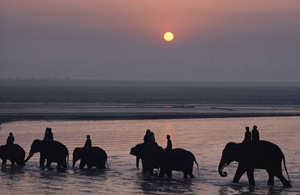
I will bear criticism like an elephant in battle bears an arrow from a bow. Most people are bad behaviour. 320
One can take a trained elephant even into a crowd. The king himself will ride a trained elephant. He who is disciplined is the best of men, since he can bear criticism. 321
Trained mules are excellent, and so are thoroughbred horses from the Sindh, and so are great battle elephants, but more excellent than them all is a disciplined man. 322
There is no reaching the unattainable with mounts like these, but with himself well under control a disciplined man can get there. 323
Dhammapalo, the elephant, is hard to control in rut. Even when tied up, he refuses his food. The great tusker is thinking of the elephant forest. 324
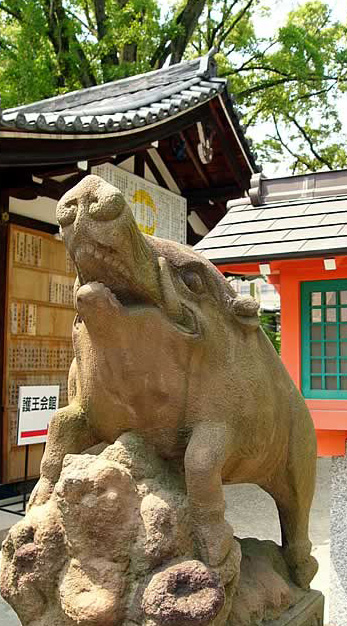 When a man is a lie-abed and over-eats, a lazy person who wallows in
sleep like a great over-fed hog, a fool like that will be reborn time
after time. 325
When a man is a lie-abed and over-eats, a lazy person who wallows in
sleep like a great over-fed hog, a fool like that will be reborn time
after time. 325
My mind used formerly to go off wandering wherever it felt like, following its own inclination, but today I shall control it carefully, like a mahout does a rutting elephant. 326
Take pleasure in being careful. Guard your mind well. Extricate yourself from the mire, like a great tusker sunk in the mud. 327
If you find an intelligent companion, a wise and well-behaved person going the same way as yourself, then go along with him, overcoming all dangers, pleased at heart and mindful. 328
But if you do not find an intelligent companion, a wise and well-behaved person going the same way as yourself, then go on your way alone, like a king abandoning a conquered kingdom, or like a great elephant in the deep forest. 329
 It
is better to travel alone. There is no companionship with a fool. Go on your
way alone and commit no evil, without cares like a great elephant in the
deep forest. 330
It
is better to travel alone. There is no companionship with a fool. Go on your
way alone and commit no evil, without cares like a great elephant in the
deep forest. 330
It is good to have companions when occasion arises, and it is good to be contented with whatever comes. Merit is good at the close of life, and the elimination of all suffering is good. 331
Good is filial devotion to one's mother in the world, and devotion to one's father is good. It is good to be a sanyasi in the world and to be a brahmin too. 332
Good is good behaviour up to old age, good is firmly established faith, good is the acquisition of understanding, and abstention from evil is good. 333
The desire of a thoughtlessly living man grows like a creeper. He drifts from one life to another like a monkey looking for fruit in the forest. 334
When one is overcome by this wretched, clinging desire in the world, one's sorrows increase like grass growing up after a lot of rain. 335
But when one masters this wretched desire, which is so hard to overcome, then one's sorrows just drop off, like a drop of water off a lotus. 336
This is what I say to you - Good luck be with you, gathered here. Dig up the root of craving, as one does a weed for its fragrant root. Don't let Mara destroy you again and again, like a stream does its reeds. 337
In the same way that even a felled tree will grow again if its root is strong and undamaged, so if latent desire has not been rooted out, then suffering shoots up again and again. 338
When the thirty six pleasure-bound streams of craving are strong in a man, then numerous desire-based thoughts pull the deluded man along. 339
The streams (of craving) flow everywhere, and the creeper hoots up and establishes itself, so when you see the creeper shooting up, cut away its root with your understanding. 340
The recollection and attraction of pleasures occur to a man, and those who are attached to the agreeable and seeking enjoyment, they are the people subject to birth and aging. 341
People beset by desire run here and there, like a snared rabbit, and those trapped in the bonds of attachments keep returning for a long time to suffering. 342
People beset by desire run here and there, like a snared rabbit, so one should get rid of one's craving if it is freedom from desire that one wants. 343
When a man out of the forest of desire is drawn back into the forest, then free from the forest as he is, he runs back into it. Look at him - free, he is running back to chains. 344
The wise say that it is not an iron, wooden or fibre fetter which is a strong one, but the besotted hankering after trinkets, children and wives, that, say the wise, is the strong fetter. It drags one down, and loose as it feels, it is hard to break. Breaking this fetter, people renounce the world, free from longing and abandoning sensuality. 345, 346
Those on fire with desire follow the stream of their desires, like a spider follows the strands of its self-made web. Breaking the bond, the wise walk on free from longing, and leaving all suffering behind. 347
 Let
go the past, let go the future, and let go what is in between,
transcending the things of time. With your mind free in every direction, you
will not return to birth and aging. 348
Let
go the past, let go the future, and let go what is in between,
transcending the things of time. With your mind free in every direction, you
will not return to birth and aging. 348
When a man is stimulated by his own thoughts, full of desire and dwelling on what is attractive, his craving increases even more. He is making the fetter even stronger. But he who takes pleasure in stilling his thoughts, practicing the contemplation of what is repulsive, and remaining recollected, now he will make an end of craving, he will snap the bonds of Mara. His aim is accomplished, he is without fear, rid of craving and without stain. He has removed the arrows of changing existence. This is his last body. 349, 350, 351
Rid of craving and without clinging, an expert in the study of texts, and understanding the right sequence of the words, he may indeed be called "In his last body", "Great in wisdom" and a "Great man". 352
All-conquering and all-knowing am I. Amidst all states of mind, unaffected am I. By abandoning everything, I am liberated by the cessation of desire. Having achieved Realization by myself, who should I point to as my teacher? 353
The gift of the Truth beats all other gifts. The flavour of the Truth beats all other tastes. The joy of the Truth beats all other joys, and the cessation of desire conquers all suffering. 354
Riches destroy a fool, but not those who are seeking the other shore. The fool destroys himself by his craving for riches, as he destroys others too. 355
Weeds are the blight of fields. Desire is the blight of mankind. Consequently offerings to those free from desire are of great fruit. 356
Weeds are the blight of fields. Anger is the blight of mankind. Consequently offerings to those free from anger are of great fruit. 357
Weeds are the blight of fields. Delusion is the blight of mankind. Consequently offerings to those free from delusion are of great fruit. 358
Weeds are the blight of fields. Self-seeking is the blight of mankind. Consequently offerings to those free from self-seeking are of great fruit. 359
Restraint of the eyes is good. So is restraint of the ears. Restraint of the nose is good, and so is restraint of the palate. 360
Restraint of the body is good. So is restraint of speech. Restraint of mind is good, and so is restraint in everything. The bhikkhu who is restrained in everything, is freed from all suffering. 361

Restrained of hand, restrained of foot, restrained of speech and restrained in his highest faculty, with his joy turned inwards, his mind still, alone and contented - that is what they call a bhikkhu. 362
When a bhikkhu is restrained of tongue, quotes wise sayings, and is peaceful, expounding both letter and spirit - his speech is good to hear. 363
With joy in the Teaching, delighting in the Teaching, and pondering over the Teaching, the bhikkhu who remembers the Teaching does not fall away from the Teaching. 364
 One
should not underestimate what one has got, and one should not live
envying others. A bhikkhu who envies others does not achieve stillness of
mind in meditation. 365
One
should not underestimate what one has got, and one should not live
envying others. A bhikkhu who envies others does not achieve stillness of
mind in meditation. 365
Even if he has only received a little, if a bhikkhu does not look down on what he has received, even the devas praise him, pure of life and determined as he is. 366
When a man is without self-identification with any object or idea, and does not grieve for what does not exist - that is what is called a bhikkhu. 367
The bhikkhu who lives full of goodwill, with faith in the religion of the Buddha - he will reach the place of peace, the satisfaction of stilling the functions of the mind. 368
Empty the boat, bhikkhu. Empty it will sail lightly for you. When you have cut away desire and aversion, you will come to nirvana as a result. 369
Cut away the five (lower fetters), abandon the five (remaining fetters), and then develop the five (faculties). The bhikkhu who has transcended the five fetters is said to be "crossed over the flood". 370
Meditate, bhikkhu, don't be careless, don't let your mind take pleasure in the senses. Don't have to swallow the iron ball for being careless. Don't have to cry out, "This is terrible" as you burn. 371
There is no meditation without wisdom, and there is no wisdom without meditation. When a man has both meditation and wisdom, he is indeed close to nirvana. 372
When he has gone off to a lonely building, the bhikkhu whose mind is at peace experiences a more than human joy, when he recognizes the supreme Truth. 373
Whenever he meditates on the rise and fall of the constituent elements of existence, he experiences joy and rapture. It is immortality for men of discrimination. 374
Therefore in this religion, this is what comes first for a wise bhikkhu - guarding of the senses, contentment, and discipline in accordance with the rules of the Order. He should cultivate friends of good character, of pure behaviour and resolute. He should be friendly in his manner, and well-behaved. As a result he will experience great joy, and put an end to suffering. 375, 376
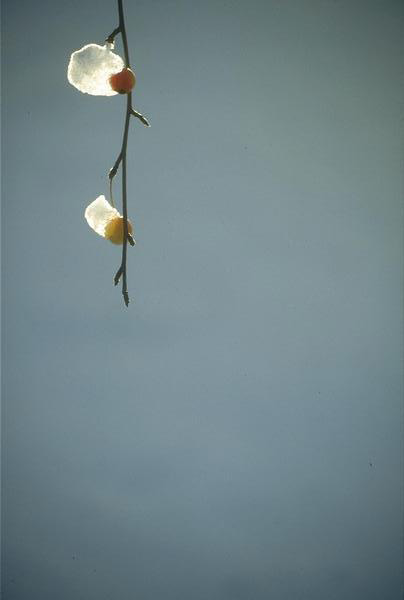
In the same way that the jasmine drops its withered flowers, you too should discard desire and aversion, bhikkhus. 377
Peaceful of body, peaceful of speech and with his mind thoroughly stilled, the bhikkhu who has rid himself of attachment to the world - is called "at peace". 378
You should encourage yourself, yourself. You should restrain yourself, yourself. When you are self-protected like that, you will live happily as a bhikkhu. 379
One is one's own guard. What other guard could one have? One is one's own destiny. Therefore one should train oneself, like a merchant does a thoroughbred horse. 380
The bhikkhu who experiences great joy, and has faith in the religion of the Buddha, will attain the place of peace, the satisfaction of stilling the functions of the mind. 381
When a bhikkhu applies himself when still young to the religion of the Buddha, he illuminates the world, like the moon breaking away from a cloud. 382
Cut the stream and go across, abandon sensuality, brahmin. When you have achieved the stilling of the activities of the mind, you will know the unconditioned, brahmin. 383
When a brahmin has crossed beyond duality, then all the fetters of such a seer come to an end. 384
When a man knows no this shore, other shore, or both - such a one, free from anxiety, liberated, that is what I call a brahmin. 385
Meditating, free from stain, settled in mind, with job accomplished, without inflowing thoughts, and having achieved the supreme purpose - that is what I call a brahmin. 386
By day it is the sun which shines, at night the moon shines forth. A warrior shines in his armour, and a brahmin shines in meditation. But at all times, by day and by night, the Buddha shines in his glory. 387
A brahmin is called so by breaking with evil deeds. It is by pious behaviour that a man is called a man of religion, and by casting out blemishes one is called one gone forth. 388
One should not strike a brahmin, and nor should a brahmin lose his temper. Shame on him who strikes a brahmin, and shame on him who loses his temper because of it. 389
Nothing is better in a brahmin than this - that he restrains his mind from pleasurable things. Suffering disappears for him to the same extent that he gets rid of thoughts of harming anyone. 390
He who does no wrong with body, speech or mind, but is restrained in all three spheres - that is what I call a brahmin. 391
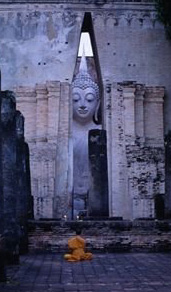
One should reverently pay homage to the man from whom one has learned the Truth, taught by the True Buddha, like a brahmin does to the sacrificial fire. 392
One is not a brahmin by virtue of matted hair, lineage or caste. When a man possesses both Truth and truthfulness, then he is pure, then he is a brahmin. 393
What use is your matted hair, you fool? What use is your antelope skin? You are tangled inside, and you are just making the outside pretty. 394
The man who wears robes made from rags off the dust heap, who is gaunt, with his sinews standing out all over his body, alone meditating in the forest - that is what I call a brahmin. 395
I do not call him a brahmin who is so by natural birth from his mother. He is just a supercilious person if he still has possessions of his own. He who owns nothing of his own, and is without attachment - that is what I call a brahmin. 396
He who, having cut off all fetters, does not get himself upset, but is beyond bonds - that liberated man is what I call a brahmin. 397
He who has cut off both bond and strap, halter as well as bridle, who has removed the barrier, himself a Buddha - that is what I call a brahmin. 398
He who endures undisturbed criticism, ill-treatment and bonds, strong in patience, and that strength his power - that is what I call a brahmin. 399
Without anger, devout, upright, free from craving, disciplined and in his last body - that is what I call a brahmin. 400
Like water on a lotus leaf, like a mustard seed on the point of an pin, he who is not stuck to the senses - that is what I call a brahmin. 401
He who has experienced the end of his suffering here in this life, who has set down the burden, freed! - that is what I call a brahmin. 402
The sage of profound wisdom, the expert in the right and wrong road, he who has achieved the supreme purpose - that is what I call a brahmin. 403
Not intimate with laity or monks, wandering about with no abode, and few needs - that is what I call a brahmin. 404
Abandoning violence to all living creatures moving or still, he who neither kills or causes killing - that is what I call a brahmin. 405
Unagitated amongst the agitated, at peace among the violent, without clinging among those who cling - that is what I call a brahmin. 406
He from whom desire and aversion, conceit and hypocrisy have fallen away, like a mustard seed on the point of a pin - that is what I call a brahmin. 407
He who utters only gentle, instructive and truthful speech, criticizing no-one - that is what I call a brahmin. 408
He who takes nothing in the world that has not been given him, long or short, big or small, attractive or that is what I call a brahmin. 409
He who has no desires in this world or the next, without longings, freed! - that is what I call a brahmin. 410
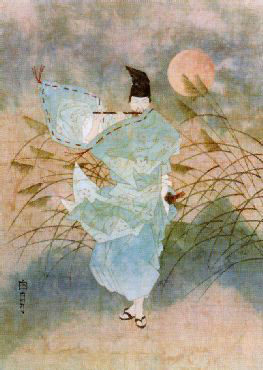
He who has no attachments and has been freed from uncertainty by realization, who has plunged into the deathless - that is what I call a brahmin. 411
He who has even here and now transcended the fetter of both good and evil, who is sorrowless, faultless and pure - that is what I call a brahmin. 412
The man who is stainless, pure, clear and free from impurities like the moon, the search for pleasure extinguished - that is what I call a brahmin. 413
He who has transcended the treacherous mire of samsara and ignorance, who has crossed over, reached the other shore, meditating, motionless of mind, free from uncertainty, and who is at peace by not clinging to anything - that is what I call a brahmin. 414
He who by here and now abandoning sensuality, has gone forth a homeless wanderer, the search for pleasure extinguished - that is what I call a brahmin. 415
He who by here and now abandoning craving, has gone forth a homeless wanderer, the search for pleasure extinguished - that is what I call a brahmin. 416
He who has abandoned human bonds, and transcended those of heaven, liberated from all bonds - that is what I call a brahmin. 417
He who has abandoned pleasure and displeasure, is cooled off and without further fuel, the hero who has conquered all worlds - that is what I call a brahmin. 418
He who has seen the passing away and rebirth of all beings, free of clinging, blessed, awakened - that is what I call a brahmin. 419
He whose path devas, spirits and men cannot know, whose inflowing thoughts are ended, a saint - that is what I call a brahmin. 420
He who has nothing of his own, before, after or in between, possessionless and without attachment - that is what I call a brahmin. 421
Bull-like, noble, a hero, a great sage, and a conqueror, he who is motionless of mind, washed clean and awakened - that is what I call a brahmin. 422
He who has known his former lives and can see heaven and hell themselves, while he has attained the extinction of rebirth, a seer, master of transcendent knowledge, and master of all masteries - that is what I call a brahmin. 423
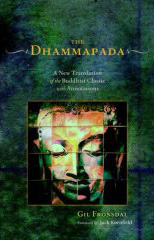
By Jack Cornfield