



Emerson's Life
Emerson's Poetry
Emerson's Prose


Ralph Waldo Emerson in "Self-Reliance"
Emerson's reputation as a leader among the
Ralph Waldo Emerson in "Last of the Anti-Slavery Lectures"
|
|
|
|
|
|
|
|
|
|
|
|
|
|
|
|
|
|
|
|
|
|
|
|
|
|
|
|
|
|
|
|
|
|
|
|
|
|
|
|
|
|
|
|
| Emerson's Prose | |||||||||||||||||||||||||||||||||||||||||||
|
|||||||||||||||||||||||||||||||||||||||||||
|
|||||||||||||||||||||||||||||||||||||||||||
|
|||||||||||||||||||||||||||||||||||||||||||
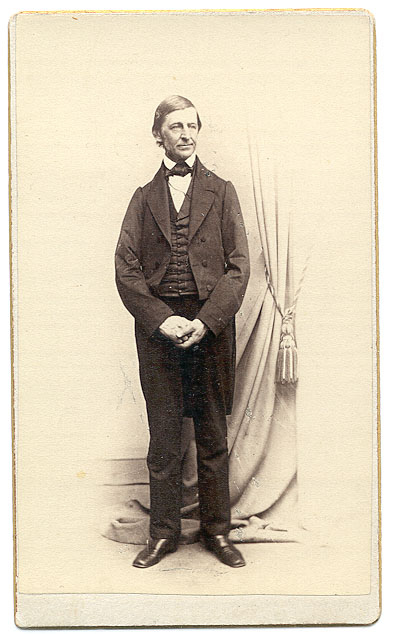
| Ralph Waldo Emerson expressed his optimistic views in essays and speeches which have been transcribed and reproduced in countless volumes. Among his most famous works are his essays entitled Self-Reliance and Experience. As the titles of these pieces suggest, Emerson was an uncompromising individualist who believed in truth, faith in the self, and independent thought. | |||||||||||||||||||||||||||||||||||||||||||
| Home Emerson's Life Emerson's Poetry Emerson's Prose |
|||||||||||||||||||||||||||||||||||||||||||
|
|||||||||||||||||||||||||||||||||||||||||||
|
|||||||||||||||||||||||||||||||||||||||||||
| "To believe your own thought, to believe that what is true for you in your private heart, is true for all men,--that is genius." Ralph Waldo Emerson in "Self-Reliance" |
|||||||||||||||||||||||||||||||||||||||||||
|
|||||||||||||||||||||||||||||||||||||||||||
|
|||||||||||||||||||||||||||||||||||||||||||
| Emerson, a former preacher, was an activist as well. In the 1850s, the author and lecturer became deeply involved in cause of abolition. One of his most well-known speeches, and subsequent essays, is the "Last of the Anti-Slavery Lectures." In it, Emerson relies upon two of his earlier key themes, those of independent thought and carefully | |||||||||||||||||||||||||||||||||||||||||||
| considered action. By continuing to stress these ideals, Emerson created a philosophy that is singularly united in its purpose of setting people free from societal conventions which only serve to stifle creativity and thwart ultimate happiness. Emerson's reputation as a leader among the |
|||||||||||||||||||||||||||||||||||||||||||
|
|||||||||||||||||||||||||||||||||||||||||||
|
|||||||||||||||||||||||||||||||||||||||||||
|
|||||||||||||||||||||||||||||||||||||||||||
| "The one thing not to be forgiven to intellectual persons is, not to know their own tasks, to take their ideas from others" Ralph Waldo Emerson in "Last of the Anti-Slavery Lectures" |
|||||||||||||||||||||||||||||||||||||||||||
|
|||||||||||||||||||||||||||||||||||||||||||
|
|||||||||||||||||||||||||||||||||||||||||||
| Transcendentalist movement of the mid-nineteenth century in New England is well- deserved. He is known to have referred | |||||||||||||||||||||||||||||||||||||||||||
|
to the movement as "Idealism" in a number of speeches. In an 1842 address, which was later published, Emerson states that "The height, the deity of man is, to be self-sustained," a sentiment which suggests the suthor's belief in man's necessary reliance on Nature as the supreme force in the world, rather than in trying to subdue nature to the will of men. He is credited with being one of the founders of | ||||||||||||||||||||||||||||||||||||||||||
| the Transcendentalist magazine publication "The Dial," which he also edited for about two years. Through this forum, Emerson was able to advance to the public more of his ideas about Transcendentalist thought. Though he was often criticized for philosophies that seemed overly-optimistic to others, Emerson remains a major influence in the world of American thought and literature through the power of his accessible, witty prose which offers wisdom even in the 21st century. |
|||||||||||||||||||||||||||||||||||||||||||
| About this site | |||||||||||||||||||||||||||||||||||||||||||