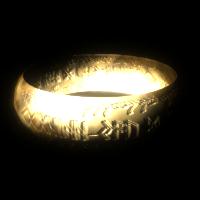
 The
struggle against corruption is a major theme in The Lord of the Rings.
A character can resist a number of points of Corruption equal to one-half
of his Will score (round up). The boxes on the character sheet normally
reserved for Psionic Energy or Cykosis can be used to keep track of Corruption.
Once the last available Corruption box is filled, the character is totally
corrupted by evil and ceases to be a player-character hero. He becomes
a dark minion run by the Gamemaster. However, even partial corruption has
a negative effect—each point of Corruption accrued by the character imposes
a +1 step penalty on all Interaction skill checks involving the Free Peoples
of Middle Earth (Elves, Dwarves, Hobbits, and Men opposed to evil). The
experience of Boromir demonstrates that corruption is noticeable in a person’s
demeanor, and Gollum’s experience shows how it can even twist a person’s
appearance.
The
struggle against corruption is a major theme in The Lord of the Rings.
A character can resist a number of points of Corruption equal to one-half
of his Will score (round up). The boxes on the character sheet normally
reserved for Psionic Energy or Cykosis can be used to keep track of Corruption.
Once the last available Corruption box is filled, the character is totally
corrupted by evil and ceases to be a player-character hero. He becomes
a dark minion run by the Gamemaster. However, even partial corruption has
a negative effect—each point of Corruption accrued by the character imposes
a +1 step penalty on all Interaction skill checks involving the Free Peoples
of Middle Earth (Elves, Dwarves, Hobbits, and Men opposed to evil). The
experience of Boromir demonstrates that corruption is noticeable in a person’s
demeanor, and Gollum’s experience shows how it can even twist a person’s
appearance.
Whenever the character is called upon to make a Corruption check, he must immediately make a Resolve-mental skill check (or a Will feat check) with a +1 step penalty for each point of Corruption already accrued (in other words, accruing some corruption makes it easier to accrue more in the future). The result determines the effect:
Critical Failure: the character accrues 2 points of CorruptionCertain Flaws, Magic skills, an Artifacts require characters to make Corruption checks. Otherwise, it is up to the Gamemaster to decide when a character must make a check. This decision should be based on the character’s nature and the nature of his society—what is tempting to a dwarf may not be tempting to an elf, for example. Generally, it is acceptable to require a Corruption check whenever the character is tempted by a course of action that favors power, greed, or personal welfare over the noble struggle of the Free Peoples against darkness.
Failure: the character accrues 1 point of Corruption
Ordinary/Good: the character does not accrue any Corruption
Amazing: the character removes 1 point of Corruption (if he has any)