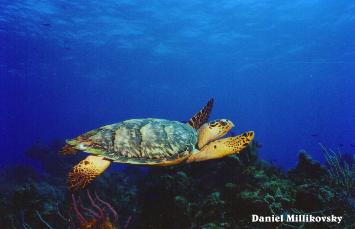
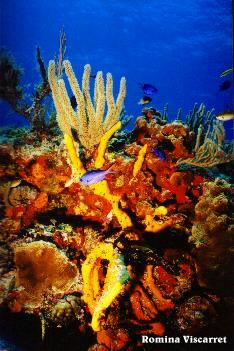
The coral reef is a structure of ancient ecological design. Its physical morphology, its orientation to the forces of the sea, and its community structure have been tested and molded by time and natural selection. Reefs have weathered global climate shifts, plate tectonics and dramatic sea-level change.
"The reef community has evolved into a fully integrated marine civilization superbly adapted to a nutrient-impoverished ocean. It is designed for the ultimate conservation of nutrients through symbioses and detailed trophic interactions has made it vulnerable to small external perturbations. This delicate complexity makes coral reefs vulnerable to changing environmental conditions, particularly temperature, sedimentation, increased nutrient concentrations, and over-harvesting.
"Ironically, the many values of coral reefs -- as a fisheries resources, for coastal protection and building materials, and as tourist attractions -- now are contributing to their steady and rapid decline and disruption of their biological integrity. We need to factor these realities into an approach for long-term reef conservation.
More than ever, coral reef conservation efforts are essential to raise public awareness about the importance of humanity's impact on the marine environment before current trends become irreversible. Clearly, 'business as usual' is no longer acceptable if we are to conserve these critical resources for the benefit of present and future generations. We stand on the threshold but it is not too late to reverse the tide of destruction." |