Traditions and Symbolism
 Thanksgiving
Feast
Thanksgiving
Feast
Our
traditional Thanksgiving celebration has roots in  pagan
ceremonies and rituals celebrated throughout many cultures in history. Many of
these rituals and ceremonies were adopted by early Christians in order to allow
other cultures to easily accept Christianity into their
own cultures. Before the establishment of formal religions many ancient farmers
believed that their crops contained spirits which caused the crops to grow or to
die. Many believed that these spirits were released when the crops were
harvested. The spirits had to be destroyed or they would take revenge on the
farmers who harvested the crops. Some of the harvest festivals celebrated the defeat
of these spirits. Harvest festivals and
pagan
ceremonies and rituals celebrated throughout many cultures in history. Many of
these rituals and ceremonies were adopted by early Christians in order to allow
other cultures to easily accept Christianity into their
own cultures. Before the establishment of formal religions many ancient farmers
believed that their crops contained spirits which caused the crops to grow or to
die. Many believed that these spirits were released when the crops were
harvested. The spirits had to be destroyed or they would take revenge on the
farmers who harvested the crops. Some of the harvest festivals celebrated the defeat
of these spirits. Harvest festivals and thanksgiving celebrations were held by the ancient Greeks, the Romans, the
Chinese, and the Egyptians.
thanksgiving celebrations were held by the ancient Greeks, the Romans, the
Chinese, and the Egyptians.
Demeter, the goddess of all grains, was worshipped by the ancients Greeks. Every autumn a three day festival was held in her honor. On the third day of the celebration was a feast with offerings of seed corn, cakes, fruit, and pigs. It was thought that Demeter's gratitude would grant them a good harvest.
Ceres
was the Roman goddess of corn. The word cereal is  derived
from the name of this goddess. The festival was held each year in October and
offerings of the first fruits of the harvest and pigs were made to Ceres. The
celebration included music, parades, games and sports, and a feast of
thanksgiving.
derived
from the name of this goddess. The festival was held each year in October and
offerings of the first fruits of the harvest and pigs were made to Ceres. The
celebration included music, parades, games and sports, and a feast of
thanksgiving.
Chung
Ch'ui was the harvest festival celebrated by the ancient Chinese. It occurred
with the full moon on the 15th day of the 8th month. This day was considered the birthday of the moon and special cakes were made and stamped with the picture of
a rabbit. The families ate a thanksgiving meal and feasted on roasted pig,
harvested fruits, and the special cakes. The festival lasted three days and
during this time, it was believed that flowers would fall from the moon and good
fortune would come to any who saw this occurrence.
birthday of the moon and special cakes were made and stamped with the picture of
a rabbit. The families ate a thanksgiving meal and feasted on roasted pig,
harvested fruits, and the special cakes. The festival lasted three days and
during this time, it was believed that flowers would fall from the moon and good
fortune would come to any who saw this occurrence.
Min
was the Egyptian god of vegetation and fertility. The time of harvest was
in the springtime and it was at this time that the celebration  occurred. The
festival included
a parade, music, dancing, sports, and a great feast. When the Egyptian farmers
harvested their corn, they pretended to be grief-stricken and wept mournfully.
They believed that this would keep the spirit that lived in the corn from
becoming angry.
occurred. The
festival included
a parade, music, dancing, sports, and a great feast. When the Egyptian farmers
harvested their corn, they pretended to be grief-stricken and wept mournfully.
They believed that this would keep the spirit that lived in the corn from
becoming angry.
The
Thanksgiving Turkey
Of
all the the Thanksgiving symbols the turkey has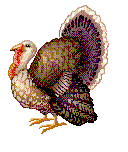 become the most well known. The wild turkey is native to northern Mexico and the
eastern United States. It was originally domesticated in Mexico and was brought
into Europe early in the 16th century. turkeys have been extensively raised
because of the excellent quality of their meat and eggs. Though there is no real
become the most well known. The wild turkey is native to northern Mexico and the
eastern United States. It was originally domesticated in Mexico and was brought
into Europe early in the 16th century. turkeys have been extensively raised
because of the excellent quality of their meat and eggs. Though there is no real
 evidence that turkey was served at the Pilgrim's first thanksgiving, in a book
written by the colonist's Governor
Bradford, the wild turkey is mentioned. In a letter sent to England, another
colonist described how the governor sent "four men out fowling"
returning with turkeys, ducks and geese.
evidence that turkey was served at the Pilgrim's first thanksgiving, in a book
written by the colonist's Governor
Bradford, the wild turkey is mentioned. In a letter sent to England, another
colonist described how the governor sent "four men out fowling"
returning with turkeys, ducks and geese.
The
Cornucopia
Cornucopia
is a Latin term derived from two words, cornu meaning horn and copia meaning
plenty. The horn of plenty, as it is also known, is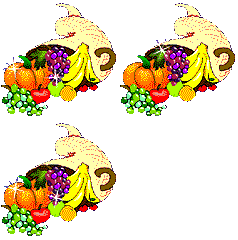 shaped like a horn or cone.
It is usually shown
overflowing with nuts and fruit. It symbolizes prosperity or abundance. In Greek
mythology, it is the horn of a goat named Amalthea which nursed the infant god,
Zeus. According to this legend, the infant Zeus broke a horn from the goat's
head and gave it with the ability to overflow with whatever its owner wished
for.
shaped like a horn or cone.
It is usually shown
overflowing with nuts and fruit. It symbolizes prosperity or abundance. In Greek
mythology, it is the horn of a goat named Amalthea which nursed the infant god,
Zeus. According to this legend, the infant Zeus broke a horn from the goat's
head and gave it with the ability to overflow with whatever its owner wished
for.

Thanksgiving Home History Links