History


The
people we know as the Pilgrims in our minds today are legends when in fact, they
were real people who courageously made a voyage in 1620 and founded the first
New England colony. They were English people who wanted to escape the
constraints imposed upon them by the government system of England. They
wanted to escape the economic problems of the country and they 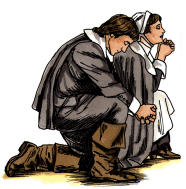 wanted
to be able to practice their religious beliefs freely. They were known as
Separatists during a time when the Church and State were one. They
believed in independent congregations away from the Church of England.
Such a belief was considered treasonous. They brought their own culture to
the New World and attempted to establish a new society on a foreign continent.
Today, the pilgrims are symbols of past bravery during our November feast of
Thanksgiving.
wanted
to be able to practice their religious beliefs freely. They were known as
Separatists during a time when the Church and State were one. They
believed in independent congregations away from the Church of England.
Such a belief was considered treasonous. They brought their own culture to
the New World and attempted to establish a new society on a foreign continent.
Today, the pilgrims are symbols of past bravery during our November feast of
Thanksgiving.

Two
ships originally started the voyage to the New World. One was the
Speedwell, the other was the Mayflower. The Speedwell, after stopping for
repairs twice, was finally considered unseaworthy. Leaving the Speedwell behind,
on September
6, 1620, the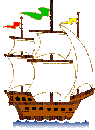 MAYFLOWER set sail across the North Atlantic with its famous 102 passengers into
history.
MAYFLOWER set sail across the North Atlantic with its famous 102 passengers into
history.
The beginning of the voyage across the Atlantic was pleasant. The winds were good for many days although many of the passengers were seasick. Next was a period of many storms and crosswinds, which cracked a main beam causing leakage in the ship. The damage was severe enough to raise concerns about whether or not the ship could continue the voyage. The Mayflower was already almost halfway across the Atlantic at this point and it was decided to continue forward with the voyage.
Two deaths occurred during the voyage. One was a sailor who died before the voyage was half way over. The other was William Butten, a servant of Samuel Fuller, who died just before they sighted land. John Howland came close to being a third death when he was swept overboard during a storm. There was one birth during the time at sea; Elizabeth Hopkins had a son, who was named "Oceanus."
Land
was sighted on November 9, 1620. The original destination was the mouth of the
Hudson River. The Mayflower was East of this destination in the area of
Cape Cod. Since it was late in the year, it was decided to remain in the Cape
Cod area. The Mayflower anchored in what is today Provincetown harbor on
November 11, after 66 days at sea. This was the day that the "Mayflower  Compact"
was signed.
Compact"
was signed.
While the Mayflower remained in the harbor at the tip of Cape Cod, the people were able to go ashore. On November 15 under the command of Captain Myles Standish, sixteen armed men set out to explore what they considered to be the wilderness of the immediate area.
The explorers
saw some Native Americans, but were unable to catch up with them. They
discovered and took some Indian corn and a kettle. A second expedition further along the inner Cape consisted of 34 men. They found many signs of the
native population which had fled at their approach, more corn and the burial of
a European man. A third expedition found Plymouth harbor, where they found a
suitable place for their permanent settlement. On Monday, December 11, they
found cleared fields and plenty of fresh running water in Plymouth. This has
come to be known as the famous landing on Plymouth Rock although there is no
record of it in the original accounts. The explorers returned to the Mayflower
to report this suitable place for the new settlement. The Mayflower arrived in
Plymouth harbor on December 16, 1620, and construction on the settlement began
on the 23rd.
further along the inner Cape consisted of 34 men. They found many signs of the
native population which had fled at their approach, more corn and the burial of
a European man. A third expedition found Plymouth harbor, where they found a
suitable place for their permanent settlement. On Monday, December 11, they
found cleared fields and plenty of fresh running water in Plymouth. This has
come to be known as the famous landing on Plymouth Rock although there is no
record of it in the original accounts. The explorers returned to the Mayflower
to report this suitable place for the new settlement. The Mayflower arrived in
Plymouth harbor on December 16, 1620, and construction on the settlement began
on the 23rd.
The Mayflower
remained in Plymouth with the colonists for the first winter. The ship was cold,
damp and  unheated,
but it provided shelter against the terrible, cold winter until houses could be
finished on shore. Exposure, malnutrition and illness led to the death of half
the group, both passengers and crewmen. There were four deaths (and one birth -
Peregrine White) during the month they spent at the tip of Cape Cod. Another 40
or 41 colonists expired during the remainder of the winter. At one point, only
seven people were healthy enough to care for the ill. On January 14, a fire
destroyed the roof on their first structure but fortunately none of the sick
people inside were hurt. A second fire a month later was
unheated,
but it provided shelter against the terrible, cold winter until houses could be
finished on shore. Exposure, malnutrition and illness led to the death of half
the group, both passengers and crewmen. There were four deaths (and one birth -
Peregrine White) during the month they spent at the tip of Cape Cod. Another 40
or 41 colonists expired during the remainder of the winter. At one point, only
seven people were healthy enough to care for the ill. On January 14, a fire
destroyed the roof on their first structure but fortunately none of the sick
people inside were hurt. A second fire a month later was put out without incident. Despite all of the tragedies and hardships, the
Pilgrims survived and built their new settlement. The Village street was laid
out with two rows of plots for their houses and gardens. A platform was erected
on the top of the hill above the village, and six cannons installed for defense.
put out without incident. Despite all of the tragedies and hardships, the
Pilgrims survived and built their new settlement. The Village street was laid
out with two rows of plots for their houses and gardens. A platform was erected
on the top of the hill above the village, and six cannons installed for defense.
The colonists
had observed Native Americans near the  settlement
in mid-February, but it wasn't until Friday, March 16, that the two peoples
actually met. Samoset, an Abenaki Sagamore from what is now Maine, and
another man entered the little village and said "Welcome, Englishmen."
Samoset had learned English from the English fishermen who crossed the North
Atlantic each year to fish for cod. He told the colonists of a great plague
which had killed all of the Patuxet people who had previously occupied the
cleared farmland where the new colony sat. He also talked about an English
captain, Thomas Hunt, who had kidnapped some of the Native Americans a few years
before. During Samoset's visit, the colonists were busy planting their garden
seeds.
settlement
in mid-February, but it wasn't until Friday, March 16, that the two peoples
actually met. Samoset, an Abenaki Sagamore from what is now Maine, and
another man entered the little village and said "Welcome, Englishmen."
Samoset had learned English from the English fishermen who crossed the North
Atlantic each year to fish for cod. He told the colonists of a great plague
which had killed all of the Patuxet people who had previously occupied the
cleared farmland where the new colony sat. He also talked about an English
captain, Thomas Hunt, who had kidnapped some of the Native Americans a few years
before. During Samoset's visit, the colonists were busy planting their garden
seeds.
On March 22nd,
Samoset returned with another Native  American,
Squanto. He was one of the men who had been captured by Hunt. Squanto had been a
slave in Spain but escaped to London. He returned to America as a guide employed
by Sir Ferdinando Gorges. Squanto became the little colony's chief
interpreter in interacting with the Native Peoples. His arrival opened a door
for a visit by Massasoit, the leader of the native people, the Wampanoag. After
exchanging greetings and gifts, the two peoples signed a treaty of peace which
would last over
American,
Squanto. He was one of the men who had been captured by Hunt. Squanto had been a
slave in Spain but escaped to London. He returned to America as a guide employed
by Sir Ferdinando Gorges. Squanto became the little colony's chief
interpreter in interacting with the Native Peoples. His arrival opened a door
for a visit by Massasoit, the leader of the native people, the Wampanoag. After
exchanging greetings and gifts, the two peoples signed a treaty of peace which
would last over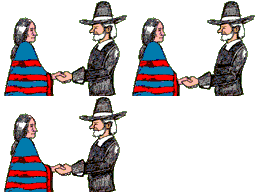 fifty
years. At the suggestion of Massasoit, fields on the south side of the brook
were turned by hand and crops of wheat, barley, Indian corn and peas planted in
early April. The weather was improving and
fifty
years. At the suggestion of Massasoit, fields on the south side of the brook
were turned by hand and crops of wheat, barley, Indian corn and peas planted in
early April. The weather was improving and  Spring
was in the air. People were recovering from the winter illnesses and the
surviving half of the crew were eager to return home. The colony said goodbye to
the Mayflower on April 5th, 1621.
Spring
was in the air. People were recovering from the winter illnesses and the
surviving half of the crew were eager to return home. The colony said goodbye to
the Mayflower on April 5th, 1621.
The name "Wampanoag" means "eastern people," or "people of the dawn." Some of these Native American Peoples still live on or near the fields, forests and waters where their ancestors settled thousands of years ago. In the seventeenth century they were known by the names of their separate territories, such as Pokanoket, Patuxet and Nauset. Each community had a well-defined territory. They were hunters, fishers and harvesters. The Wampanoag lived in harmony with the natural environment both physically and spiritually. The shared a common language and had a respect for their traditions and elders of their nation. The men were skilled hunters and fishers and the women worked the fields and around the family.
The
colonists brought religious Holy Days as well as traditional customs to the New
World. The three main  Holy
Days were "The Sabbath", "The Day of Humiliation and
Fasting", and "The Day of Thanksgiving and Praise". One of the
traditional customs was that of a secular autumn celebration of harvest. This
was a celebration that included prayers of Thanks to God for a bountiful harvest
as well as recreation, games, and feasting. When God's displeasure was evident,
a "Day of Humiliation and Fasting" occurred. When God's
Providence was evident, a "Day of Thanksgiving and Praise" occurred
usually followed by a feast with prayers of
thanks. The actual first declared Thanksgiving occurred
in 1623, after a providential rain shower saved the
colony’s crops.
Holy
Days were "The Sabbath", "The Day of Humiliation and
Fasting", and "The Day of Thanksgiving and Praise". One of the
traditional customs was that of a secular autumn celebration of harvest. This
was a celebration that included prayers of Thanks to God for a bountiful harvest
as well as recreation, games, and feasting. When God's displeasure was evident,
a "Day of Humiliation and Fasting" occurred. When God's
Providence was evident, a "Day of Thanksgiving and Praise" occurred
usually followed by a feast with prayers of
thanks. The actual first declared Thanksgiving occurred
in 1623, after a providential rain shower saved the
colony’s crops.
The
event we now know as "the First Thanksgiving" occurred in the autumn
of 1621. It was a secular celebration of the autumn harvest. Massasoit and
the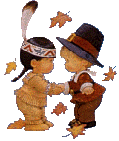 Native People were invited to share in this harvest celebration which included
games, recreations, and three days of feasting. This is the event that triggered
our modern day Thanksgiving celebration.
Native People were invited to share in this harvest celebration which included
games, recreations, and three days of feasting. This is the event that triggered
our modern day Thanksgiving celebration.
Thanksgiving Home Traditions & Symbols Links
