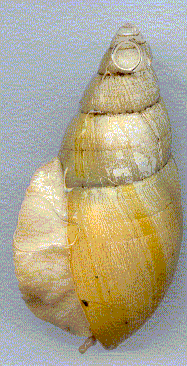
| Achatina iradeli This snail is far more unusual to find in the U.K. and in fact I know of only a handful of people who own them. They are characterised by their very long, thin shell, which is yellow in colour, and their pale, white/yellow body. I do not know if this is supposed to be a characteristic or not, but my juvenile specimin has a much sharper radula than other species I have come into contact with. I coud hear him ripping chunks out of a cucumber, and when I placed him on my hand and he began to rasp there it was actually an uncomfortable sensation, compared to the gentle tickle experienced with fulicias and others. This snail interestingly does not lay eggs. It actually gives birth to live young snails. (See below for the story of how I found that out!) This is a rare occurrence in snail terms, though I think certain aquatic snails also do so. Ahcatina iradeli is certainly only one of a very few Achatinidae species to give birth rather than lay eggs. There's a picture of newborn iradeli at the bottom of the page. |
 |
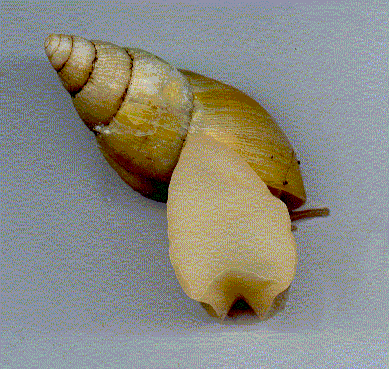
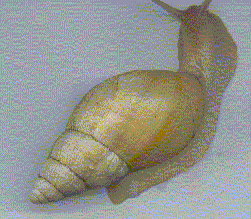
| As can be seen in the following pictures it is similar, though not identical in colour to the South African Pale landsnail (Achatina spp.) The yellow bands are especially attractive. In this picture you can also just about see the white/yellow body. The shell is more elongated and slimmer than that of the most common Achatina species. |
 |
 |
| I got a big surprise the first time the iradeli had babies! It is in a tank with the Achatina albopicta, the baby Achatina smithii and some baby fulicas. I had been under the impression that when I recieved it it was too young to have bred, and so would be infertile and unable to reproduce. I was keeping it in with snails of other species, and so the last thing I expected to find was a tankful of baby Achatina iradeli! There was also no sign of any eggs! I eventually discovered, from the friend who gave the snail to me, that Achatina iradeli actually don't lay eggs at all! It seems to mature fairly young, - so it had already mated before I recieved it, and then it actually gave birth to live young! There is a picture of the newborn young below. Note that they have a yellowy hue not unlike the adult specimin, and rather different from the usual sight of newborn fulicias which start off totally transparent before they begin to get brown flecks and take on colour. The picture was done on the very day I found the first batch of newborn snails, - 14 Jan 2002. They can't be more than seven or eight hours old in this picture. |
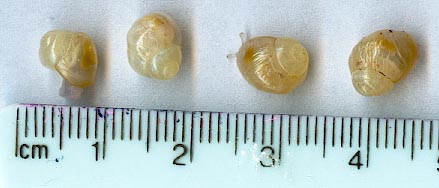 |
| It is possible to tell by examining the newborn snails that they were born live and did not hatch from eggs (though it's only possible to tell once you already know that's what happened!) Their shells are not smooth and uniform like you would expect a newborn snail's shell to be. A couple of them have sort of dents in them, and they are all slightly misshapen (from pressure exerted on them as they were born?) and have a slightly textured feel and appearance to them. You can tell the difference by comparing them here. Please email me if you are interested in owning some iradeli or other African snails. I periodically have snails available for rehoming. Please click here for the snail pages Click here for the main site menu |

|
| This counter tells how many hits the iradeli page has had |