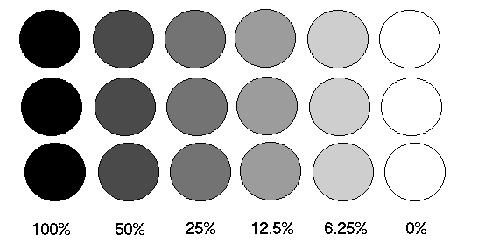
The mud test is used to test the toxicity of used oilfield drilling muds (offshore drilling). EPA (The Environmental Protection Agency) states that if 50% or more of the fish live in the bowls with the 12.5% mud concentration, then the mud passed the test. This regulation stands even if all of the fish die at the 100% concentration.
Variables:
18 bowls and nets
Mud sample in the above concentrations
20 live fish per bowl
Salt water with a controlled salinity (salt content)
Constant oxygen supply
Feedings: twice a day
Duration of test: 98 hours
Which is the independent variable?
Which is the dependent variable?
What are the constants in this experiment?
Why are there three replicas (bowls) for each concentration?
Which bowls make up the control group? Why is the control group needed?
Which bowls make up the experimental group?
Why is this mud test a controlled experiment?
The following Mud Test results show the number of live fish at the end of the test. Determine if the mud passed the test. By looking at the results, identify any problems with the experimental data and explain what could have happened to produce those results.
