| Holy Writ... A Page in Progress Back |
| Like much of prehistory, we cannot know an incredible amount about the ancient prototypes of modern religion. It is known that totem animals were worshiped, the worship of goddesses and gods came later. The early religions were very shamanistic in nature and revolved mostly around aspects of nature such as weather and animal gods. However, much can only be speculated from archeological finds. This is because writing had not taken prominence at that point.
Writing has greatly changed our world. We are able to record instances and information through the mechanism of writing. Ideas can be transmitted over distances flawlessly and over many years. Works of literature can be written and most importantly, and idea which is written down can be read, reread, criticized, learned from, and appreciated again and again. For much of early religion, ideas and beliefs were transmitted orally. This works for a small group of people and a basic minimalist religion. However, as civilizations grew more complex, there arose a need to be able to record things. Earliest writing goes back to the people of the middle east such as the Sumerians, Babylonians, and Egyptians. From these sources we draw many works of literature, the epic of Gilgamesh, Egyptian records, and even the Holy Bible. Writing is vital to religions in their modernity because with the size and complexity of modern societies, there is a need to solidify and publish authoritative systems of beliefs. Can you imagine important stories and information going from one place to another via retelling? This may work for a few generations, but there is a fear that something like a personal account may lose factual data and become tinged with personal opinions and embellishments over the ages. Therefore, the need for writing in religions is definitely apparent. This brings us up to the collection of Holy Texts. Sacred writings form the basis of most religions today. They are considered to be accurate accounts and authoritative dogma for those who believe in them. Holy texts are vital to religions and spiritual traditions because once something is written down: you can read reread, criticized, studied, learned from and appreciated for all time. |
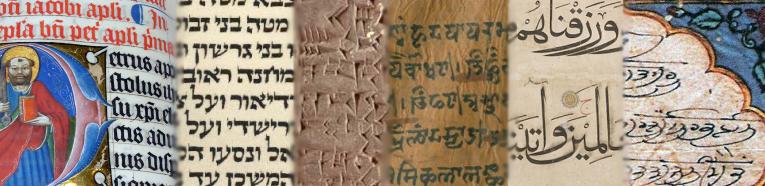
| The Holy Bible Gnostic Gospels The Tanakh The Talmud The Qu'ran The Hadith The Dhammapada Tipitaka Tripitaka Five Classics The Vedas Upinishads Sutras Tantras Ramayana Bahavad Gita The Guru Granth Sahib Tao Te Ching The Book of Mormon Pearl of Great Price Doctrine and Covenants |
 |
| Holy Writ |