













 |
| Should the death penalty be reinstated? |

Emerging black artists
Black artists such as Gerard Sekoto and George Pemba had less interest in exploring the formal complexities thrown up by European-influenced modernism. Instead they concentrated on depicting their realities and environments in a direct, though forcefully expressionist, manner.
Gerard Sekoto
From the 1930s onward, Sekoto portrayed urban African life in places such as Sophiatown and District Six, vital and tumultuous hotspots of an emerging though still unacknowledged black culture.In Sekoto's works of the early 1940s, such as Street Scene, bustling African figures are placed in the context of their often denuded environment, while Yellow Houses, of the same year (and the first work by a black artist bought by the Johannesburg Art Gallery), reduces the human presence, focusing instead on the environment itself.
In Song of the Pick, naturalism gives way to severe stylisation: a rank of workers wield picks in unison, forming a powerful image of African labour; a white overseer looks on, but his figure is dwarfed (even threatened) by this phalanx of diggers. In 1947, Sekoto left South Africa and settled in Paris. Illness and intermittent impoverishment meant that his work never again reached the heights it had in South Africa.
George Pemba
George Pemba, by contrast, stayed at home in small-town South Africa (in the township of Motherwell near Port Elizabeth), living into his 90s and patiently continuing to paint despite the lack of public acclaim - although that arrived late in his life, when a new awareness of neglected black art brought artists such as Sekoto and Pemba to renewed prominence.Pemba's often naïvely styled work focused on the simple lives of poor black people, humbly and sometimes humorously evincing their fundamental humanity, though he also treated themes such as the story of the Xhosa prophetess Nongqawuse of the 19th century.
Emerging black artists
A contemporary of Sekoto's, artist John Koenakeefe Mohl, founded South Africa's first art school for black people. This was in the township of Sophiatown, and Mohl and the black artists who came after him took as their subject the life and world of the newly urbanised black proletariat, housed in townships on the outskirts of the "white" cities.The Polly Street Art Centre in Johannesburg, run for 14 years by Cecil Skotnes, helped give impetus to emerging black artists, among them the distinctive talents of Lucky Sibiya and Louis Maqhubela, both of whom developed styles that spoke both of individuality and the creation of a recognisably African visual idiom.
Increasingly, and inevitably, black artists began to give voice to a political sensibility that left behind the realist depiction of township life.
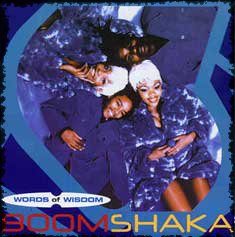
Boom Shaka's 'It's About Time' swept the charts
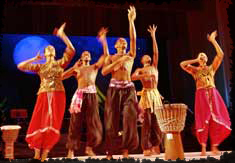
Dance has finally become respectable, with a number of home-grown productions wowing audiences in SA and abroad

SA bids for Square Kilometre Array
South African scientists have submitted a bid to host the Square Kilometre Array (SKA), an enormous radio telescope.......