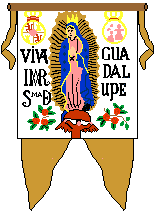

From the very start of her history, Mexico has been bound up with the Roman Catholic Church. For a very long time, it was the center of North America. Prior to the European arrival it was home to the mightiest empire on the continent. The only nation which could rival the Aztecs of Mexico would be the Inca Empire of Peru. In addition, since the days of the Spanish
Prior to the "Reform War" the Church held a position so sacrosanct that no matter how divided the country was, every faction and every side held fast to her. The first revolts against Spain were instigated by Catholic priests, namely Padre Hidalgo and Padre Morelos, and when independence did at last come in 1821 it was secured by another devout Catholic, Agustin de Iturbide, who founded the first traditional Catholic monarchy in the New World.
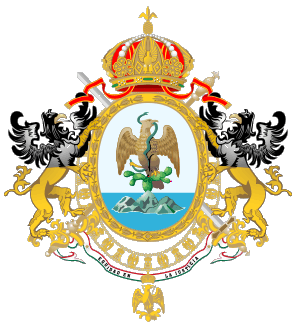
Emperor Agustin's government was based on the Plan of Iguala, also called the Plan of the Three Promises, which were: unity, independence and of course, religion. The Roman Catholic Church was the one official religion of Mexico and remained so even after the birth of the republic (whose first president was aptly named Guadalupe Victoria).
However, Mexico faced determined attacks against her Catholic culture and traditions from the very begining, starting with the overthrow of the constitutional monarchy of Agustin. The loyalties upon which the Catholic monarchy was built were eroded, largely through the influence of Joel R. Poinsset, the first envoy from the United States to Mexico, who actively encouraged Mexicans to join the secret society of Freemasons.
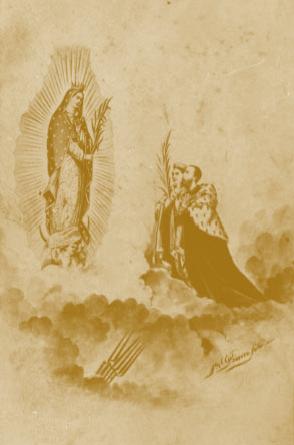
The last hope for the Church in Mexico came in 1864. Following the "Reform War" which was won by the liberal anti-clericals of Benito Juarez, exiled Mexican conservatives worked to bring in the Austrian Archduke Maximilian von Hapsburg to save their country from turmoil and disaster. After a national referendum, which was quickly dismissed as being unfair, the young prince was crowned Emperador Maximiliano de Mexico. The traditional Catholic monarchy had been restored, and all questions of legitimacy resolved as the Hapsburgs were the first dynasty to
However, following the successful conclusion of the American Civil War, victory was snatched away from Emperor Maximilian at the moment when the war against Juarez was all but won. Although Emperor Maximilian had not restored completely the old favored position of the Church, following his regicide by republican forces, anti-Catholic persecution started to rise again, reaching its most bloody and horrific peak just after the dawn of the 20th Century.
Thankfully, religious freedom has been restored in Mexico, but the Church continues to struggle with increasing numbers of U.S. missionaries converting Mexicans, not from paganism or atheism, but from Catholicism to Protestantism. On the whole, this has only split and weakened the Christian community.