 |
|
|
|
|
|
|
|
|
|
|
|
|
|
|
|
|
 |
|
|
The Strange Case of
the Mexican Revolution |
|
|
|
 |
|
|
|
The Mexican Revolution must stand out as unique in world history for a number of reasons. It was certainly not as simple as the French or American Revolutions. In Mexico, the first attempted revolt, which is still celebrated today as '16 September', was organized by a Catholic priest; the much idolized Padre Hidalgo. Yet, this revolution, supposedly against Spain, had nothing but kind words for the Spanish monarch, King Fernando VII, otherwise dismissed as a tyrant. Also, whereas the most common idea of a revolution is one with political ends, the Mexican Revolution began as what can be described as nothing less than a race-war. |
|
|
|
 |
|
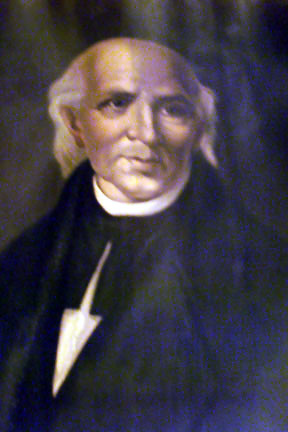
There does not seem to be anything at all "normal" about the Mexican Revolution. Padre Hidalgo, the man praised and honored throughout Mexico as the father of independence, was a Catholic priest as liberal as the worst modern day corruptions of Vatican II. During his time as a parish priest, he gained a reputation for condemning one Church teaching after another. He seems to have had much more in common with the educated liberal elite of the time than with the devout peasants he led into battle.
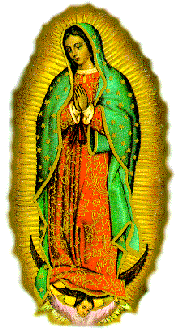
Although he claimed to have a great devotion to Our Lady of Guadalupe, he opposed such emphatic teachings and doctrines as clerical celibacy, the Index of Forbidden Works, the authority and infallibility of the Holy Father and even the virgin birth of Christ Himself. The revolt which he commanded launched a campaign which seemed aimed at the total genocide of all "white" or Spanish Mexicans. The massacres of people by his army left blood flowing freely in the streets. |
|
|
|
|
In fact, the Church hierarchy in Mexico excommunicated Padre Hidalgo and extended the excommunication to include anyone who followed him on such an unholy campaign. However, he was the hero of the people, and these acts would later come back to haunt the Church when Hidalgo was raised to the status of a secular, rather than religious, saint. However, what is also as strange is the fact that, at the end of the day, Hidalgo lost. His rebellion was crushed, his army decimated and in 1811 he was executed by firing squad as a traitor. Interestingly, before his death Hidalgo reportedly told the Inquisitors, "a todo el mundo...[I am] repentent for the incalculable ills which have originated out of the frenzy which possessed [me] to break so scandalously with the King, the nation, and Christian morality..."
Today, the name of Hidalgo is everywhere across Mexico, and he remains the common man's demi-god of independence, despite the fact that he failed to deliver the prize. Memorials to him are scattered everywhere, the anniversary of his call for independence is till celebrated at the national |
|
|
holiday and statues of him are common place. Again, in spite of the fact that he did not win the war, he did not make Mexico independent of Spain.
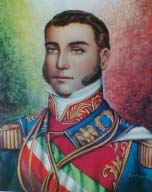
Oddly enough, the man who did accomplish that goal, Don Agustin de Iturbide, is all but forgotten. There are no monuments in his honor, his name is never spoken and many Mexicans have hardly any idea at all who the man was, yet it was he, not Padre Hidalgo, who actually achieved the independence of Mexico. However, even the case of Iturbide is far from normal. He was actually the man ordered by the Spanish government to crush the independence movement. He was considered a devout and loyal gentleman, very traditional and conservative, and had earlier opposed the efforts to seperate Mexico from Spain.
Yet, once he came in contact with the people he had been sent to |
|
 |
|
|
|
|
suppress, he began to sympathize with them and this very old fashioned aristocrat became the new revolutionary leader. However, he still did not advocate, as Hidalgo had not, a total break from the Spanish monarchy. His goals of "unity, independence and religion" were intended for a Mexican government that would still recognize Spain's King Fernando VII as its independent monarch. It was to be a situation somewhat similar to modern day Canada, which is totally independent, but shares her Queen with the U.K. If Fernando VII refused, Iturbide wished to make Mexico a free monarchy under one of his brothers or lesser members of the Borbon dynasty. However, all refused and so the jubilant people turned to Iturbide and demanded that he become Emperor of Mexico.
It is also rather out of the ordinary, especially for that time, that when the monarchy was established, it was established by a democratic vote, based on popular consent, and when Iturbide was crowned Emperador Agustin I, he was crowned by the President of Congress, with the Bishop of Guadalajara simply supervising. He was tied from the very begining to a rather republican institution which would shortly see the "hero" of the hour deposed and in turn portrayed as the first villain and scapegoat of the newly independent Mexico. His regicide marked the end of Mexico's long and strange road from colony to republic. |
|