| Engine - The heart of the beast |
| I really was learning when I decided to mess with the engine. I would defintiely recommend Jack Ashcraft's book "Total Performance V4" as a great handbook to supplement the Haines manual. Where Haines tells you how to take things off and put them back on again, the opening text in Jack's book gets you thinking about the engine as interelated systems which needs to be considered to not only acheive maximum benefit but also to finish with a reliable and efficient modified engine that will also last longer. More aimed at the Sonnet owner, many parts are equaly transferable to the 95 or 96. My original and niaive 'bolt and build' philosphy was quickly dashed. For example: Simply putting a larger bore exhaust will not yeild full benefit until the exhaust ports are enlarged as well. Bigger valves and ported heads are limited until the cam is reground to maximise their potential. As well as working faster and harder, an uprated engine will need an uprated oil and cooling system to cope with these demands. If expensive parts are simply bolted on it is not only money down the pan from the beginning but it will also cost you more money as parts wear out quicker if you havent considered the other sub-systems that feed it. Here endeth the sermon from Brother Gent. So what am I doing? |
 |
 |
 |
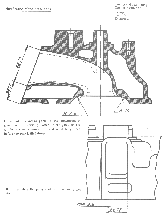 |
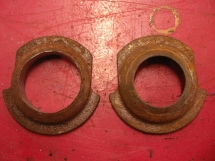
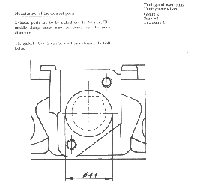
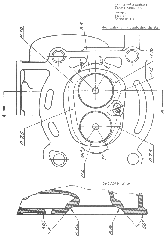
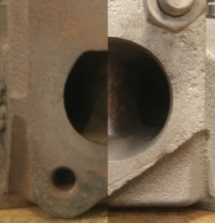
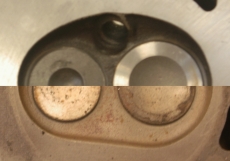
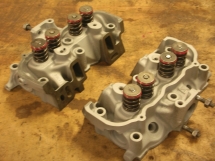
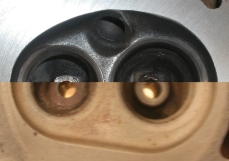
| Porting Porting is essentially removing material to increase gas flow in and out of the engine. I followed the 1970 Saab Sport & Rally Manual for the specifications (click the diagrams below for a direct link). I received three independ quotes for the porting work, each was around �600. If you want it done professionally, expect to pay. I was lucky enough to have a spare set so I did mine myself. It is a nervous business as if you go too deep and break into a water channel your heads are instantly and permantly scrapped. It took me two days 9-5 in the workshop and the hand drill has suffered for it. With the inlet porting I decided to only remove material around the valve seat and at the base of the valve guide. These are easily accesible. I chose not to mess with the inlet port entrance as 1) it is a delicate proceedure that only yeilds a small increase in cross-sectional area yet demands a lot of time and effort to achieve a perfect, square finish and 2) (remember what I said about thinking of it as systems?) if you go to the trouble of porting the entrance you have to port the inlet manifold as well to the same specs to achieve any benfit there, and this is difficult enought but with the added difficulty on ensuring a perfect match when they mate together to avoid any 'steps' between the head and the manifold. It also means you have to cut your inlet manifold gasket to match each time you replace it. Too much effort for not much gain - in my opinion. The same can be said for the exhaust port. As well as porting the exhaust port to 44mm, you must also open the middle gasket to the same diameter to achive any benefit whatsoever. See the photo below to see the obvious difference. |
| Valve Shrouding Taking the 42.1mm inlet valves and 36.1mm exhaust valves from the Ford Taunus V6 (available from Burton Power) and machining the valve seats to 40.1mm and 34.1mm respectively (with a 45degree chamfer on the valve seat and 30 degree chamfer on the valves) follows the Saab Rally spec and is a simple swap and machine job. You will also need new collets and spring retainers. I have had a 39.1mm and 33.1mm seat enlargements - 3mm under the valve size and not the prescribed 2mm. This is because a 2mm undersize (leaving a 1mm seat at 45 degrees, so about 1.4mm of contact) is pretty extreme for a fast raod car that will have lots of use. The seats al aslo multi profile, as oposed to the prescribed 45 degree, to aid airflow. Again, full potential is restricted unless the combustion chamber is modified accordingly to allow sufficient airflow out of and around the new sized valve throats. If you are usling dome topped cylinders, (to prevent unwanted loss of compression ratio) vlavle shrouding is for you. In the bad old days it would have to be milled by hand, time consuming and therefor expensive. Mike Tanski at Ferriday Engineering has tranfered the original Rally combustion chamber specs to his CNC machine and can now provide this to the masses! Mike is also doing an Unleaded Conversion, fiting new Brass Valve Guides and a slight skim to maintain a good head gasket seal and marginally increas the compression ratio. |
| Remember what I said about systems? More potential is relased for you lavishly modified heads by running a cam reground to a sports profile. Kent Cams can reground my cam to a 'fast road' profile but they can also perform modifications for rally oreinted driving for around �100 with a few days turnaround. Keep thinking about systems: a sporty cam and ported heads and you will want to take the car to a higher RPM. For this you will want stiffer valve springs. Again, the V6 springs do the job nicely. As far as I know the double-coil type springs DO NOT fit. |
 |
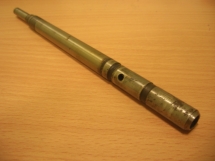
| Top Tip!! A rebuilt engine or an engine that has been sitting with no oil in for a while (like mine) needs to be nicley lubed before it is started properly for the first time. A good practice is to turn it over a few time with the plugs out. This will a) Get oil moving around the engine without actual combustion b) Get things moving without the added strain of the valve compression c) Prime the carb and reduce wasted battery usage as there will be no spark A better method requires sacrificing an old distributer to remove the shaft. Sink the saft into the Distributor hole and engage the bottom with the oil drive shaft. The oil pump can then be turned using a hand drill to get oil flowing without even moving the cam or the crank and therefore absolutly minimising any dry bearing movement. |
 |
 |
 |
 |
 |
 |