|
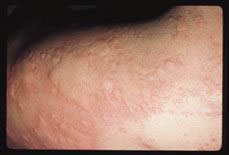
Hives are a type of skin rash characterized by groups of flat pale red raised swellings on the skin. The rash is usually short-lived (each outbreak lasts about two hours), but as some areas are fading, new areas often flare up. The outbreaks can last from a few minutes to a few weeks. The rash is intensely itchy, and sometimes can burn or sting, causing extreme discomfort for the afflicted. The most common type is acute urticaria, caused by an allergic reaction to a physical allergen, such as food, bee sting, drugs, etc. Of those cases not directly attributed to a specific allergen, the most common type of hives (80-95% of cases) is idiopathic urticaria (1), meaning there is no known cause for the condition. There are many other types of hives, distinguished by their cause. One that is commonly associated with idiopathic is cholinergic urticaria. This type is caused by raised skin temperature, such as in exercise, hot baths or showers, and emotional reactions such as stress or anger. Angioedema is characterized by deep swelling around the eyes and lips, and sometimes the hands and feet. Angioedema and urticaria are both caused by the same reaction and often occur together. (1,4,15,16, 17)
An allergy is defined as: "a harmful, increased susceptibility to a specific substance." An allergic reaction is caused by the immune system's defensive response to a substance it perceives as dangerous. What separates an allergy from illness is that the specific substance that causes the immune system to act defensively is not harmful or dangerous to the human body. The reaction is caused by Immunoglobulin E (IgE) antibodies attaching to mast cells found in the lungs, gastrointestinal tracts, and deep in the skin, and basophilic cells found in the blood. The attachment releases the powerful chemical histamine from the cells, causing a variety of allergy symptoms, dependent on where the histamine was released (e.g. released in the skin can cause a rash, released in the lungs can cause asthma). (15,16,17,18)
For many reasons, hives are likely the most distressing problem allergists, immunologists and dermatologists see in their patients. (4) The symptoms create intense misery at many levels for patients, causing a desperate cry for help that is not seen with most other conditions. The doctors are equally frustrated over how little they can do to help urticaria patients other than attempt to treat the symptoms for an unknown duration. There is no "magic pill" to alleviate their patient's suffering or a definitive answer to what the cause of it is. Because the term "stress" is so ambiguous with no uniform measure, it is often dismissed or not even considered as a factor in these mysterious cases, by both patient and doctor alike. (18) However, given the effect stress is proven to have on the body's chemistry, it seemed reasonable to explore how great a role it might play in the cause of idiopathic urticaria.
|