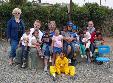
About Us: The History
and one from God. As they couldn't tell the difference while infants, many
were given to the care of orphanages. Few of the youngest children had
official birth certificates and those who didn't required registration with the
local County Registrar's Office. If they were registered by administrators of
an orphanage, they were usually given made-up first names as well as
estimated birthdates as most parents couldn't remember the exact date.
Many times, the parents moved on to follow the harvest and didn't see their
children again for many years, if at all. With proper medical attention, a
little TLC and good nutrition, these sickly children began to grow and
regain health. These children were the successful ones. Not all were so
"fortunate".
Some of the less fortunate children were locked into their dirt-floored, dark
quarters all day while their parents worked. And it was necessary for both
parents to work in order to survive. Some children were left in the care of
slightly older siblings. Some were left in the care of an elderly woman who
was no longer able to work but also not able to care for children very well,
either. Some were left with a neighbor lady who had too many children of
her own to give much attention to new ones. As Indian women breast-feed
and carry their children on their backs until they walk, many of them take
their babies to work if the rancher is agreeable. There have been reported
cases of babies being injured or killed by heavy equipment in the fields
when the mother placed the sleeping baby in the shade of the equipment
and out of the blazing sun . Many got sick from the pesticide-filled
environment. However, all this was better than nothing. Due to this type of
lifestyle for generations, most Indian people were lacking parenting skills
and the infant mortality rate was very high.
But change was on the rise. Over the last ten years, the Mexican
government has been releasing land to the indigenous people in this
area. Many times, when the children are strong enough and old enough
(often 12 years of age), they go to work in the fields alongside their
parents. They pool their finances and begin to build permanent housing
for the family and some are able to buy vehicles. Many Christian
ministries and tender-hearted visitors assist by building permanent
houses for the most impoverished families Today, fieldworkers are
seldom migratory but their children need help more than ever. Here's
where we come in!