|
|
St. Petersburg is Russia's imperial crown, Moscow is its familial
heart. It is a city in which one comes face to face with all the finest and
most frustrating in Russia. More
than anywhere else in the country, it is in Moscow where the Soviet
past collides with the democratic future. Lenin's Mausoleum remains
intact, but today it faces the newly chic GUM (pronounced goom), which
is similar to Macy's or Harrod's.
Yet, as the new Moscow emerges,
it is becoming increasingly clear that any move into the future will
be marked by a strong appreciation of the city's rich and varied
heritage--a heritage that vastly predates the era of Soviet rule.
Indeed, the most striking aspect of the city today is not Moscow's
much-publicized embrace of Western culture but its self-assured
revival of its own traditions. Cathedrals are being restored
and opened for religious services, innovative theaters are reclaiming
their leadership in the arts, and traditional markets are coming back to
life.
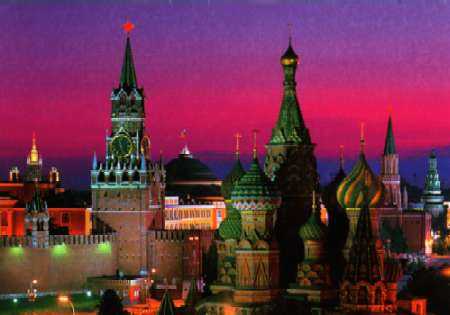
The Kremlin
Russia's
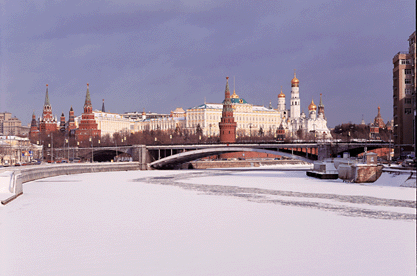
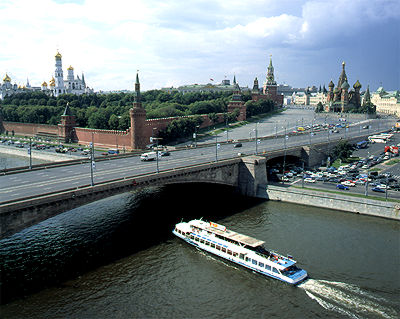
mythic refuge, the Kremlin is a self-contained city with a multitude
of palaces, armories, and churches.
The
Kremlin was founded in 1147 and became the very beginning of Moscow's
history. The
original towered walls were completed in 1157, ten years after
Moscow's founding, and by the late 14th century, Moscow had risen
enough in power and prestige to become the seat of the Russian
Orthodox Church. This change brought with it the construction of some
of the Kremlin's most impressive structures, including the Cathedral
of the Assumption, where Ivan the Terrible defiantly tore up the charter binding
Moscow to Mongol rule.
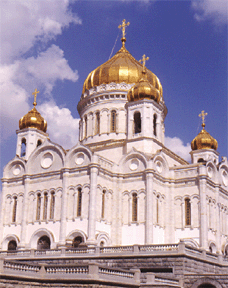
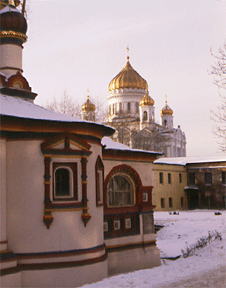
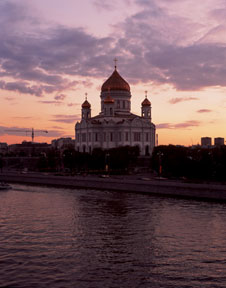
Christ the Savior Cathedral
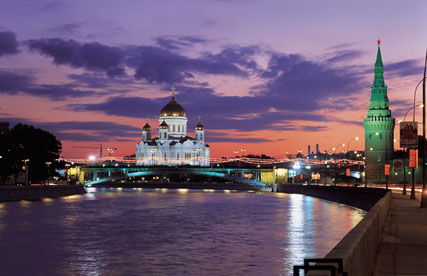
Christ
the Savior Cathedral which was demolished in 1931 with Stalin's regime
along with many other churches and monuments is now newly reconstructed.
Its reconstruction began over two years ago, and people have been working
24 hours a day to complete it. Rising 103 meters above the city and glittering
with gilded domes and crosses, the massive cathedral is a magnificent
symbol of the largest construction boom in Moscow’s recent history.
All over the city architectures are renovating historical buildings, erecting
new monuments and museums, and enriching the cityscape.
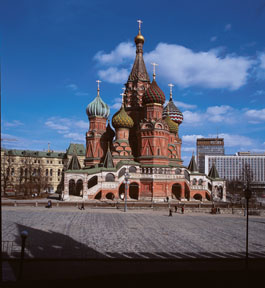
Red Square
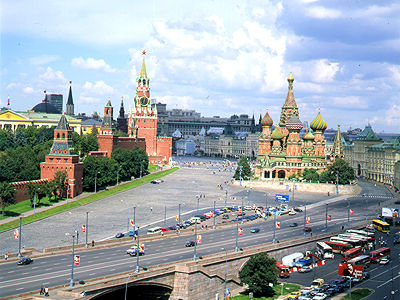
For most visitors, Red Square is associated with
the images of Soviet leaders standing
in the bitter cold atop Lenin's Mausoleum. Although the Square is no longer
witness to the imposing parades of May Day, it remains a profoundly
impressive space. Delimited by the stark severity of the mausoleum,
the expansive facade of the world-famous GUM department store, and the
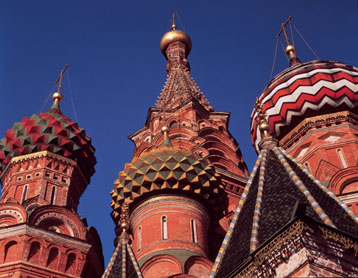
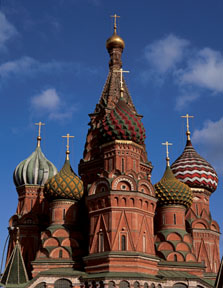
exuberant colors of St. Basil's Cathedral, Red Square is, and deserves
to be, the requisite first stop for any visitor to Moscow.
|
|