


|



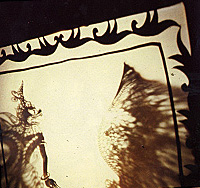
To the uninitiated, wayang kulit is a theatrical performance that involves a Tok Dalang and an array of two-dimensional puppets made out of buffolo hide or goatskin. The puppets are usually stylished exagerations of the human shape The Tok Dalangs task is a demanding one. He has to manipulate the puppets, sing, tap signals to his ochestra, and speak the parts of all characters. Wayang kulit was traditionally performed during religious festivals, public holidays, wedding, birth celebrations and circumsicions. Food offerings, beautifully arranged on banana leaves, were customarily made to the characters of wayang kulit before, during and after the performance. The stories of the wayang kulit traditionally revolve around Hindu epic stories of the Ramayana and the Mahabrata. Through the years, the stories have evolved into what is commonly known as Rama and Pendawa cycles. The names of the main characters vary slightly from country to country. It is not exactly clear when wayang kulit began, but versions of it may be found in China, Thailand, India, Indonesia and of course, in Malaysia, particularly in Kelantan; where it roots can be traced back 250 years. Today, however, the art form is becoming a rarity. It is on a decline due to to its functions which originally to entertain and as a tool for mass communication, had been taken over by modern media such as television, radio and the internet. A wayang kulit performance usually starts with the traditional tree of life. The puppet storyteller, a Tireasis-like figure was introduced, followed closely by the main figures of Rawana, Sita, Rama, the Laksamana and 3 clown-like figures who act as the court jesters. A modern-day Tok Dalang normally performs in Kelantanese dialect, incorporated with some words in standard Bahasa Melayu and a few of English words like roundabout, straight traffic jam so that more people could understand the performance. A living proof that wayang kulit also can be modernized alongst the way to the 21st century. Apart from that, it functions as a comic relieve in a performance. Tok Dalangs versatile voices also wrapped itself potently around his puppets - one minute he was menacing Rawana, then the demure Sita, then the levelheaded Rama. It was hard to believe that all the voices originated from one source and one man! The Tok Dalangs experience in the art is shown when he expertly breathed life into the characters, in terms of movement and voices: Rawana, the monster king, moved erratically and agressively; the lovers, Rama and Sita, ambled along elegantly; and the clown-like figures scratched their heads and bellies to create comic effect. Backed by a gamelan orchestra of 10 to 30 musicians, with arrays of beautifully crafted of shadow puppets, wayang kulit is surely a treasured heritage of the Kelantanese culture. |
||


|
|||