
hold the cube so that the piece's destination is at FR (white is on top). Then:

|
|
|
|
|
|
|
|
|
|
|
|
|
|
|
|
|
|
|
|
|
|
|
| Beginner Method, Step 3 | ||||||||||||||||||||||
| The third step of this method is to place the middle layer edges, that is, the edges that are neither in U or D. One algorithm is introduced in this section. An algorithm is any step-by-step procedure used to solve a problem, but in the Rubik's cube it just means a set of moves. There are algorithms associated with most steps in this solution (and others), and these algorithms must be memorized. However, this method only requires you to memorize six of them, which is not very many compared to other methods (I know about 150 of them, and some more complicated methods require 300 or more!) | ||||||||||||||||||||||
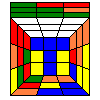
| First you find a piece in the bottom layer that belongs in the middle layer. Turn the bottom layer (D) until that piece has one sticker that matches up with its center (blue-orange edge in the sample picture), then hold the cube so that the piece's destination is at FR (white is on top). Then: |
||||||||||||||||||||||
|
||||||||||||||||||||||
| If the piece is at RD, do the mirror image of the algorithm on the left, or do D' (a) (a) D2 (a), replacing (a) with the algorithm. | ||||||||||||||||||||||
| If the piece is at FD (as it is in the sample pic), do D' R' D R D F D' F' | ||||||||||||||||||||||
| Then repeat all of the above (except for the introductory paragraph at the top!) until the top two layers are solved *or* all the unsolved pieces are switched and/or flipped, but still in the middle layer. If the latter occurs, put any edge you like in the spot of an unsolved edge (using the algorithm above), then repeat as necessary until the top two layers (first two layers, or F2L) are solved. | ||||||||||||||||||||||
| Click here to go to the next step! | ||||||||||||||||||||||
| Previous step | ||||||||||||||||||||||
| Home | ||||||||||||||||||||||
|
|
||||||||||||||||||||||