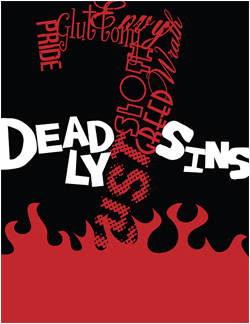
The seven deadly sins are a classification of vices that were used originally in the early Christian teachings to educate followers about morality and sins. The sins were later used by Dante in his epic poem The Divine Comedy. Each of the deadly sins has an opposite among the seven virtues: chastity, abstinence, temperance, diligence, patience, kindness, and humility. There is a great deal of symbolism referring to each of the sins. Below is a brief explanation of each sin and the symbols used to represent the sin.
Pride-Pride is excessive belief in one's own abilities. It has been called the sin from which all others arise. Pride is also known as vanity. pride is often represented with a chicken and is associated with the color violet.
Envy-Envy is the desire for others' traits, status, abilities, or situation. Envy is associated with the dog and the color green.
Wrath-Anger is manifested in the individual who spurns love and opts instead for fury. Wrath is often represented by a bear and the color red.
Lust-Lust is an inordinate craving for the pleasures of the body. Lust is often linked with the cow and the color blue.
Sloth-Sloth is the avoidance of physical or spiritual work. It is associated usually with the goat and a light blue color.
Greed-Greed is the desire for material wealth or gain, ignoring the realm of the spiritual. It is also called avarice or covetousness. Greed is represented by a frog and yellow.
Gluttony-Gluttony is an inordinate desire to consume more than that which one requires. This sin is represented by the pig and is associated with the color orange.