Introduction
Origins of the RAP
|
Salvation and the RAP
|
Conclusions
|
Appendix
|
Links
Some of the most misleading and inaccurate information contained in 'Behind Closed Doors' is in
the Chapter dealing with symbolism in the RAP degree. Mr Malcomson goes into considerable detail
to explain what he presents as the 'deceptive' meaning of the RAP symbols. He argues that these
symbols are 'inherited directly from Freemasonry' and 'subtly elevated today as honourable
symbols of Protestantism'. When one actually examines the true meaning of the symbols, as handed
down to generations of Arch Purple men, it is immediately apparent that Mr Malcomson's
interpretation is erroneous. He goes to great lengths to discuss the symbols,but his attempts to
prove that Masonic symbolism and RAP symbolism are one and the same are not borne out by the
truth.
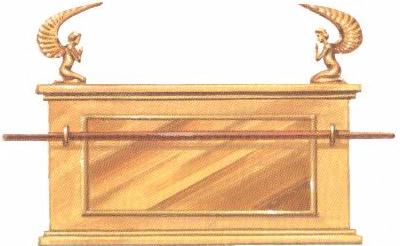
Malcomson asserts that: 'Amazingly the Royal Arch Purple blasphemously teach [sic]...that this
sacred symbol "the-Ark-of-God" really represents G-O-A-T spelt backwards'.
No one who has ever joined the RAP could possibly verify this statement as being accurate. It is
in fact a complete inversion of what RAP candidates are actually told as part of the lecture.
Malcomson goes on to say 'this sacrilegious perverting of holy things within the order further
shows the esoteric (or occult) nature of the Institution. The Royal Arch Purple, like the
foolish Philistines in 1 Samuel 5:2, have attempted to bring this sacred symbol of God's
presence (the Ark of God) into the (heathen) house of Dagon. However, after this holy
representation was placed within an alien structure, "Dagon was fallen down upon his face to the
earth before the ark of the Lord" (v3). This highlights the fact that when the presence and
power of Almighty God is placed in the midst of iniquity, the counterfeit cannot truly stand,
because, in reality, truth and error can never co-exist!'.
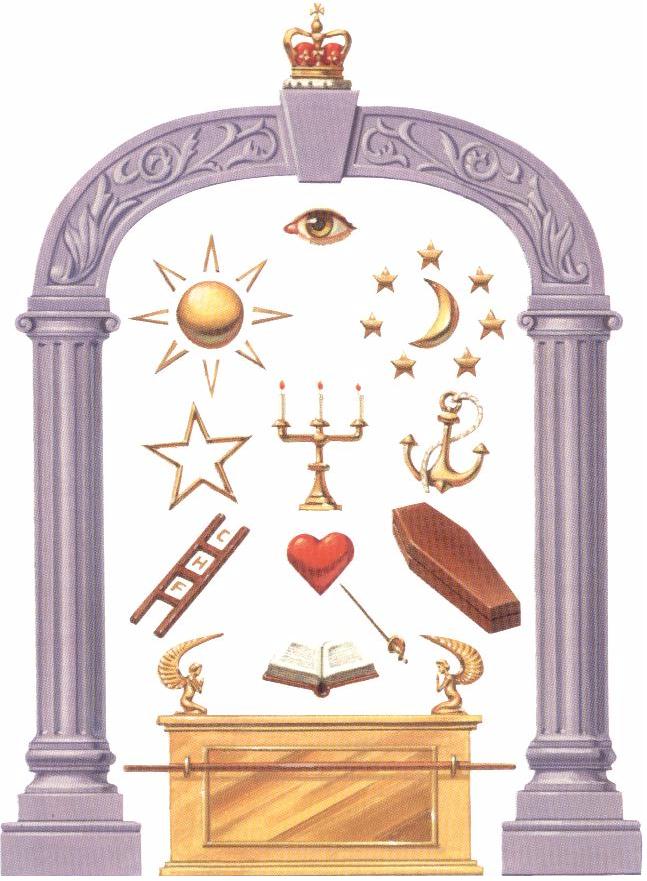
Although Mr Malcomson attributes much pagan significance to the use of the Ark of the Covenant as a symbol by the RAP, his analysis is exposed as inaccurate by a close examination of what the Ark is truly intended to symbolise. The 'History of the Royal Arch Purple Order' is quite explicit on this subject: 'The emblem of the Ark of the Covenant reminds us that it was the visible evidence of God's promise to be with and guide His people Israel safely through life. That promise is still as relevant to us today.' This point is borne out by scripture. In Exodus 25:21-22 we read that the Lord said to Moses: 'And thou shalt put the mercy seat above upon the ark; and in the ark thou shalt put the testimony which I shall give thee. And there I will meet with thee, and I will commune with thee from above the mercy seat, from between the two cherubims which are upon the ark of the testimony,of all things which I will give thee in commandment unto the children of Israel'.
As can clearly be seen from this evidence, the Ark of the Covenant is used as symbol by the RAP to remind us of the truth that the Lord is faithful to all those who truly believe in him; in Old Testament times the Ark served as tangible testimony of the Lord's presence in the midst of His people. There can be no pagan or occult significance attached to such a clearly defined biblical symbol, which speaks of God's love and abiding presence with those who have sincerely put their trust in Him.
The 'History of the Royal Arch Purple Order' goes further and deals with the symbol of Noah's Ark. It says, 'we also have the Ark represented by Noah's Ark...seen as the means by which God chose to save and regenerate life on earth. So the emblem of the Ark should be seen by Arch Purple men as symbolic of a better and purer life'.
God's Word in Genesis 6:5-7 tells us that 'God saw that the wickedness of man was great in the earth, and that every imagination of the thoughts of his heart was only evil continually. And it repented the Lord that he had made man on the earth, and it grieved him at his heart. And the Lord said I will destroy man whom I have created from the face of the earth; both man, and beast, and creeping thing, and the fowls of the air, for it repenteth me that I have made them'.
As we can see from the scriptures, the account of Noah's Ark speaks to us of the severe and solemn judgement of God upon those who forsake Him. Furthermore, it tells us that, like Noah, we must turn to the Lord - and to Him alone - for salvation. In Noah's case, his only means of escaping utter destruction was to obey God's command and build the Ark for refuge. In our case, our only hope is to turn in faith to the Lord Jesus Christ for salvation. It is abundantly clear that this is the intended meaning behind the use of both Noah's Ark and the Ark of the Covenant as emblems or symbols by the RAP.
Mr Malcomson's attempts to prove that these symbols are pagan or Masonic in their meaning are thus shown to be wildly inaccurate. As we will see, he attempts to apply the same criticism to all the other symbols of the Royal Arch Purple Institution.

Malcomson continues, 'The Royal Arch Purple employs a mystical eye in its imagery known throughout the occult world as the all-seeing eye. This symbol which is shared with most false religions, cults and occult bodies today has always been used as a symbol of deity. Occultist Frederick Goodman explains that, "The eye plays a most important part in occult symbolism and probably owes its origin in western magical designs to the Eye of Horus, which was one of the most frequently used of Egyptian magical symbols".'
Although Malcomson is quick to attribute pagan or occult significance to this symbol, he seems to have overlooked the fact that the Bible contains references to the eye of God, and it is important that we view the RAP's use of the symbol in that context.
In Job 28:10 we read, 'He cutteth out rivers among the rocks; and his eye seeth every precious thing'. In Psalm 32:8 the psalmist says of God: ' I will instruct thee and teach thee in the way which thou shalt go: I will guide thee with mine eye'. Similarly, in Psalm 33:18 it is written, 'Behold, the eye of the Lord is upon them that fear him, upon them that hope in his mercy'.
The use of the all-seeing eye as a symbol by the RAP is intended to convey nothing more or less than the omnipresence and omnipotence of Almighty God, and His watchfulness and care for His people. To infer any heathenish significance for this emblem is to stretch the bounds of credibility.
Malcomson goes on, 'The peculiar secret society teaching that surrounds this esoteric symbol, not surprisingly, disguises an occult meaning. Evangelical author of "Guardians of the Grail" J.R. Church states, "the symbol may represent a god, but it is not the God of the Bible. It is a human eye, indicating that man is god. It represents so-called mind power, the ability to manipulate one's world with thought"'.
This inference is clearly not derived from scripture. There are numerous references in God's word to the eyes, ears, lips, hands, etc. of the living God. 'The Shorter Catechism Explained from Scripture' by Thomas Vincent, published in 1674, puts this very succinctly: 'Question IV - What is God? Answer - God is a spirit, infinite, eternal, and unchangeable, in his being, wisdom. Power, holiness, justice, goodness and truth...How is God said then, in Scripture to have eyes, and ears, and mouth, and hands, and other parts? "The eyes of the Lord are upon the righteous, and his ears are open unto their cry" (Psalm 24:15); "The mouth of the Lord hath spoken it" (Isaiah 1:20); "It is a fearful thing to fall into the hands of the living God" (Hebrews 10:31). These and like bodily parts are not in God properly, as they be in men, but figuratively; (in expressing himself hereby) to our weak capacities, that we might the more easily conceive of him by such resemblances'. In other words God has, through scripture, revealed certain truths about himself by using figurative and comparative references to the human body.
Clearly, Malcomson's assertion that the eye symbol somehow represents that 'man is god' flies in the face of the scriptural evidence before us. As has already been stated, the figurative representation of the all-seeing eye as a symbol in the RAP is intended solely as a reminder of God's presence and power. It represents no other God or being than the Lord God of the Bible. Although other groups of individuals may at other times and in other places have intended the same symbol to mean something else, this does not necessarily imply that its use by the RAP was ever intended to mean the same.
In the 'History of the Royal Arch Purple Order', the authors make reference to 'the all seeing and all knowing yet merciful God'. We are reminded that although the Lord sees and knows all our sins and weaknesses, He is still merciful to all those who sincerely repent of their sin and come to Him through faith in the Lord Jesus Christ. As the authors of the 'History' put it, 'repentance can lead to redemption and the redirection of our lives to that true light revealed in our Lord Jesus Christ'.
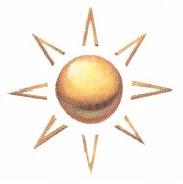
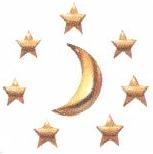
According to Malcomson, ' the sun, moon and stars, known in scripture as the host of heaven, are found to be to the fore of Royal Arch Purple imagery. These heathenish emblems, which have always been associated with Baal worship, are also found prominently displayed within most new age shops'.
It would appear that he has overlooked the words of Psalm 136 v 7-9: 'To him that made great lights: for his mercy endureth forever; The sun to rule by day: for his mercy endureth forever; The moon and stars to rule by night: for his mercy endureth forever'. In the light of this passage of scripture, it seems strange to attach pagan significance to symbols derived from God's word, which are invoked by the psalmist as examples of God's power.
Malcomson continues, 'paganism has always showed its trinities in art by the sun (with a face) representing the male sun god, the moon (with a face) representing the moon goddess (or queen of heaven) and the all-seeing eye representing their offspring'. It is interesting that Mr Malcomson fails to mention or explain the fact that these very symbols were to be found on the cover of the Geneva Bible, used by the Protestant reformers.
It is also significant that, in his eagerness to attribute pagan meanings to these symbols, Malcomson apparently ignores the first chapter of Genesis, where we read: 'And God made two great lights, the greater light to rule the day and the lesser light to rule the night: he made the stars also. And God set them in the firmament of the heaven to give light upon the earth. And to rule over the day and over the night, and to divide the light from the darkness: and God saw that it was good'. This surely begs the question - if God saw that it was good, how is it that Mr Malcomson sees these things as being 'pagan'?
The emblems of the Sun, Moon and Stars are used in the RAP with an entirely scriptural meaning - nothing else. Indeed, a perusal of the scriptures read at the conferring of the degree will show that Genesis Ch1 v14-18 is read by way of explanation to the candidate.
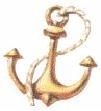
This is perhaps the most obvious and readily explained of the RAP symbols. It is a direct representation of the words of Hebrews 6:19: ' which hope we have as an anchor of the soul, both sure and stedfast, and which entereth into that within the veil'. It symbolises the Christian's hope of eternal life through faith in the Lord Jesus Christ. Sadly, Mr Malcomson chooses to ignore this symbol completely - perhaps he was unable to find any 'occult' meaning?

Malcomson briefly comments on the symbol of the coffin as having 'a hidden occult significance', yet he fails to provide any evidence for this claim. However, to examine this symbol's true meaning, we need only turn once again to the 'History of the Royal Arch Purple Order'. In reference to the symbol of the coffin, we read: 'This is a sombre reminder of the mortality of mankind...no man can foresee the time or place when all his work is ended...it brings us to the basic theme which we propagate and defend, that is the belief that this life is but a forerunner of a resurrection to eternal life and the faith we hold gives a lively hope as to where we will spend that eternity'. It can be seen, therefore, that the emblem of a coffin is used by the RAP solely as a reminder of the transience of our earthly existence, and the fact that we will all ultimately have to give an account of ourselves before God. This draws our attention to the solemn warning of Hebrews Ch9 v27: 'It is appointed unto men once to die, but after this the judgment'.
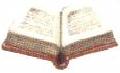
Again, Malcomson ignores the use of this symbol as an emblem by the RAP. It is in many respects the most important of our emblems, as it represents the very basis of our Protestant faith. It simply represents the infallible word of the living God, providentially preserved to our own day, and open for all to read and understand.
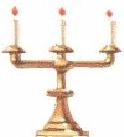
One of the less well known of the RAP emblems is the three branched candlestick, which represents the Trinity of Father Son and Holy Ghost. Malcomson says, �the candidate is then faced with a mystical three-branched candlestick flickering before his eyes. He is told that it represents the three great lights�.
Of course, Malcomson fails to mention that in the degree, prominence is given to the spiritual meaning of the three lights (which, incidentally, are not always necessarily candles), that of the central Biblical doctrine of the Trinity. The secondary or �carnal� meaning of the symbol is of course of lesser importance � it is simply a reminder of the great lights created by the Lord (see Genesis Ch1, Psalm 136), as well as the centrality of the Holy Bible as the volume of light and understanding. However, Malcomson wrongly implies that the Worshipful Master is somehow mystically elevated to �an unholy alliance with the sun, moon and stars� in mockery of the Trinity. This is clearly untrue. He ignores the fact that in the relevant part of the degree, the Worshipful master stands holding a Bible � this is the real source of �light�, not the WM himself as Malcomson suggests. As for the assertion that this explanation somehow usurps or undermines the fundamental doctrine of the Trinity, this is based on a total misinterpretation of the address and lecture. It is quite clearly and simply explained to the candidate that the two meanings are entirely separate � the spiritual meaning is given first, due to its importance, then the �carnal� meaning is given. The name �carnal� is a reference to the fact that it incorporates the heavenly bodies, a physical part of God�s creation and therefore distinct and separate from the previous spiritual message. There is no overlapping between the two: it cannot be logically inferred that there is somehow an attempt to create an alternative trinity, or to allude to spiritual light being imparted to the candidate by the Worshipful Master. No amount of twisting or dissembling can fuse two separate illustrations together, when the facts are so clearly different.
Malcomson also attacks the use of �burning candles� at this juncture. As has already been stated, the lights are not necessarily candles, but even if they were, the criticism is null and void. What he refers to as �the superstitious use of burning candles� is no more than a simple straightforward illustration of the information being imparted to the candidate. For the attack to be credible, it would be necessary for the lights to be used as objects of worship in their own right or as parts of a form of worship � this is clearly not the case, as they form no part of any devotional exercise within the ceremony. Thus it can be seen that this point was ill conceived and factually inaccurate.

Malcomson says that 'the five-pointed star, known as the pentagram, is probably the most blatant occult symbol in use today...Wiccan witches use its five points to mystically represent the elements of nature - earth, fire, water, air and spirit'. However, the problem with this theory is that the use of the pentagram as a symbol of witchcraft did not emerge until the mid-nineteenth century, when it was introduced to witchcraft by a leading occultist called Anton Levi. This, of course, was decades after the symbolism of the Royal Arch Purple had been formulated. We must look once again to the 'History of the Royal Arch Purple' for the true meaning of this symbol to Arch Purple men: 'As a Christian symbol the pentalpha (i.e. the five-pointed star) with the one point uppermost is supposed to be a reminder of the five wounds of Christ and at one time symbolised a full knowledge of the Christian mysteries - the doctrine of the Trinity plus the two natures of Christ...it is symbolic of the main points of fellowship which should and do exist between Arch Purple men and their fellowmen. Points which stress that all men are equally dependent upon each other. Whatever help we may render to another today, may be needed by ourselves on another occasion'.
Yet again, in his eagerness to attach occult significance where none exists, Malcomson overlooks the Christian meaning behind this symbol. He amazingly asserts that 'the five - pointed star is found on most Arch Purple memorabilia and represents the blasphemous resurrection rite of the five points of fellowship, each point mystically symbolising a part of the resurrection act'. Not surprisingly, this is wholly inaccurate. As we have explained elsewhere, the five points of fellowship do not form part of any such 'blasphemous resurrection rite'. The part of the travel where the candidate receives the five points of fellowship has nothing to do with resurrection or new birth. The five points of fellowship are in fact a method of explaining and emphasising the need for brotherly love, co-operation and unity between Arch Purplemen - a far cry from Mr Malcomson's imagined 'resurrection act'. This fact is exposed when one reads the material he reproduces from the RAP degree on his website - it is abundantly clear that the five points of fellowship have no occult meaning and are not intended to convey any false hope of resurrection on the candidate.
Origins of the RAP
|
Salvation and the RAP
|
Conclusions
|
Appendix
|
Links
Introduction