Pesticide Abuse in Tasmania

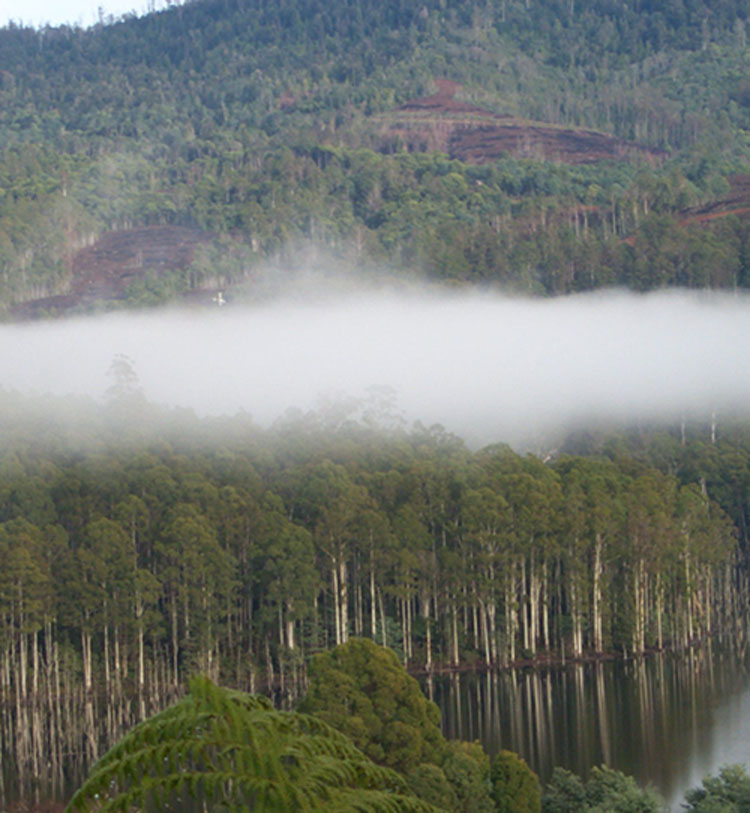
Residual and very toxic chemicals are widely used in Tasmania.
These chemicals are being applied in a manner GUARANTEED to drift into drinking water catchments.
The methods employed to prevent contamination are known to be woefully inadequate. Methods of analysis and water testing procedures employed by Government and industry are often non-existentor corrupted. Many reports are not released to the public and Government reports are often designed to mislead.Requests made by the public for risk or hazard assessment data are simply not responded to.
Most worrying of all is the fact that the dramatic increase in the use of these chemicals has resulted in widespread contamination in Tasmania and Australia. In some places this has been occuring for decades.
Click here to download a document exploring the major deficiencies in the current risk assessment and practice of aerial spraying in Australia. This document should explain why there is no current method to define an appropriate buffer for protection from chemical drift from aerial spraying.
A call to the Tasmanian Spray Complaints Unit on 31st March 2006 revealed that the Department of Primary Industries, Water and Environment did not have any criteria by which to define an 'adverse event' with respect to spray drift exposure by neighbours. Download the record of interview here.
It is alarming - particularly in this context - to observe the dramatic rise in overall cancer rates and other diseases in Tasmania. Yet when residents suffer chronic and terminal illness after repeated and prolonged exposure to these dangerous chemicals the Tasmanian and Federal Government places the onus of proof on the families and children who suffer the pesticides not only in their water but also in their bodies. Chemical users appear to be relying on the limited science of toxicology to justify dangerous practices. The precautionary principle has not been implemented.
Ironically there are no long-term economic justifications for large scale and intensive use of pesticides. Such practices merely herald in the consequences of corporate absentee land ownership and the drive for such 'enterprises' to reduce the cost of labour and maximise profits in the short term. We are now experiencing the effects of long-term exposure.
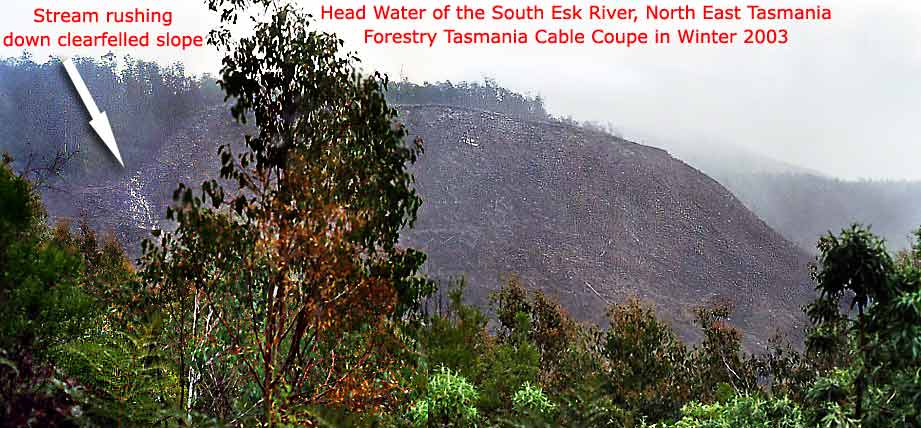
To see the Upper Esk water catchment in the Winter of 2003 click here - Esk Winter 2003
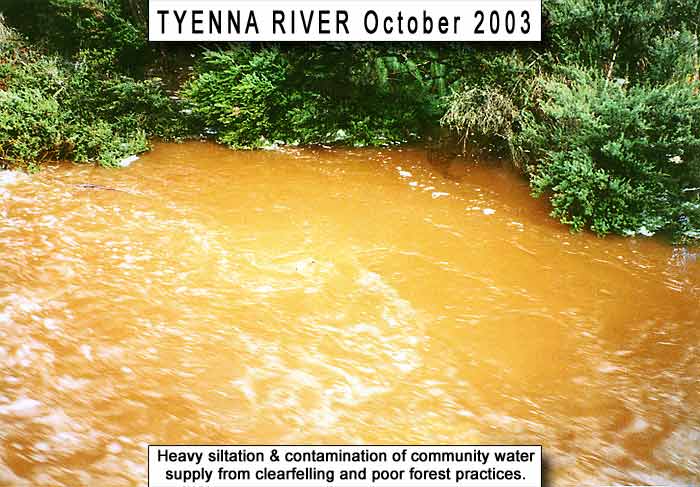
Tyenna River in October 2003. Click here - Tyenna River