|
dentistry, prosthetic dentistry, fixed prosthodontics, dental occlusion, oral disease, teeth pathology, dentistry student, dental restoration, crown, bridge, denture, tooth, dental education, dinte, dinti, dentara, dentare, esthtetic, estetic, igiena, implant, medicina, profilaxia, profilaxie, proteza, proteze, stomatolog, stomatologia, stomatologie, university, dentist, bucharest, bucuresti, romania, dentistry, prosthetic dentistry, fixed prosthodontics, dental occlusion, oral disease, teeth pathology, dentistry student, dental restoration, crown, bridge, denture, tooth, dental education, dinte, dinti, dentara, dentare, esthtetic, estetic, igiena, implant, medicina, profilaxia, profilaxie, proteza, proteze, stomatolog, stomatologia, stomatologie, university, dentist, bucharest, bucuresti, romania |
|
|
Few
people like to think about gum disease. But each of us has a chance of
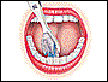
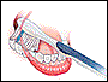
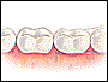
experiencing it at some time in our lives.* The best protection against gum disease is good oral hygiene. When gums are kept healthy, they not only hold teeth in place, but also create a seal covering the root that blocks bacteria from penetrating sensitive tissue below. Removing plaque from teeth prevents the formation of bacterial toxins which attack gum tissue, causing irritation and disease. When gum disease does occur, treatment is crucial - to heal gingivitis, or to control and stop the progress of periodontitis. Periodontitis may be present without noticeable symptoms, and can occur with or without gingivitis preceding it. Educate yourself about gum disease so that you can better understand your dental professional's oral care recommendations for your specific condition. *Nearly 75% of people over age 35 now have gum disease or have experienced it previously. Gingivitis (Overview) Gingivitis is a reversible form of gum disease that occurs as a result of infrequent or incorrect brushing and flossing. Its symptoms, which include gum tenderness, bleeding when brushing or flossing, inflammation and pain, are the result of irritation by bacterial toxins. Gingivitis is best prevented by proper brushing and flossing. Together, they keep plaque from building up on tooth surfaces, between teeth and under the gumline. Gingivitis (Healing the Condition) In most cases, gingivitis is quickly healed by following an effective plaque removal routine. This includes proper brushing with a soft-bristle toothbrush and plaque-fighting toothpaste, flossing and the use of an anti-plaque rinse. When you visit the dentist and hygienist, have your brushing and flossing techniques checked. Also, have your dentist or hygienist examine your gums to verify that gingivitis is the condition that you have. Your dental professional may recommend that you use specific products to help prevent plaque build-up. These include the Oral-B® ADVANTAGE® Plaque Remover, Oral-B Tooth and Gum Care Paste, Oral-B Dental Floss or Tape (with or without Fluoride), and Oral-B Anti-Plaque Rinse. Periodontitis (Overview) Periodontitis occurs when gums are penetrated by bacterial toxins which attack and inflame the gums, ligaments and bone structure that support teeth. The effects of this inflammation may not be reversible, but the disease's progress can be controlled and halted. Because periodontitis may initially occur without visible symptoms, regular dental examinations are essential to early diagnosis. Deepening of the gingival pockets, one of the first signs of the disease, is easily detected during a simple screening procedure. The symptoms of early periodontitis may include: tooth sensitivity, a feeling of intense pressure between the teeth or bleeding when flossing or brushing. Advanced periodontitis may be associated with gum recession, root decay, pus between teeth and gums, and loosening or loss of teeth. Periodontitis is prevented by inhibiting penetration of bacteria below the gumline. This is accomplished with proper daily brushing and flossing, and use of an antibacterial rinse. Periodontitis (Controlling the Condition) For diagnostic purposes and to monitor the effectiveness of treatment, your dental professional uses a periodontal probe to measure the depth of gum pockets and tooth detachment. Depending on your individual condition, important specific recommendations are made for home care. These can include daily use of special plaque removal devices such as the Oral-B Interdental Brush, the Braun Oral-B Plaque Remover, the Braun Oral-B Oral Irrigator or the Oral-B PERIOFLEX® Subgingival Irrigator. Use of Oral-B Tooth and Gum Care Paste, Oral-B SUPER FLOSS, and Oral-B Anti-Plaque Rinse or Oral-B Anti-Cavity Rinse is also recommended. Periodontitis generally requires an intensive in-office treatment program for plaque removal from teeth and deep gum pockets, and a frequent recall program for observation of progress. As these are completed, a maintenance program is established to prevent recurrence of disease activity. With more advanced periodontitis, the services of a periodontist may be required. Special Techniques for Personal Care (Plaque Removal and Oral Care) In addition to use of a soft-bristle toothbrush (such as the Oral-B ADVANTAGE Plaque Remover) to remove plaque from tooth surfaces, there are several techniques for manual removal of interproximal plaque. They include use of dental floss or tape, ULTRA FLOSS, SUPER FLOSS, or an interdental woodstick. To learn more about these techniques, see Oral-B's Cleaning Between Teeth brochure. If you regularly require intensive in-office plaque removal, or supragingival or subgingival irrigation, your dental professional may recommend using one of the following power-assisted oral care appliances at home: Braun Oral-B Plaque Remover. Soft, end-rounded bristles set in a small, oscillating, cup-shaped brushhead make this plaque remover effective on all tooth surfaces, between teeth and below the gumline. It's even safe for use with restorations. Braun Oral-B Oral Irrigator. This oral irrigator has mono- and multi-jet settings that provide for complete cleaning of teeth and gentle massage of gums. It can be used with water or a therapeutic rinse, and has a power boost button for removal of stubborn food particles. Oral-B PERIOFLEX Subgingival Irrigator. With a unique, gentle, rounded nylon tip and tri-directional fluid delivery, this subgingival irrigator ensures thorough cleansing of gum pockets as well as even distribution of solutions. Proper brushing: Clean each tooth individually. First, place your brush at a 45 degree angle to the junction between the tooth and the gum, and apply gentle pressure as you move in a circular motion. Do this for about 10 seconds. Use the same brushing action on all inner and outer tooth surfaces, tilting the brush as needed for reaching the insides of smaller front teeth. ![]() ![]()
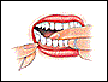
Proper flossing: Take about 18 inches of floss or tape, and wrap it around your middle fingers until you have a two-inch length between them. Guide the floss gently and carefully between upper and lower teeth, using a back-and-forth motion. Avoid "snapping" the floss against delicate gum tissue. Curve the floss around each tooth in a "C" shape, and gently guide it up and under the gumline.
Move it up and down the side of each tooth to remove plaque. Use a new
section of floss for each tooth. With gingivitis, flossing may initially
cause bleeding. If bleeding persists, immediately consult your dentist or
hygienist. Gingivitis and Periodontitis (Contributing Factors)
Gingivitis and Periodontitis (Keys to Prevention)
Glossary
|
|
dentistry, prosthetic dentistry, fixed prosthodontics, dental occlusion, oral disease, teeth pathology, dentistry student, dental restoration, crown, bridge, denture, tooth, dental education, dinte, dinti, dentara, dentare, esthtetic, estetic, igiena, implant, medicina, profilaxia, profilaxie, proteza, proteze, stomatolog, stomatologia, stomatologie, university, dentist, bucharest, bucuresti, romania, dentistry, prosthetic dentistry, fixed prosthodontics, dental occlusion, oral disease, teeth pathology, dentistry student, dental restoration, crown, bridge, denture, tooth, dental education, dinte, dinti, dentara, dentare, esthtetic, estetic, igiena, implant, medicina, profilaxia, profilaxie, proteza, proteze, stomatolog, stomatologia, stomatologie, university, dentist, bucharest, bucuresti, romania |