Let's have a bumper crop of those wonderful Beans (Phaseolus Coccineuss)
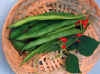
This is where I require a photo of those long lines of bamboo canes with windswept and tattered bean plants. Most allotments carry a number of these but in November it would be unfair to photograph one.
Environment
We have to try to imitate the growing conditions of the plant in it's native environment. Growing wild they have a warm, humid and calm environment. Moisture is essential, cover the whole growing area with a mulch once the beans are established.
History
In the late 1970's whilst working as an agricultural engineer I visited a
farm located adjacent to the East Midland Airport.
This by it's nature is a flat windswept area.
During the visit I noticed a large and healthy crop of runner beans. On
enquiring I was told these
were grown for the local greengrocery outlets.
The beans were growing up rough cut branches/sticks, arranged ia a wigwam
formation, FIVE, yes five plants per stick.
The reason, I was told, was to have to part the leaves and go searching for
the beans.
They are trapped inside this jungle of leaves, hanging, cut off from the
wind and with very
little light. The result is pale green and tender crop.
The rough surface of the sticks help the plants to gain a secure hold.
Cultivation
The farmer ploughs in well rotted manure at the end of each season, we cannot
do this but we can emulate this feat with a spade.
The seeds are sown directly in the ground during the second week of May with
a liberal supply of slug pellets.
The other thing to note is to save your own seed, these being more reliable
than bought-in supplies,
the farmer proved this after having a shortage due to the drought of 1976,
the bought-in seeds having poor germination.
I grow a few plants seperately, use them as a flower feature and keep
the best seed.
Info
There are mountains of info in books and on the internet devoted to this
vegetable but I hope this article will eradicate at least
one solitary row of sad, cold and windswept beans.
This king of
vegetables should be given more attention and it will grace our dinner plates,
unlike the tough stringy
offerings that are so common.
Blanch and freeze a batch for Christmas lunch.