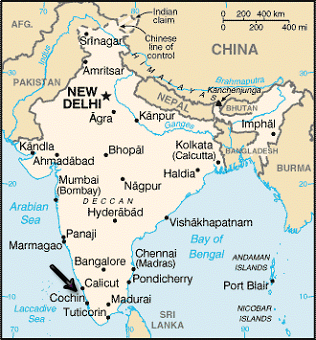
Destination Info During the largest part of our stay in India we are in the province of Kerala, which is located in the south. |
 |
 |
| Mumbai
Mumbai is the glamour of Bollywood cinema, cricket on the maidans on weekends, bhelpuri on the beach at Chowpatty and red double-decker buses. It is also the infamous cages of the red-light district, Asia's largest slums, communalist politics and powerful mafia dons. This tug of war for the city's soul is played out against a Victorian townscape more reminiscent of a prosperous 19th century English industrial city than anything you'd expect to find on the edge of the Arabian Sea. Kochi (Cochin) The port city of Kochi is located on a cluster of islands and narrow peninsulas. The older parts of the city are an unlikely blend of medieval Portugal, Holland and an English country village grafted onto the tropical Malabar Coast. Down near the waterfront you can see St Francis Church, India's oldest; a 450-year-old Portuguese palace; Chinese fishing nets strung out past Fort Cochin; and a synagogue dating back to the mid-16th century. Ferries scuttle back and forth between the various parts of Kochi, and dolphins can often be seen in the harbour. Most of the historical sights are in Fort Cochin or Mattancherry. Budget accommodation can be found in mainland Ernakulam. Indian Airlines has daily flights to Bangalore, Mumbai, Delhi, Goa, and Chennai. If flying is outside your budget, there's a whole bevy of buses that leave Kochi at regular intervals and fan out in every direction except seaward. You can easily get to any of the outlying regions either by state-owned or privately owned bus, but there are no advance reservations. Turn up, join the scrum, and hope for the best, which in this case would be a seat. Failing this, try the railway station which has trains zipping up the coast to major destinations on a daily basis Kerala Backwaters The complex network of lagoons, lakes, rivers and canals fringing the coast of Kerala forms the basis of a distinct regional lifestyle, and travelling by boat along these backwaters is one of the highlights of a visit to the state. The boats cross shallow, palm-fringed lakes studded with Chinese fishing nets, and along narrow, shady canals where coir (coconut fibre), copra and cashews are loaded onto boats. Stops are made at small settlements where people live on carefully cultivated narrow spits of land only a few metres wide, and there's the chance to see traditional boats with huge sails, and prows carved into the shape of dragons. The most popular backwater trip is the eight-hour voyage between Kollam and Alappuzha, but most of your fellow passengers on this route will be Western travellers. If you want a local experience, or you simply feel like a shorter trip, there are local boats from Alappuzha to Kottayam and Changanassery. (Source: www.lonelyplanet.com) KUMILY As such an insignificant little town, Kumily's importance is due to its proximity to the Boat Landing of the Periyar Tiger Reserve or Thekkady, and to its being a border town, with Tamil Nadu just a call away. Of late, major hotel groups are zeroing in on Kumily to capitalize on the tourist boom. Of the tourists of various hues, those obsessed with the diversity of flora and fauna of the Periyar Reserve is a growing and dedicated group. There are the spice shops- every third shop is one- which is likely to confer on the town the sobriquet, 'Spice Town'. Apart from the handful of spices grown in Idukki district, the traders also have in their stocks an assortment from all parts of the nation. Kumily is the major gateway to Tamil Nadu for Idukki, Kottayam and Alleppy districts. The Tamil Cardamom plantation in Idukki and the large population of Tamilian laborers makes far busy traffic indeed between Kumily and Cumbum in Tamil Nadu (Source; www.idukki.com). |