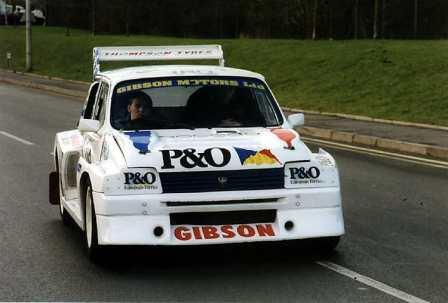
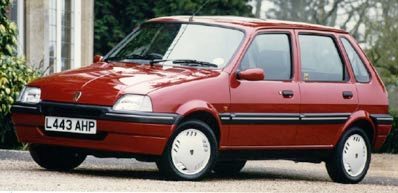
The Rover Metro was a hatchback automobile of "supermini" size, originally launched in 1980 as the Austin Mini Metro ('miniMETRO' to give the official badging), intended to replace the Mini. It was developed at Leyland Cars and the car wore many names: Austin Metro, MG Metro, Rover Metro and Rover 100 series for its passenger cars. There was also a Morris van version. The range was cancelled in 1998, effectively replaced by the Rover 200.
Austin/MG Metro
In the autumn of 1980, British Leyland introduced one of the most common and instantly recognisable cars in Britain since the Mini 21 years earlier. The Austin Metro was intended as a replacement for the Mini, but used a larger design which was badged as being more modern and practical. Yet some of the Mini's underpinnings were carried over into the Metro, namely the 998 cc and 1275 cc A-Series engines and much of the front-wheel drive train and four-speed manual gearbox. The Metro used the Hydragas suspension system found on the Allegro. The hatchback body shell was one of the most spacious of its time and this was a significant factor in its popularity.
A mild facelift during 1985 saw some minor styling modifications to the Metro's front end, along with a new dashboard design and the long-awaited 5-door version but little else was changed. The lack of a 5-speed transmission would become a major handicap as time went on - the BMC sump-mounted gearbox was never developed to accommodate an extra gear ratio, which was a severe handicap against the opposition. The Hydragas suspension also gave the car a harsh, bouncy ride despite pleas from the system's inventor Dr. Alex Moulton that it should be interconnected front-to-rear as opposed to side-to-side as was found on the production version
Rover Metro
At the end of 1989, the Austin marque was shelved and the models were re-badged as Rovers, though a Rover-like badge had in fact been emerging on Metros since 1987. The Rover Metro came into being in 1989, heavily revised and fitted with a new range of engines. The aging 998 cc and 1275 cc A-Series engines, which had been in use since the late 1950s, gave way to the K-Series 8 valve engines and a 16 valve engine in the GTI and early GTa's. In 1993 a 1.4 diesel was launched. The Hydragas suspension was finally modified in the way that Alex Moulton so desperately wanted to bring the car back up to standard in terms of handling and ride quality.
Now badged as a Rover, the Metro's build quality and reliability were much improved and it was brought nearer to the top of the supermini class. By the early 1990s it was competing effectively with stiff competition such as the Renault Clio, Peugeot 106 and Ford Fiesta.
Rover 100
The final Rover 100.In the autumn of 1994 Rover scrapped the Metro nameplate but the car lived on under a new name, Rover 100, which had already been adopted outside the UK. The mechanics of the car remained similar, with 1.1 and 1.4 petrol engines, but there was now the option of a 1.5 diesel. The interior was revised to give a more upmarket appearance, but it was mocked by many as being short on space and old fashioned in comparison to its most modern rivals. |