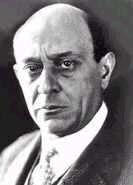
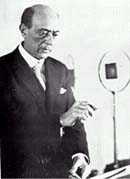
|
"I believe what I do and do only what I believe; and woe to anybody
who lays hands on my faith. Such a man I regard as an enemy, and no quarter
given!" - Arnold Schoenberg
Musical Analysis:
Work completed in September 1947
First performed by the Albuquerque New Mexico Civic Symphony
Orchestra under Kurt Frederick on November 4, 1948
Approximately 6 minutes long
Piece is a cantata
Written for a narrator, men's chorus, and an orchestra
Piece was inspired by reports of survivors of the Nazi
pogroms in the Warsaw ghetto
Shortly after the end of WWII, while living in the United
States, Schoenberg met some of these survivors who related their personal
experiences to him
He was immediately inspired to write the text to this
piece
He used some of the exact wording that the visitors had
said to him when the survivors
This piece was composed during Schoenberg's return to
his Jewish roots and to the Jewish musical tradition
Piece is based on a 12-tone system-emphasizes jagged
melody lines and dissonances
12-tone system: Created by Schoenberg and Hauer in the
early 1920's--According to Schoenberg, the 12 notes of the equal-tempered
scale are arranged in a particular order, forming a series or row that
serves as the basis of the composition
Majority of the piece is written in English
Basic form of piece comes out at the end of the piece
during the Jewish hymn "Shema Yisroel"
Piece begins with the residents of Warsaw's Jewish ghetto
being brutally rounded up by the Nazi soldiers to be counted and transported
to the gas chambers
The sergeant thinks that things are moving too slowly,
so he urges them to hurry up, and he beats them until they fall
Finally, as the victims are being taken away, they suddenly
begin singing the Jewish hymn "Shema Yisroel," which means "Hear,
O Israel"-this is the Jewish command to love God, and a prayer for
comfort and hope
The percussion instruments emphasize the barking commands
by the Nazis and the killing of the Warsaw ghetto Jews
The chorus chants the dramatic climax "Shema Yisroel"
Some themes in this piece are: the connection between
Hebrew and German languages, the victim and the oppressor, and the need
for comfort and the willingness to give it
Text from "A
Survivor From Warsaw"
|