
May 30, 2004
Pictures from May 30, 2004
Introduction
This section shows photographs posted on May 30, 2004. They're from my Camino to Santiago de Compostela.
The Camino is an ancient pilgrimage to Santiago de Compostela in northwest Spain. It starts from many cities in Europe, but the Camino Frances starts in Roncesvalles near the Pyrenees by France. From there, the trek is almost 800 km. I started in Leon, and did about 300 km.
The cathedral has the remains of St. James, who with John was one of the first two apostles. During Holy Years, when St. James Day (July 25) falls on a Sunday, the East Door is open so pilgrims can view the remains. By papal decree, Catholics get absolution if they complete the Camino during a Holy Year, get communion that day, and do confession within a couple weeks. I think that's how it works anyway. These days most do the Camino for cultural reasons. This year about 300,000 will complete the trip.
I first read about the Camino a couple years ago in Chatelaine magazine. I had just returned from France, and really wanted to get back to Europe. I'm a backpacker, a traveller, and am into quests, so a road with an end appealed to me. My middle name is James, which means I was named after this saint. Perfect!
I took about 150 pictures during my three weeks there, but don't worry, I have culled them for this page.
Instructions
To view a large version of the picture, click the thumbnail. Then use your browser's Back button to return to this page.
|
|
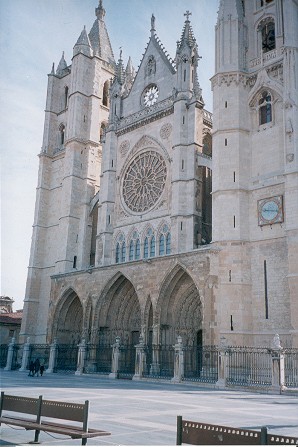
I left Ottawa on May 1. It was the warmest day yet, and it was hard to miss the arrival of spring. I flew through Toronto, Frankfurt, and Madrid, and arrived in Leon by train on the evening of May 2. I had no problems. I got my train ticket from the RENFE office at the airport, and took the metro to the station. RENFE has an internet booking system, but it doesn't list all the trains; you're better off to buy a ticket directly. Here is the cathedral in Leon. It's famous for its stained glass windows, but they don't let you take pictures inside.
|
|
|
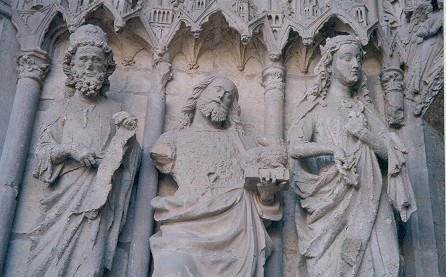
The doorways were very ornate. I like the expression on the left statue's face. He looks judgemental in a kindly sort of way, like he's saying, "We both know you're a sinner, and it's not good, but it is OK." The weather was pretty cool when I first got to Spain, and stayed that way for the first half of my trip. I couldn't believe it. I assumed Spain would be warmer than Canada...!
|
|
|
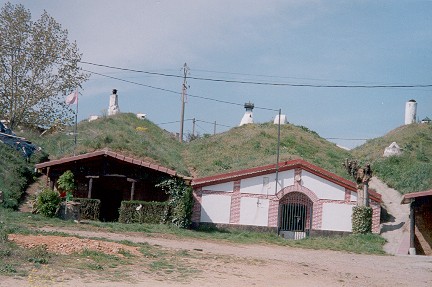
I started walking on May 3 to Villar de Mazarife. I saw alot of these hobbit holes! It made me think there's a lot of Camino in "Lord of the Rings". Pilgrims going to Santiago, and then on to Fisterra, are like the elves heading west to the Gray Havens on the ocean's edge. From there the elves leave the trials of Middle Earth for immortal bliss; symbolic of the new lives pilgrims attain upon completing the Camino.
|
|
|
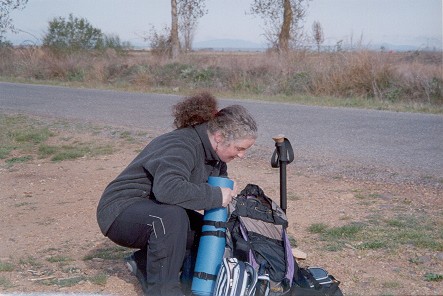
That day I met Monika from Germany doing the Jakobsweg...the Camino has a different name in each language. In English it's the Way of St. James, but we use the Spanish word instead. We travelled together for a couple days. But as she says, all must do their own Camino.
|
|
|
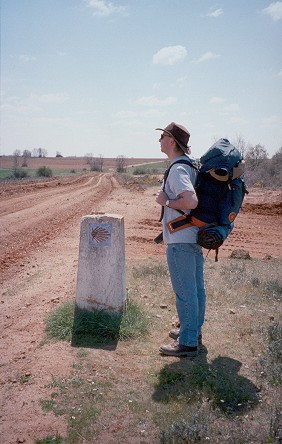
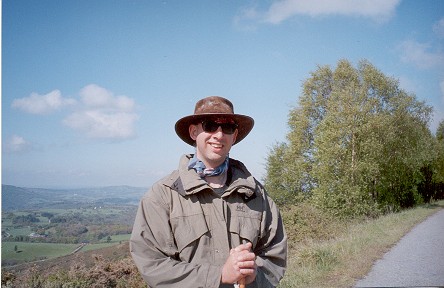
Me beside a Camino marker. These are along the road the whole way through. The towns have yellow arrows spray painted on the walls and streets to show you the way. You don't need a map, but a book is good because it points out sites of interest and the locations of the hostels (known as albergues). If you keep your eyes open, you won't get lost.
|
|
|
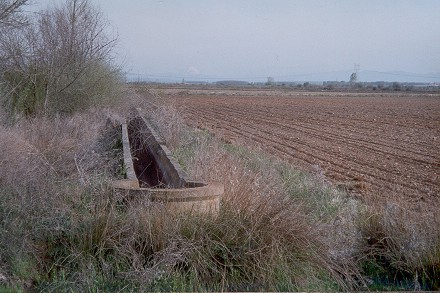
Spain is very agricultural, at least where I visited. It was like walking through a big farm interrupted by mountains. I think my uncles would agree that they're very good farmers. Spain has extensive irrigation canals; makes me wonder why they don't get busy making them in the Prairies.
|
|
|
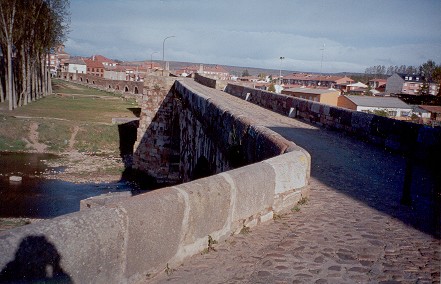
On May 4 I arrived in Hospital de Orbigo. This bridge is huge. Back in 1434, a knight named Don Suero de Quinones got dumped, so he jousted here with 300 people. His honour restored, he completed the Camino in order to give thanks. The Camino can be quite inexpensive. Pilgrim meals are about 6.60 Euros; this gets you two courses (e.g. soup then meat and potatoes), bread, dessert, and wine. Water is extra. I usually ate one big meal per day, and then bread, cheese and fruit for the other two. The albergue usually costs about 3 Euros.
|
|
|
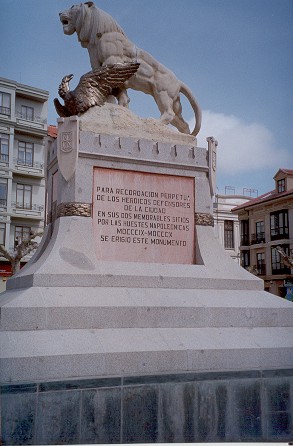
On May 5 I arrived in Astorga. I had to buy a new Swiss Army Knife, and while at the store I met an officer from the Spanish Civil War of 1936. I'm not sure which side he was on, but he was very proud. I'm not even sure what each side stood for, who were the good guys, or who won...but it all seems to have worked out. There's a legacy of regionalism, but it mostly takes the form of spray painted grafitti. This picture shows the memorial to the soldiers from the Napoleonic wars.
|
|
|
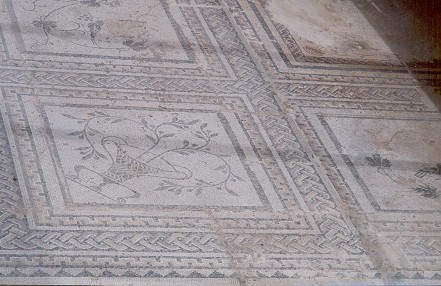
Astorga was part of the Roman empire, and celebrated its bimillenial (2000th anniversary) in 1986. It was founded in 14 BC, during the reign of Caesar Augustus! Here is a picture of a mosaic tile floor from the Roman ruins near the albergue. Spain is an interesting country, funny in some ways though. You can smoke in bars and restaurants. Well I guess that's not unusual, but you can't here in Ottawa. They serve lots of french fries (almost every meal!). The TV is always on (very loud) in the bars and restaurants; either an American show, a Spanish talk show, or soccer. Dryers seem pretty rare; most people dry their clothes outside.
|
|
|
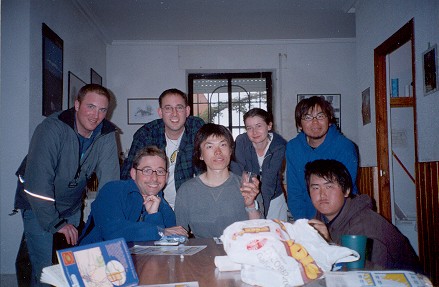
I met alot of people during the Camino, and should have taken more people-pictures. On the left is Martin from Scotland, whom I hung out with in the evenings for a week or so. I saw the guy in the lower left, as well as the Japanese guys, on my last day in Spain. That's the way it went on the Camino; everybody travelled at a different rate, so you'd leave people behind only to see them again (sometimes) days later. I saw other people almost every day. I also met a guy from Peru named Raoul who's father is Walter from Victoria. I wonder if Uncle Rodney knew him?
|
|
|
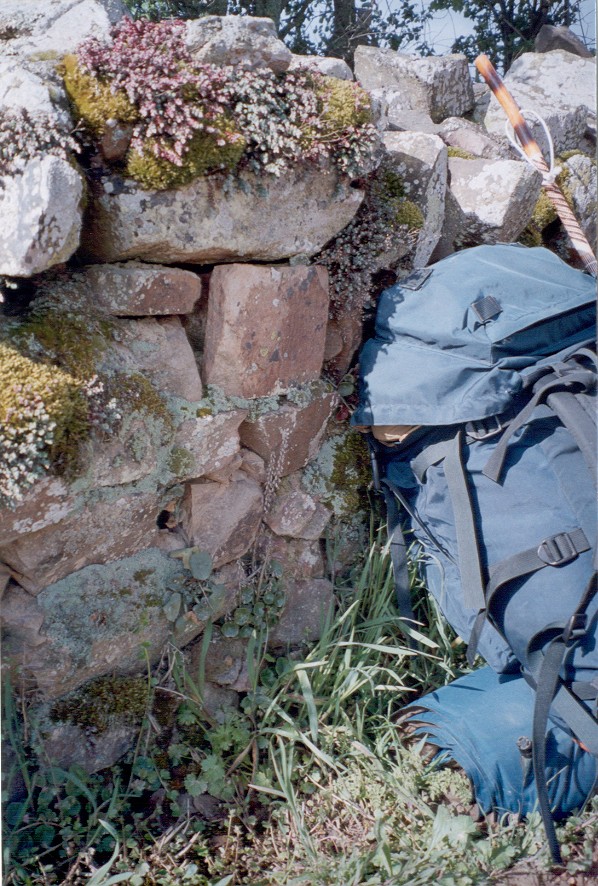
On May 6, I went from Astorga to Rabanel del Camino. I stayed in the English-run albergue (the Albergue Gaucelmo), and met Rick from Jersey...old Jersey off the coast of England! I went to mass that night, and it was hard to follow because it was in Spanish, but I did my best. This picture is a really neat stone wall covered in moss and other plant life, with my backpack and staff for scale.
|
|
|
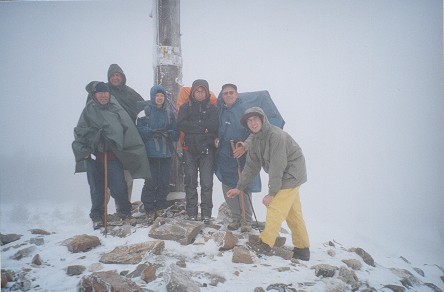
May 7 to Molinaseca was a tough day. I followed the road up into the mountains and it got cold, windy, and snowy. This picture shows me and some other pilgrims (peregrinos) at the iron cross (Cruz de Ferro) which marks the highest point of the Camino (1504 m). You bring a stone from home and leave it on the pile...that's why I'm bent over. I visited the refugio run by Tomas, a "modern-day Knight Templar". It was quite welcome; I had coffee and cookies at high altitude, and it was a nice break from the cold. You suffer during the Camino: hunger, thirst, exhaustion, pain, illness, injury, loneliness, lack of sleep, lack of privacy, poverty (sort of - lack of possessions anyway), weight, discomfort, broken patterns, confusion from dealing with other languages, boredom sometimes, heat, cold, rain, snow, wind, hills, and bumpy terrain.
|
|
|
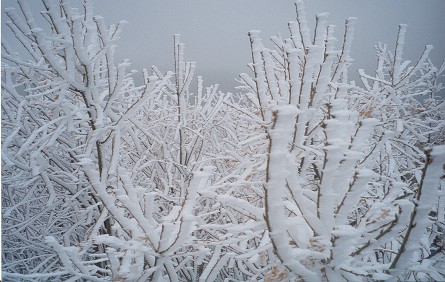
This picture shows snow frozen to a tree by the wind. You suffer, but also appreciate food, drink, bed, new days, pain meds, healing, health, new friends, familiar faces, solitude, few responsibilites, self-sufficiency, dropping your pack, relaxation, adaptability, really seeing beautiful sites, new vistas, and treasuring good moments.
|
|
|
After the summit, it got warmer and warmer as I descended. Each half-hour made a huge difference. The improving weather really kept me going that day, because I was beat! The descent killed my knees.
|
|
|
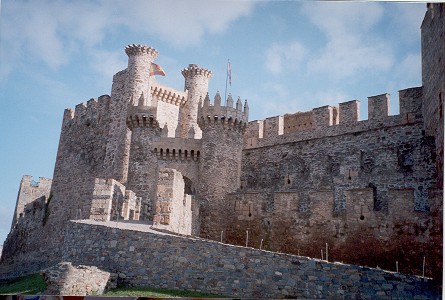
On May 8 I went through Ponferrada to Villafranca del Bierzo. This castle was built by the Knights Templar back in 1282. Ponferrada was very difficult to get through, they really need better waymarking.
|
|
|
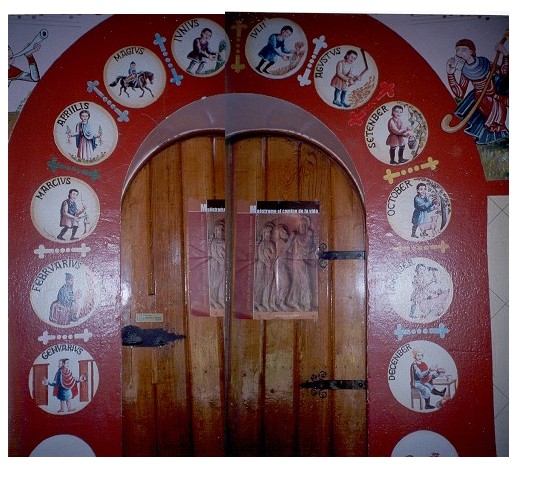
This fresco is from a neat little church on the way to Villafranca. It shows what to do each month. I took two pictures and stitched them together. But my efforts didn't work to well...! Here's what it shows:
|
|
|
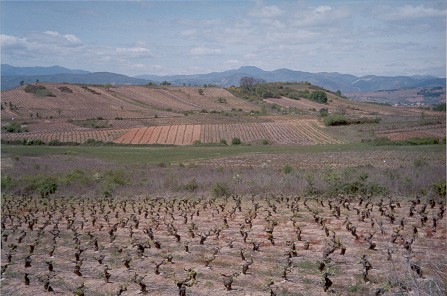
After Ponferrada I entered the wine country, with vineyards stretching to the horizon. I stayed in a privately-run albergue that night. After dinner, the owner (Jesus Jato) had a ceremony with a flaming concoction, designed to protect us from all the evils of the road (thieves, blisters, snorers, etc.). I really should have photographed it.
|
|
|
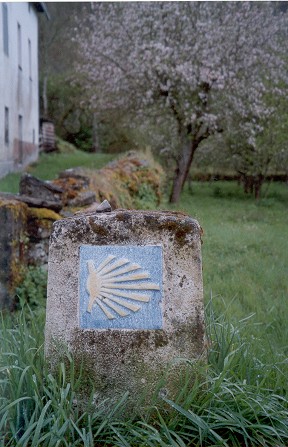
May 9 was another challenging day: the steep ascent to Cebreiro and the entry into Galicia. I cheated, some say, by getting the albergue owner to transport my pack for 2 euros. But my legs were killing me. Plus I caught a cold (easy to get sick in albergues). Money well spent! Here's a nice picture of a waymarker. I want to say that Martin did a good job coaching me during these days to go further than I thought I could. But we all helped each other in different ways...part of the experience. They say Cebreiro is nice; I couldn't tell because it was so cold I just wanted out, and so foggy I couldn't see a thing. I thought the place was a tourist trap.
|
|
|
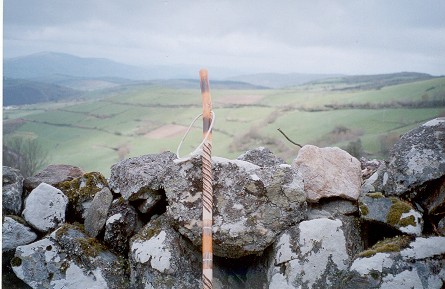
On May 10 I went to Triacastela. This picture is an homage to my staff which really helped me out.
|
|
|
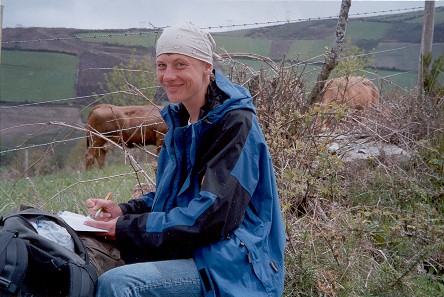
Here's a picture of Ute from Germany writing some postcards by a cow pasture.
|
|
|
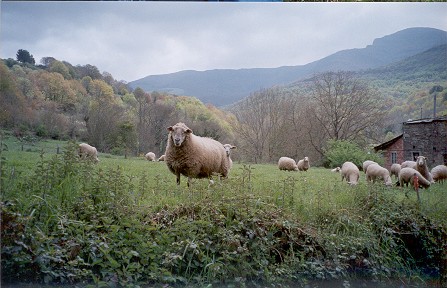
A nice little flock of sheep.
|
|
|
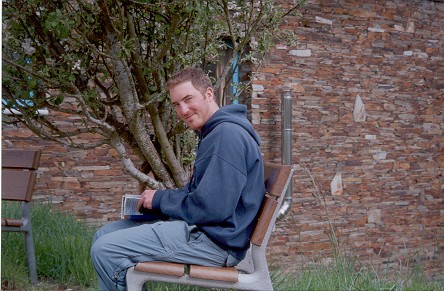
The albergue in Triacastela was really nice, set off from the town with a big lawn in front. Here's Martin...doesn't he look like a Yates?
|
|
|
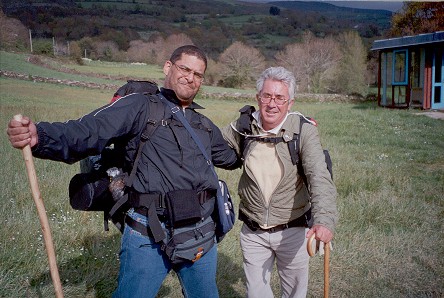
Jose from Venezuela (I think) and his friend...or maybe his father? I'm not sure. He was a slow but spirited peregrino.
|
|
|
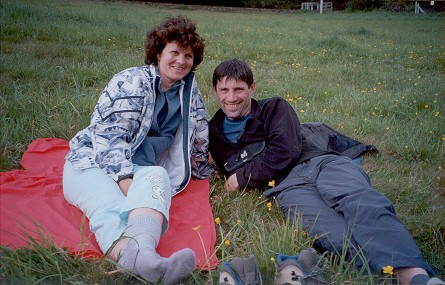
Patrick and Christine from Cherbourg, France. I saw these guys quite a bit after he demanded a cigarette from me in Molinaseca. We mostly talked French but some English too. He told me that he bought a tortilla (a Spanish omlette with eggs and potatoes). He used a French expression to describe how heavy it was; that it "choked a Christian". Christian in French is Chretien, which is the name of our last prime minister, famous for choking a protestor who blocked his way. So I thought the expression had to do with the "Shawinigan Handshake", but no.
|
|
|
On May 11 I went to Sarria. Here is where the Camino begins for those who want to do the minimum 100 km. I took the shorter route so missed Samos, the site of a very old (6th century!) monastery. But the way was nice anyway. The albergue was full, so I stayed in someone's house; people more or less grab you when you get turned away from the albergue. A company called Spanish Steps runs organized high-end pilgrimages. They drive you when you can't walk, put you in hotels, feed you, etc. Not for me, but suitable for some. A lady in the tour took this picture of me. She's from California, and her neighbours are George Lucas, the drummer from Grateful Dead, and Sean Penn! Some peregrinos are really down on tour groups because of their American approach: organized and pampered. I sort of feel that way, but not everyone is capable of doing the Camino in the traditional way. But privation and meeting new people are important parts of the experience.
|
|
|
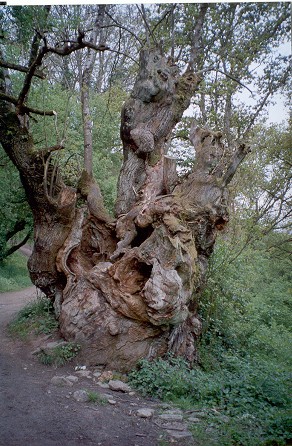
On May 12, I went to Portomarin. On the way I saw this neat tree.
|
|
|
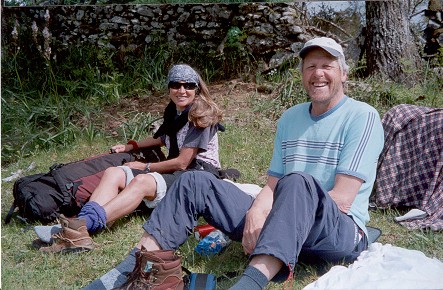
My friends Elizabeth and Konrad from Bavaria. They went at almost the exact same speed as me, so were in the same albergue almost every night. Hard to tell from this picture, but they are actually 60-something grandparents. Europeans are rather godlike when it comes to health. Funny, we went to dinner one night, and had to wait until 8:00 for supper (they eat late in Spain, lunch at 2:00, supper at 8:00). He sat down to wait, and started watching the soccer game. She said, "Konnie! Let's walk around! Do sight seeing!". Of course we walked 25 km that day, and had been sight seeing for two weeks. But we left. She pointed out a church. "Konnie! Look! There's a church!" Again, we'd been seeing churches for weeks too! But we did window shop in front of a hardware store for at least 90 seconds. They were such nice people. I remember she gave me some food my very first morning in Villar de Mazarife.
|
|
|
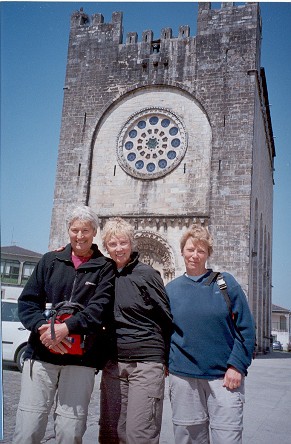
These ladies were very good walkers. I think of them as the English ladies, but Glenys is from Wales. Suzette and Pauline are sisters. Glenys is neat; she runs a sheep farm. We traded banannas back and forth for a few days; I think I still owe her one.
|
|
|
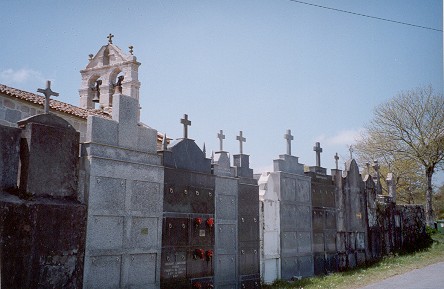
On May 13 I went to Palas do Rei. I had started listening to my walkman during the day, and "Eugene's Lament" from Ill Communication by the Beastie Boys came on just as I passed this church with its reusable tombs. Perfect timing. This was the first day I considered to be warm, and finally started wearing shorts.
|
|
|
On May 14 I went to Ribadiso. I walked by a hill covered with windmills for generating electricity, and thought that was great. I ate lunch that day in Melide; I ate "pulpo" which is octopus. Big chunks of octopus leg, suckers and all. It was nasty, but I got it down. That day I met Carol from Scotland, who reminded me of Lady Diana but with a most charming accent.
|
|
|
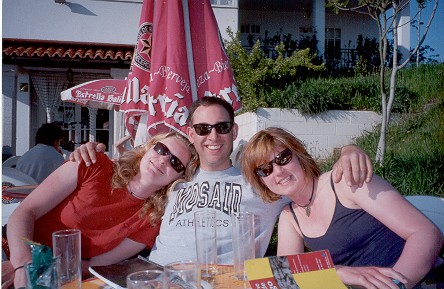
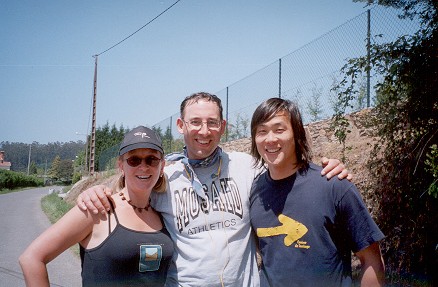
The albergue in Ribadiso was amazing. Great buildings and facilities, and lots of green space by a stream. Here's a great picture of me with Carol and her friend Claire from Australia.
|
|
|
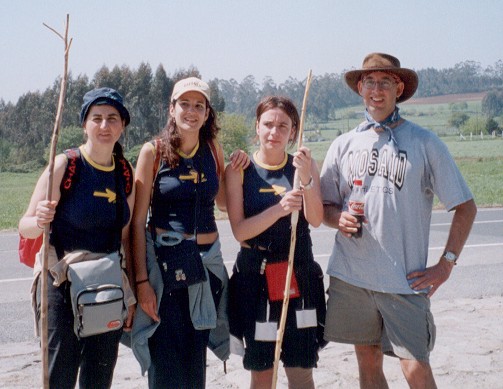
On May 15 I went to Arca. The albergue was OK, but a letdown after the great one the night before. I was feeling kind of homesick and in need of some reflection that day, and concluded that the Camino is a microcosm of life's sufferings, reliefs, and joys. Doing the Camino exposes you to this balance in a communal way, and gives you some understanding that makes you a better person even when it's over. For awhile anyway; I heard about a guy who does it over and over because his wife likes him better post-Camino. I met these senoritas on the road a couple days earlier, and talked with them a few times. When I first met them, they gave me some ham for my sandwiches, which was great. I really got along well with the girl in the middle, because she knows some English. Also with a fourth one, not seen here because she had to drop out.
|
|
|
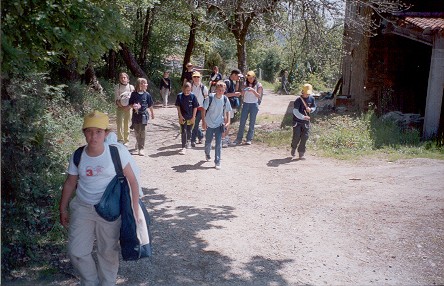
This picture doesn't do it justice, but there was a HUGE group of schoolchildren doing a long march that day.
|
|
|
Me with Molly and Lucas of Spanish Steps. I got along well with these people, so they gave me lunch a couple times!
|
|
|
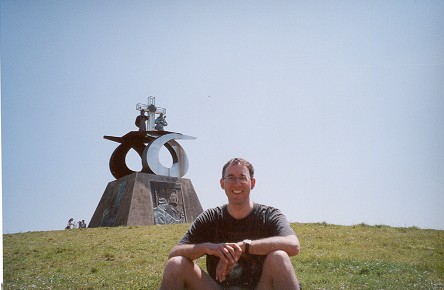
On May 16 I had a relatively short day (20 km) to Monte de Gros. From here you can see the cathedral, about 5 km away. Here's me on the mountain, with the monument behind me. It shows images of Pope John Paul II and St. Francis at Santiago.
|
|
|
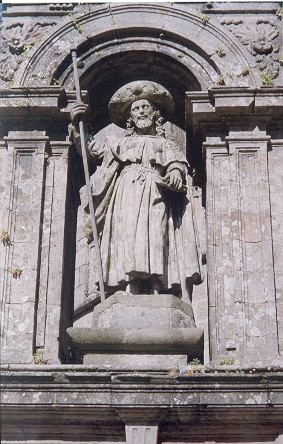
On May 17 I made it to Santiago! I went through the East Door and saw the remains of St. James. They were in a silver chest underground in the heart of the cathedral behind iron bars. For me it was very affecting. Here's a picture of St. James the Pilgrim above the East Door.
|
|
|
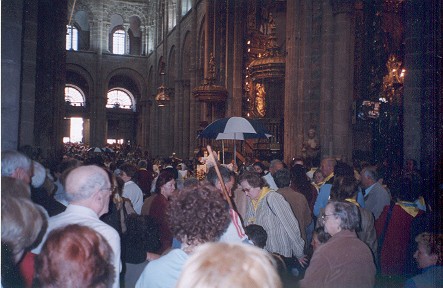
The daily pilgrim's mass is at noon. I attended after getting my certificate, and it was PACKED. They list those who made it, and I heard the reference to myself: "A pilgrim from Canada who started in Leon" (spoken in Spanish). Then they swung the big incense burner (the botafumeiro), which they do every day during a Holy Year. You can actually see it in this picture if you look carefully.
|
|
|
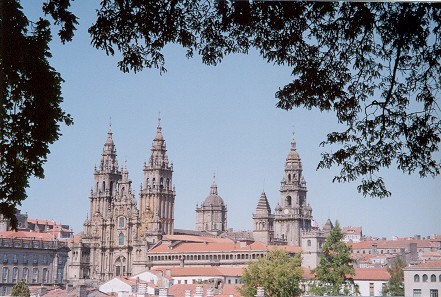
I spent the rest of the day relaxing in Santiago. I walked around a bit and bought some souveniers, then went to a nearby park. Here's a photo of the cathedral from the park. One interesting sight was a group of old ladies singing, accompanied by a guitar borrowed from the busker. They entertained the busker!
|
|
|
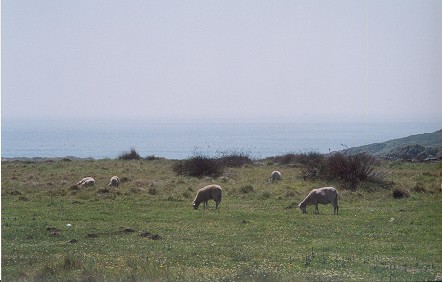
On May 18 I took the bus to Fisterra, which is a town by the ocean where they brought St. James' remains ashore. I had planned on walking, but was done, beat, and finished. Here's a nice photo of some sheep in front of the sea.
|
|
|
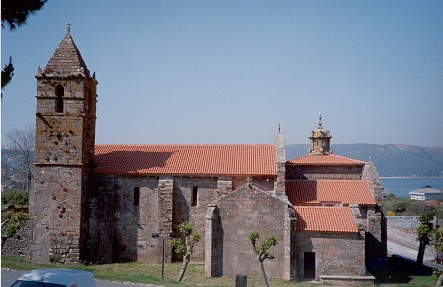
This church in Fisterra is from the 1100s. So it's as far west as Christianity got until 1492; a 400 year pause.
|
|
|
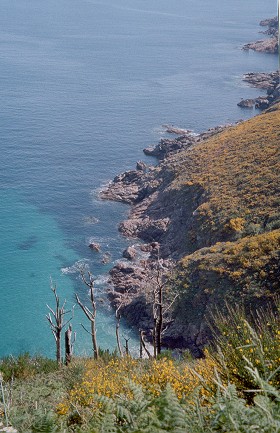
I walked from the town to the end of the cape. This is a nice picture of the ocean below. As I walked I swear I could smell peaches, blown in across the ocean from Georgia. But it was probably the local vegetation. Dreamy.
|
|
|
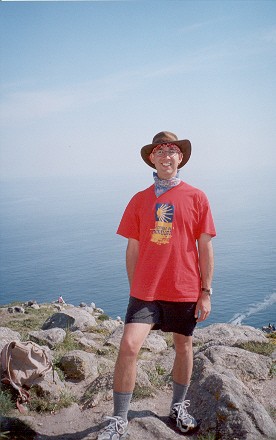
Me at the end of the cape.
|
|
|
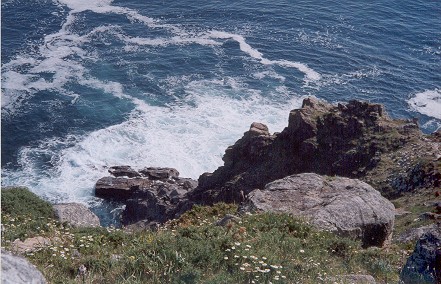
The view of the ocean at the end of the cape. Sitting here my thoughts were consumed with considerations of mortality. I really wanted to get to the water, but it was too far down.
|
|
|
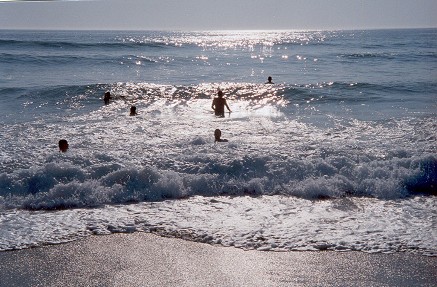
So I went to the beach! I think I'm the dot on the upper right. And so ended the Camino.
|
|
|
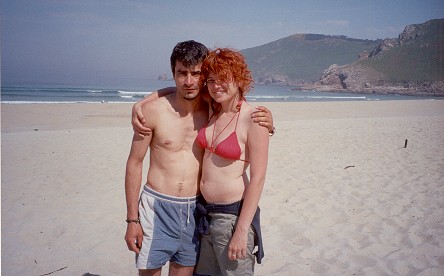
I spent a couple days at the beach after that; the 19th and the 20th. I ran into David and his new girlfriend at the beach on the morning of the 20th. I first met him weeks before in Rabanel del Camino (I think). Speaking of girls, I did see "some", but no photos. Sorry guys!
|
|
|
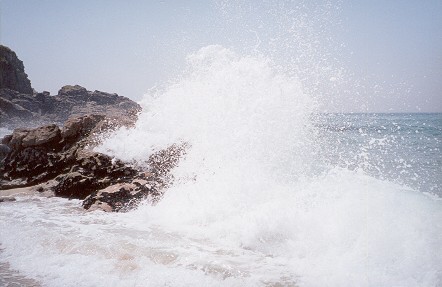
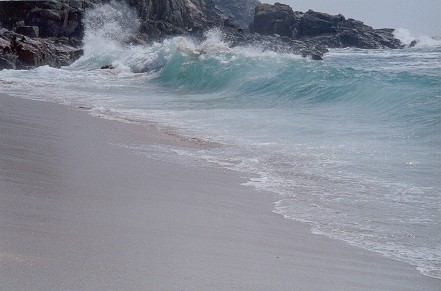
I loved watching the fury of the sea as the waves brought the high tide in. Ha, there was a group of Spanish guys who hung out there every day. They were totally relaxed lying down as the tide rose. Then one big wave came all the way up and swamped them. The water is warmer than Maine, but colder than Cape Cod. Some people camp on the beach. One guy told me he was lying there at 1:00 AM when the tide came in. He woke up, reached out, and felt the water about 1 meter away. He tried building a little wall with sand...but that didn't work!
|
|
|
Imagine this wall of water crashing down on you. I saw remnants of the oil spill at the beach, when I first arrived at low tide. The oil is in little "cookies", round, viscous (solid), covered in sand. The oil spill was about two years ago!
|
|
|
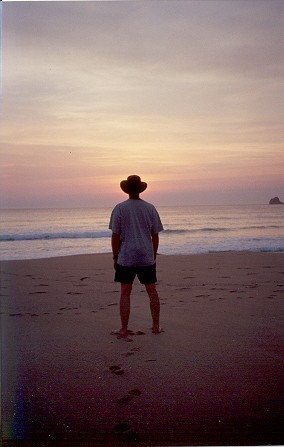
Me watching the sun set into the Atlantic, towards the new world.
|
|
|
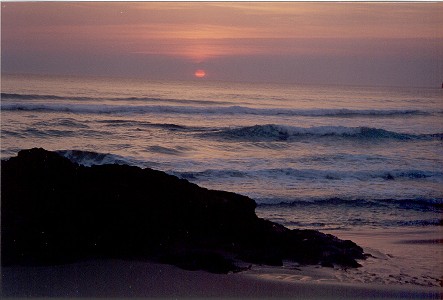
My favourite sunset picture. The next day I took the bus to Santiago. I sat beside this great girl named Teresa from the Canary Islands. She is Spanish but actually knows English, which is rare. She did a short Camino from Santiago to Fisterra (short...100 km...it's all relative), then was going to a women's march, then on to help clean up the oil spill. Sigh. I ran out of film so don't have a picture, but maybe she'll send me a copy of the one she took. When I got to Santiago, I hung out for a few hours, then took a night train (sleeper car) back to Madrid. Then I flew to Heathrow, Toronto, and then Ottawa. A LONG travelling day; about 36 hours. And so ended my trip.
|
Last updated May 30, 2004.
Comments to [email protected]