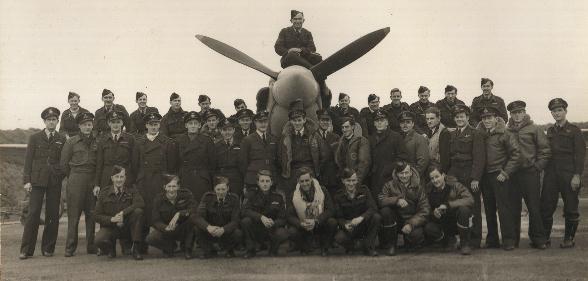
453 Squadron formed in New South Wales in May 1941 and three months later
sailed for Singapore.
Malaya and Singapore
Following Japan's surprise attack on Malaya, 453 Squadron Buffaloes
deployed to Ipoh in December in support Allied troops already retreating
before the Japanese. The Unit met with immediate success destroying eight
enemy aircraft, however squadron losses were also high, with a number of
aircraft being lost on the ground.
After withdrawing to Kuala Lumpur, a large formation of Japanese bombers
and fighters attacked the squadron's base, destroying five Buffaloes and
damaging another four aircraft. Despite being vastly outnumbered, the
Buffaloes put up a valiant fight, shooting down at least four enemy aircraft.
With only three serviceable aircraft left, 453 Squadron withdrew to
Singapore and merged with 21 Squadron. This combined Unit attempted to defend
Singapore - which was now under regular attack by Japanese aircraft. On 26
January 453 and 21 Squadrons were separated and in early February, 453
Squadron embarked for Australia where is disbanded soon after its return.
Fighter Command, Britain
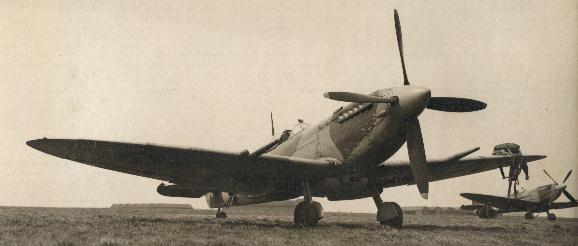
Equipped with Spitfires, 453 Squadron was re-formed in England in June
1942. Flying fighter sweeps and bomber escort the Squadron's Spitfires
accounted for many enemy aircraft. Early 1944 saw 453 Squadron operations
concentrated on defensive patrols designed to keep German reconnaissance
aircraft from detecting the shipping build up prior to the Allied invasion of
Europe.
Following the D-Day landings the squadron was involved in combat patrols
over the beach head. The next three months saw 453 Squadron deployed to Europe
in support of the advancing Allied ground forces. By September 1944, the
Squadron was back in England, from where its Spitfires mounted attacks against
the well defended V-1 and V-2 missile launching sites in Holland.
From November until the end of the war the Squadron
was once again flying fighter sweeps and bomber escort. Following Germany's
capitulation 453 Squadron was selected as part of the Allied occupation forces
and became the first Commonwealth squadron based in the German capital. 453 squadron disbanded on 21 January 1946.
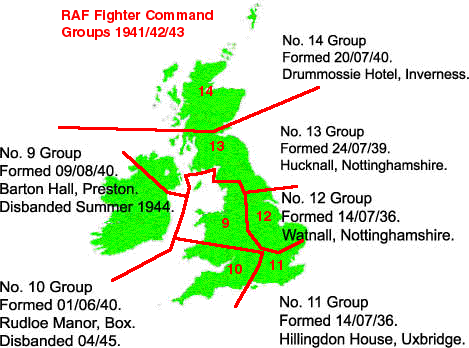
453 Squadron RAAF with Fighter
Command
|
Group |
Base |
County |
Arrived |
| 13 |
Drem |
East Lothian |
18 June 1942 |
| 11 |
Hornchurch |
Essex |
25 September 1942 |
| 11 |
Rochford |
Essex |
2 October 1942 |
| 11 |
Martlesham Heath |
Suffolk |
24 November 1942 |
| 11 |
Rochford |
Essex |
7 December 1942 |
| 11 |
Hornchurch |
Essex |
27 March 1943 |
| 10 |
Ibsley |
Hampshire |
28 June 1943 |
| 10 |
Perranporth |
Cornwall |
20 August 1943 |
| 14 |
Skeabrae |
Orkney |
15 October 1943 |
| 2TAF |
Detting |
Kent |
19 January 1944 |
| 2TAF |
Ford |
Sussex |
18 April 1944 |
| 12 |
Coltishall |
Norfolk |
30 September 1944 |
| 12 |
Matlaske |
Norfolk |
18 October 1944 |
| 11 |
Lympne |
Kent |
6 April 1945 |
| 11 |
Hawkinge |
Kent |
2 May 1945 |