Napoleon and Liberty
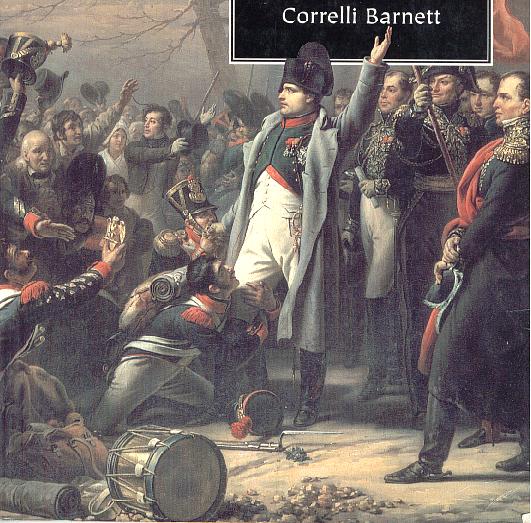
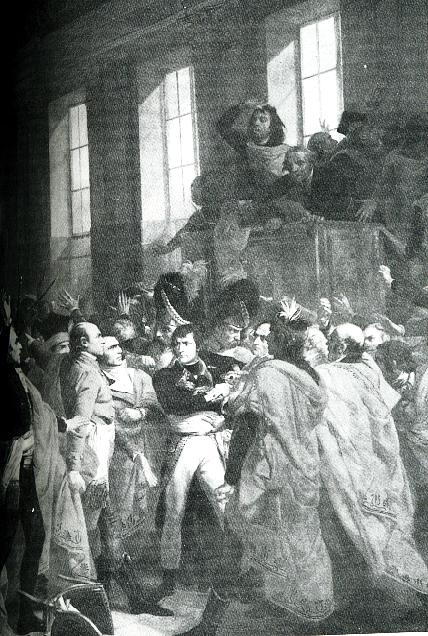
Bonaparte decisively enters national politics with real significance in the coup d�etat of 18-19 Brumaire 1799. He took power from his co-conspirators as they hesitated and installed himself as first Consul in the new Constitution issued a month after his seizure of power. He had learnt from the mistakes of his predecessors and arrogantly presumed he would not reciprocate their errors.
Napoleon embroiled himself in the conflicts of the revolutionary period, alleiviating the seige of Toulon won him great prestige. He quickly rose to become a General by the age of twenty-four.
During the September Massacres Bonaparte was arrested and himself deprived of his own liberty for quite some months by the Thermidorians. He survived the ordeal to become a hero of Paris for his involvement in the �Whiff of Grapeshot� incident. 1795 Saw a Royalist Insurrection against the National Convention, Bonaparte rallied the Parisian defences and saved the Revolution becoming the darling of the masses.
However by 1803, Bonaparte�s grip on power was such that he could erode the Liberty, Equality and Fraternity of the Revolution in order to secure his on power. Firstly he had re-established Slavery in the French Empire.
His programme of centralisation meant his new army of the Civil Service and Bureaucrats extended down to the village level giving him unprecedented power. Bonaparte levied a great amount from taxes and his Army swelled with recruits.
As a tyrant he utilised crude propaganda, secret agents and spies. Worse he ordered arbitrary arrests and executions. He further eroded Liberty brought by the Revolution by his centralisation of Education, he issued a type of Curriculum putting all education strictly under state control. Similarly dissent was not permitted, he manipulated the popular will so successfully that no could criticise him because no one wanted to hear or read about. The question whether opposition could have survived in a France where Booksellers and printers took Oaths of Alliegance and Newspapers were state-controlled, is doubtful.
This is not to ignore thge religious freedom he guaranteed, even though Churches were also under state supervision. His Bureaucracy was a meritocracy, as was his army, he broke the Guilds allowing commerce to flourish. It is though his erosion of Liberty he may be best remembered for.
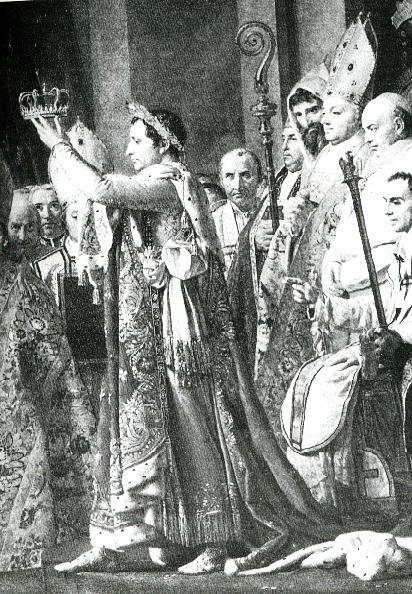
Bonaparte by 1808, had re-introduced a full imperial court resplendent with titles, though no particular privilege, still denotable ranks of nobility. His Code denied workers Trade unions and the right or coleective bargaining, women were inferior as stated in the law. [Click here for more on women] Children had no rights whatsoever, perhaps most disturbing Work passports were introduced allowing the monitoring of any worker in the land.
Napoelan believed he had consolidated and preserved the unity, Liberty, equality and fraternity of the Revolution. Simultaneously he believed that Liberty was a threat to the efficient government of the state and brought chaos and terror.
|