
SPECIAL FEATURE: PESSAH AND EASTER
PESSAH IN THE JEWISH TRADITION
INTRODUCTION
The Feast of Pessah or Easter/Passover, Paskha in Aramaic is refering to the �sacrifice of the Lamb� and the Act of Salvation that allowed the Hebrew nation to go out of Egypt and be liberated from bondage of slavery.
All this process is called in Hebrew : �MeAvdut leHerut�, i.e. : �From slavery to Freedom�. This sentence might seem evident to understand, but it is definitely not obvious in our spiritual mentalities and behaviours. There is a permanent disfunctioning betweeen our tendency to be liberated from any kind of bond, human, spiritual, professional situation of dependence and slavery and our reluctance to be absolutely free. This reluctance is shown in the history of salvation of the Jewish people at different steps of its history : Liberation from Egypt and Entry into the Land of Canaan, the Receiving of the Torah [Oral and Written Torot or Laws at the Sinai]. Then the maintainance of unity within the Tribes [Shivtey Israel] and the temptation to be divided which proceeds from a natural tendency to deny or reject the grace of God or rather to misuse and capture it for one�s benefit.
A �liberating� act of God becomes then the occasion for a lack of faith : When God gives His Law at the Sinai, the people cannot wait for Moses and ask his brother the Priest Aaron to shape a idol for them. We need visible things to fix our creed or would stumble as those in the desert who could not accept to be patient and receive a gracious sign of God.
The same happens during the Exile in Babylon. When Cyrus, who is considered as a heathen messiah by the Jewish tradition just as King David is a Jewish one, edicts to liberate the Jewish deportees and allow them to return to Jerusalem and to build there a House to the Lord, a lot of questions arise and show that there was not absolute acceptance to be free.
Two months exist in the Jewish calendar to signify how the Jewish people but also all the nations of the earth can be saved : Tishri in Autumn and Nisan in Spring.
�Observe the Month of Spring and you shall make a Pessah to the Lord your God�
[Deuteronomy 16:1].
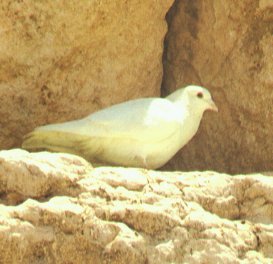
The name of this Spring month has changed throughout history. �Nisan� is rather late and may be connected with �nitzan� [to flower, bud] as in the Song of the Songs [2:12] when the flower begin to come up and the voice of the dove is heard throughout the Land.
It is the Rosh HaHodashim "The first of the months� because it explicitely refers to the month when the Jewish people were saved from the slavery. It is therefore important to consider the link which exists between first autumnal month Tishri celebrating the creation of the world and the earth, of the first human beings and Nisan which deals with the final redemption of all mankind as stated in the Book of the Prophet Micah [7:15] : �As at the time that you left Egypt, I will show you wonders. They [The Jews] were saved in Nisan and they will again be redeemed in Nisan�. This paves the way to the Christian accomplishment of the Promises in Jesus Christ. Some Christian feast are enrooted in the time of Tishri, but all Christian Feasts are profoundly based in the long period of final redemption of Pessah-Shavuot/ Easter � Pentecost.
Last but not least, the flowering singificance of this month has to be pointed out : Autumn preludes to winter time. Spring is the beginning of a long period of cultures, productivity, fertility, harvest and richness. Aviv or Av � I�v means �Spring� and in Hebrew �Father of the 12� which has been commented as the 12 months of the year, the 12 Tribes� and thus is also bound to the 12 Disciples of Jesus or Apostles and the two groups of Watchers and elders, mentioned in the Book of Apocalypsis and are sitting around the Throne of Glory.
It should be noted that the Month of Nisan has been a festive one from the very beginning of the way the Jews stayed in the wilderness and dedicated the Sanctuary. It is the only feast for which Jews respect a series of laws referring to the celebration of Pessah. It is, for example, forbidden to use the �hametz� or unleavened bread before and after the Feast. The same : the money collected for the poor �maos hitin [money for wheat] or �Kimha dePiss�ha [Flour for Pessah] has to be distributed before the Feast starts in order to have a clear conscience when eating the Paschal sacrifice.
PLEASE CONTINUE TO PAGE 2

HOW to contact us?