
THE TIME OF PESSAH [PASSOVER] AND
THE CHRISTIAN TIME OF PALM SUNDAY
CONTINUED FROM PAGE 2
We are so used to dispair and mishaps that we may have the same realistic reaction in front of Lazarus death and the fact that he has been dead for four days, and stinks [John 11:39]. Jesus continuously prays because we are people of little faith : �Father, I thank you that You has heard me. And I knew that You hear me always: but because of the people who stand by I said it, that they may nelieve that you has sent me. And when He thus had spoken, He cried with a loud voice : �Lazarus [ElYazor/God of Help], come forth!�
And Lazarus came forth, bound hand and foot and Jesus said : �Loose him and let him go� [John 11:41-44].
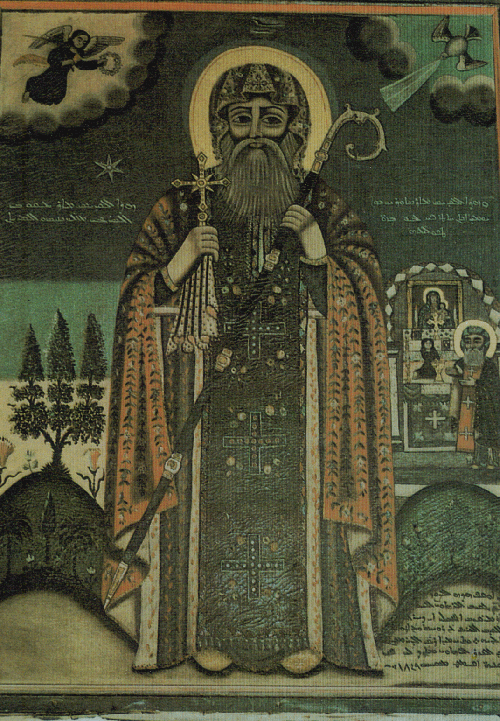
Here starts the Way of the Cross of the Way of the Life-giving Tree or of the Tree of Life! The Christian tradition recounts that Lazarus followed Jesus and became an episkopos [bishop] in Cyprus were he died.
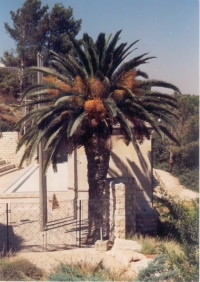
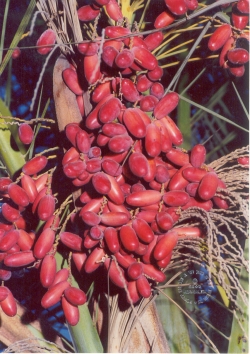
�Lazarus, ElYazor, Eleazar! come forth!�. This cry is the cry of the Lord to the Living God. At the time of the Entry of the Lord into Jerusalem, the crowd was waving the palms crying : Hosanna! Blessed He that comes in the name of the Lord!� Some theologians tried to link this event with the eschatological Feast of the Booths or Sukkot which would be ineaccurate. We know that when they were chanting the Hallel [Psalms 113-118] during the preparation of the Feast of Pessah/Passover, the faithful used to wave these palm branches. And the Hallel is chanted at Pessah because God helps, assists, saves. As this cry used to be heard in the Temple : �Ana HaShem Hoshiya-na!� Please God, do save!� [Psalm 118: 25]. In our Indo-European languages : �Hosanna in the Highest� sounds like an exclamation of joy! This is th cry rising up from a womb, a belly as in Psalm 118:24-26] : �This is the day which the Lord has made; we will rejoice and be glad in it. Save now, I beseech You, O Lord: O Lord, I beseech You, send now prosperity. Blessed be He that comes in the name of the Lord. We have blessed you out of the House of the Lord�.
In Hebrew, the meaning sounds more peculiar : �Ana, Please Save, Save thus Yourself, God. The Aramaic targum [translation-interpretation] suggests : �Save now !� The same as this constant temptation of faith : the two thieves on the Cross, at the Calvary-Golgotha are cheating Him [Mark 15:30] : �Save Yourself and come down from the Cross!� One of the malefactors said : �If you be Christ, save yourself and us!� [Luke 23:39].
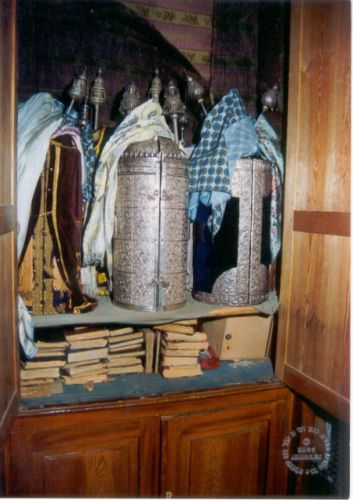
But at the time when Jesus will enter into His Passion, be betrayed and rejected by every single human being this cry shows an exceptional connection with the Feast of the Booths or Sukkot. As the Jews chant in circle around the Torah Scroll they pronounce these words : � Ani VaHu hoshiya-na!� which is to be translated as : � I and He, that He thus save now!�
The Jewwish tradition explains that these words refer to two Biblical verses : ANI [I]: �I was among the captives by the river of Chebar, that the heavens were opened, and I saw visions of God� [Ezekiel 1:1] and VEHU [And He] : �And he was being bound in chains among all that were carried away captive of Jerusalem and Judah, which were carried away captive unto Babylone�. [Jeremiah 40:1].
In both quotations, the texts refer to God Himself. This cry is expressing the strong tie made by God between Himself and His People and it sounds familiar to the Christian : I and the Father are One [cf. John 17:22]. The Jewish tradition goes further and links this cry to an undefeatable hope : AnveHu as in Exodus 15:2 : � The God of my fathers, I shall exalt Him�.
THE JEWISH READINGS
This week, we shall only consider the prophetic portion or haftarah read on this second day of the Omer [comput of the Omer or agricultural measure after Pessah]. You will find during this week a link included in the �world of Prayer� explaining the origin of the verses of joy celebrating the Resurrection of the Lord and aspecial explanation of the connection between Pessah and Easter and Pentecost, Shavuot.
The text of the Prophet Ezekiel is perfectly in line with Lazarus resurrection, the Entry of Jesus into Jerusalem, the Way of the Cross, the Crucifixion and the Resurrection from and of the dead. Chapter 37 is unique : the dry bones revive. The Prophet is called by the Spirit and set in the middle of a valley which was full of bones. And these bones were very dry. And God says to Ezekiel that He will breath into these bones and they shall live.
The Prophet is called to prophesy and the dry bone, through the Spirit of God shall revive, laid with sinews, and having flesh, skin, having a breath in them. �O my people, I will open
PLEASE CONTINUE TO PAGE 4

HOW to contact us?