| Restoring A33 TJN (page 8) |
| Once the shell was restored it was time to respray it in its original colour of sunburst red.I decided to attempt this myself,having had reasonable success years ago respraying my MGB GT in Vermillion (the BL/Rover equivilant to sunburst red).The easiest option for a DIY respray is "cellulose".So 5 litres of colour & 3 litres of primer was bought,along with high gloss thinners & other items such as wet 'n' dry paper & panel wipe. Oh yes...it all had to be done by the end of April 2002,luckily the weather was on my side.................................. |
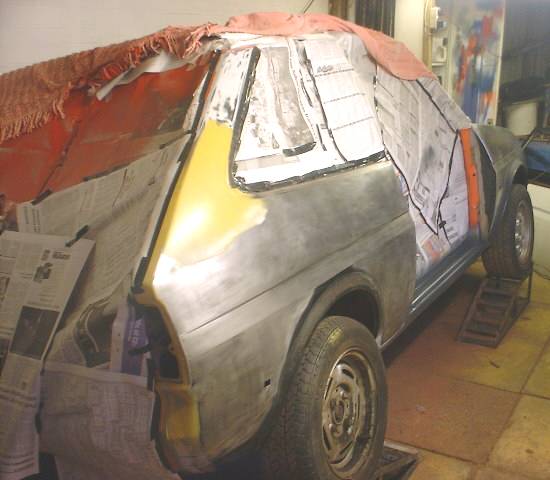 |
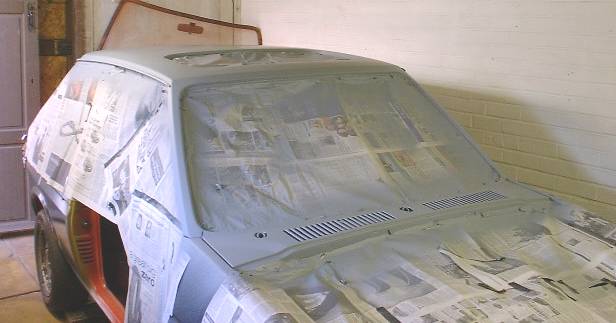
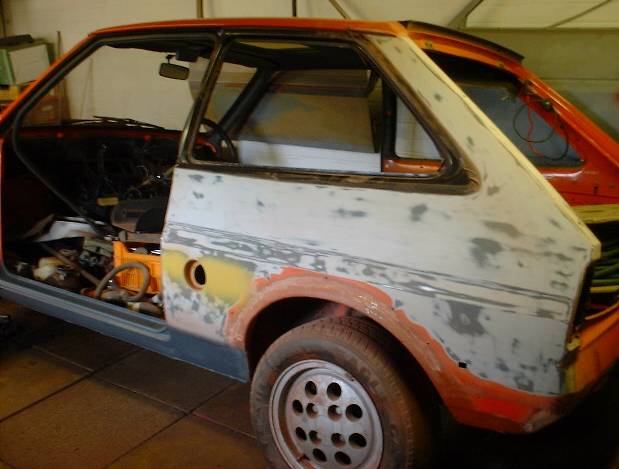
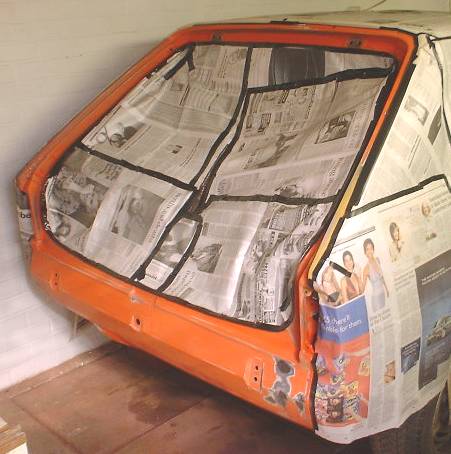
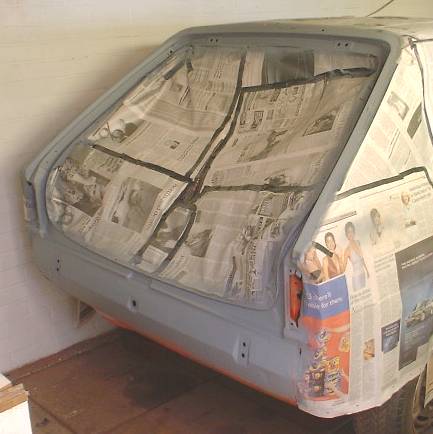
| The car would be sprayed in several instalments due to a lack of space to work round the car & my spray equipments lack of capacity to spray an entire shell in one go. .New panels had been fitted,complete with black "transit" primer.This is only temporary rust protection & must be removed before painting can start.Ideally a DA (dual action) sander would remove all this.But as I don't have one I got sore hands instead! |
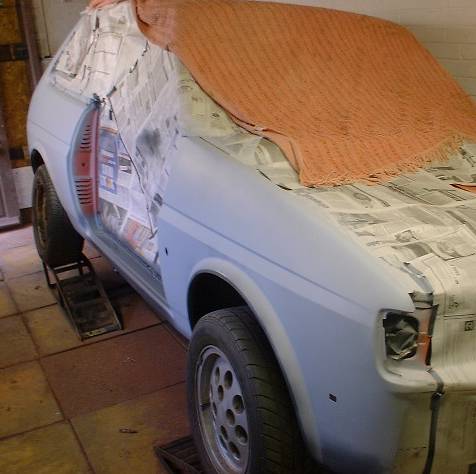 |
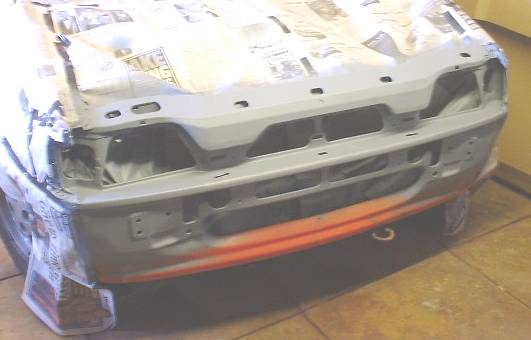
| Once the bare metal has been prepared using 240 grit wet & dry paper the area must be sprayed with "acid etch" primer before it can be properly primed,Etch primer chemically bonds itself very strongly to bare metal to create a good base for the primer.If normal primer is applied to bare metal there is a chance the paint will fail in the near future & flake off.Etch primer is available in spray cans & two 400ml cans were enough for my needs. |
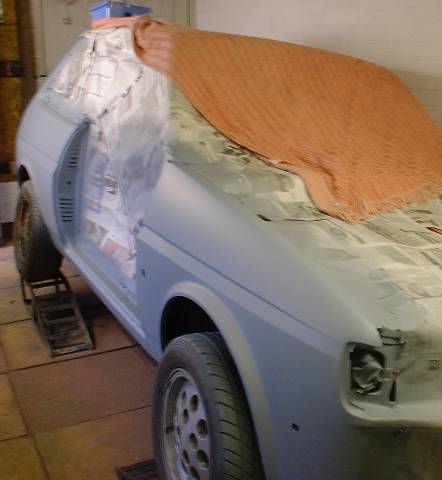 |
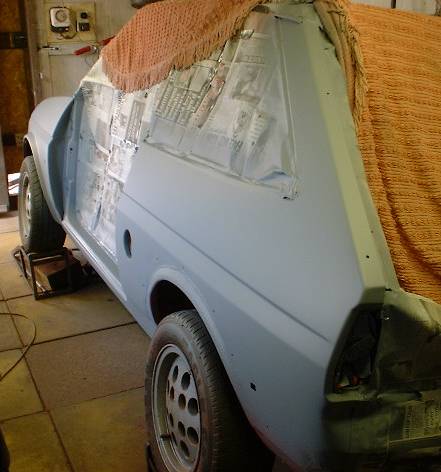
| The etch primer was left to harden for 24 hours before four coats of cellulose primer was applied. I'm using a Wagner W600 High Volume low pressure (HVLP) spray kit to paint the car.This applies more paint than a conventional compressor & spraygun without wasting a lot of paint as mist which disperses in the air. The primer was then left for 24 hours before being rubbed down to a flat finish with 600 grit wet & dry paper.Wet & dry paper is designed to be used wet by immersion in a bucket of soapy water (washing up liquid is best).It's hard wearing & by far the best way to prepare paintwork. |
 |
 |
 |
 |
 |
 |
 |
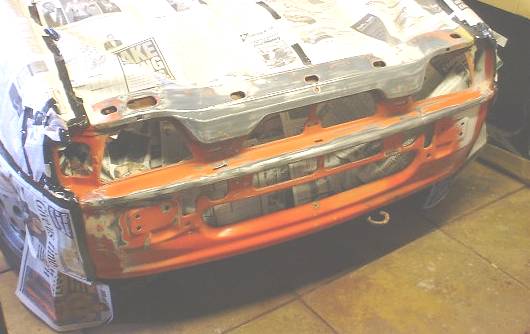 |
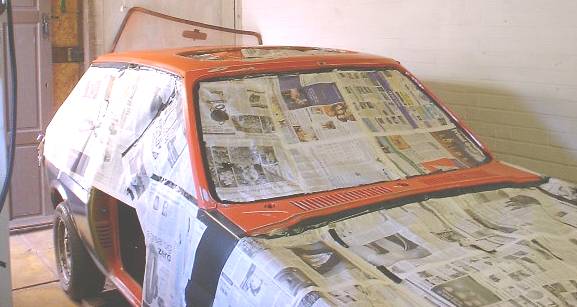
| Each section was prepared, etch primed if needed, primed & then top coated before moving on to the next area. The finished paint will be on page 10 once I've built it. Good existing paint was left on but prepared with 240 grit W& D before primer & 600 grit W& D before top coat. |
 |