


" We hope to take moviegoers to a place that only
animation can take them, which is pure imagination."
--- Executive Producer, Jeffrey Katzenberg.
Taken from the Prince of Egypt Movie Scrapbook
Written by Thomasnie Lewis
� DreamWorks SKG, 1998
After a turbulent journey, the basket comes to rest in the calm waters near theRoyal Palace. The Pharaoh's wife finds the infant wrapped in blankets, unharmed. She adopts the baby as her own and names him Moses.
Moses grows up as Egyptian royality -- a Prince -- and develops a deep friendship with the Queen's son, Rameses, who Moses believes is his real brother. As a young man, Moses is carefree and adventerous, while Rameses is more serious and cautious, for he is next in line to take over Pharaoh Seti's throne and become the ruler of the kingdom.
Moses is proud of Rameses' future and protects his brother when Pharaoh Seti disciplines them for their boyhood pranks. Then one night, an incident sets off a chain of events the unravels Moses' world. At a banquet, the palace magicians, Hotep and Huy, present Rameses with a gift, a Midianite woman named Tzipporah. Rameses gives Tzipporah to Moses, but she escapes to the Hebrew settlement of Goshen. Moses follows her. In Goshen, he loses Tzipporah but encounters his real sister and brother, the Hebrew slaves Miriam and Aaron.
Miriam reveals to Moses the truth of his birth: He is really the son of a Hebrew slave. Moses refuses to believe her and runs back to the palace. Exhausted, he falls asleep and has a nightmare in which babies are torn from their mother's arms and thrown into a river filled with crocodiles. When Moses wakes up, he is horrorifed to find hierglyphs on the palace walls that depict images that appeared in his dream.
Moses confronts Pharaoh Seti, who tries to explain: "The Hebrews grew too numerous. They might have risen against us." Moses cannot believe what he's hearing. "Sometimes for the greater good, sacrifices must be made," his father continues. Then he adds, "They were only slaves."
Moses is horrified and tormented. He is not the prince he thought he was, and he is now beginning to see the slaves as real people - his people. The morning after his discovery, Moses and Rameses go to the site of a new temple where Moses sees for the first time the brutal lives of the Hebrews. When a taskmaster strikes an elderly slave, Moses tries to defend the old man and ends up killing the guard. "I will make it so it never happened," Rameses assures him. But Moses is stunned by what he's done, and flees Egypt.
He spends days aimlessly wandering the desert before coming to a Midianite village, where he again meets Tzipporah. Her father, Jethro, is the high priest of Midian. He welcomes Moses into their tribe. As the years pass, Moses builds a life as a shepherd. He falls in love with Tzipporah and they marry.
One day, when Moses is out with his sheep, he comes across a small bush burning brightly -- yet the bush seems untouched by the fire. Moses extends his staff into the flames, but the staff is unaffected. He puts his hand into the fire, and it, too, is unharmed. Suddenly, a gentle voice echoes around him and calls his name. "I am the God of your ancestors," the voice reveals. God commands Moses to return to Egypt and free the Hebrew slaves.
Inspired by God's directive, Moses and Tzipporah travel to Egypt and find that Pharaoh Seti has died, and Rameses is now pharaoh. Moses tells his brother about God's command, but Rameses refuses to let the Hebrews leave Egypt. In fact, the request angers Rameses, and he doubles the slaves' workload.
Moses tries to convince Rameses of God's power, but Rameses is unimpressed, even after the Nile River turns to blood. Moses warns that God will inflict more terrible plagues on Egypt. Rameses ignores this warning, and one by one, the plagues devasate the land of Egypt. The last plague kills Rameses own young son. Defeated, Rameses tells Moses, "You and your people have my permission to go."
Moses leads the Hebrews out of Egypt, with much rejoicing, but as they reach the shores of the Red Sea, they see Rameses' army coming after them. The Hebrews are trapped. Moses calls to God, and the Mighty Red Sea parts, allowing the Hebrews to safely cross. The waters crash down on the pursing army.
Safe on the far shore, the Hebrews celebrate their newfound freedom.
Three months later, Moses stands before his people at Mount Sinai and delivers Ten Commandments, handed down by God.
The Prince of Egypt has the four essential components necessary to tell a good story:
Adventure: Central figure who believes in the ultimate truth, follows his heart and conquers his enemy
Romance: Moses and Tzipporah
Comedy: the playfulness of the young princes and the crankiness of the court magicians, Hotep and Huy
7 minutes long, highlighting many conflicting emotions; important that this section ends in the promise of hope
Yocheved gives up baby Moses
Perilous journey down the Nile while Miriam watches
The queen finds him .... representing hope
Moses searches for answers
Seti's reprimand
The banquet (meeting Tzipporah)
Miriam reveals the truth
Moses' confusion
Moses goes through a transformation from the saddest point in his life to the happiest as he settles into the life of a shepherd and marries Tzipporah
Through Heaven's Eyes
The spiritual birth of Moses and his confrontation with Rameses
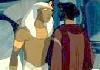
Return to Egypt
The Ten Plagues:
Frogs
Gnats
Flies
Death Of The Livestock
Bloils
Hail
Locusts
Darkness
Death Of The Firstborn
Another transformation from a low point (Moses being devastated over what it took to finally convince Rameses to free the Hebrews) to a high point (realizing that they are finally free)
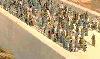
Parting The Red Sea
The Story Continues....
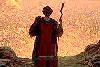
Sleep like you're rock by the sea, Sleep and remember, My lullaby, And I'll be with you when you dream
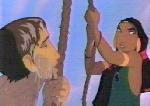
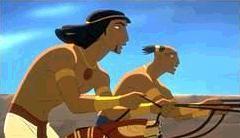
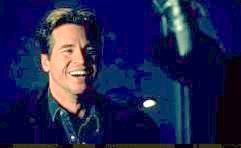
Val Kilmer was chosen to voice the lead character, Moses. "We needed someone who could play the innocent at the start and then turn into a commanding leader," Jeffrey Katzenberg recalls. "The casting people played us recordings of a couple of other voices, but there was no question as to who was the right person."
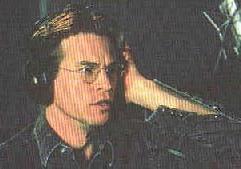
"It's a pretty heavy story, and I had to find the mood in the voice, to give it a genuine emotion. It can be initially hard to grasp what you're seeking. You have to remember that it doesn't matter how you feel -- it matters how the audience feels.... I was pleased and honoured at the opportunity to play this role and to support DreamWorks. Both personally and professionally, I was inspired by this genuinely magnificent piece of storytelling."
"Rameses is a villain because his destiny made him one," says animator Serguei Kouchnerov
"Rameses is locked into his role as Pharaoh, 'the morning and the evening star.' The idea that he's doing something wrong in having Hebrews as slaves doesn't really occur to him. The tragedy is that he's blind to the injustice of it. He's certainly not an evil man. He's a blind man, a limited man, a man conditioned to having a vast amount of power."

"While we were working on POE, we always tried to keep in mind that not only was this a story from the Bible, it was also the very human story of two brothers. One goes bad and one goes good -- I tried to keep that as much in mind as the biblical references. We wanted to keep it a universal story that everyone could relate to, not just people of faith."
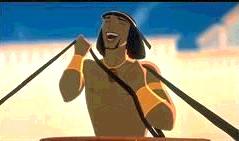
Moses is also the character who changes the most during the course of the film. William Salazar, the lead animator on young Moses, says, "At the beginning of the story, you have to see the character's potential, but you can't show too much." The filmmakers had to show that beneath his carefree exterior, Moses is a thoughtful, complex young man with a developing moral sense, but without being heavy-handed or revealing too much. Although he is the younger brother, Moses is shown in this scene to be a more dynamic figure than Rameses. The force of his personality enables him to control his sibling's emotions. His willingness to accept the blame for his own actions and his concern for Rameses indicate that Moses is more than a spoiled young hellion. His ability to hear and respond to his father's words in a way that his brother cannot gives the audience some basis for understanding Moses' later sense of justice and compassion.
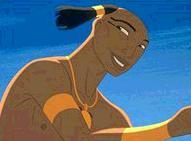
Rameses is presented is a more reactive, less resourceful character. In response to Seti's reprimand, Rameses becomes defensive. He is obsessed with the desire to dispel his father's doubts about his ability. As a youth, Rameses accepts his emotional dependence upon Moses, secure in the knowledge that his brother will always be at his side. Later in the film when they become adversaries, Rameses remains vulnerable to Moses' influence, which seems to magnify his unyielding nature.
The ultimatum.. "The characters are trying to relate to each other as brothers, so we need to get them close to a moment they shared as kids," says story artist Ronnie del Carmen. "Moses knows Rameses always sulked in one place when they were kids. That moment gave a resonance to their relationship we had yet to find."
By making childhood experiences a significant force in The Prince Of Egypt (like Seti's words "But one weak link can break the chain of a mighty dynasty" haunting Rameses and Moses humming his mothers lullaby), the filmmakers enrich the characters and their changing relationships.
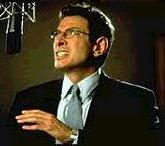
"Aaron is the doubter and sort of a spokesman for the slaves, who are fickle. They love Moses, then they're upset with Moses. I start out doubtful and upset with him, but when I walk into the bed of the Red Sea, I think I show that if one person shows he believes, that's all it takes for the whole thing to work. It's a nice transformation."

"It was Moses' mother, putting him in the basket and floating him down the river and I was sobbing at the end of it and I thought that if these sketches can move me in this way this is something that I think can be really powerful."

"Her role is sort of the believer. The one who holds onto the faith from beginning to end -- things will be OK."
Patrick Mate on Jethro:

Dave Brewster on The Queen

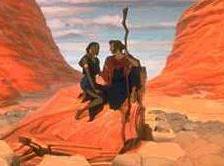
It was intended to show the contentment in their lives together.
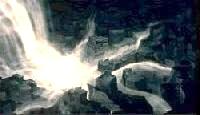
The filmmakers created a constant design element wherever God is manifested. For example, the Burning Bush looks like the Angel of Death ... only in colour. The fire in the bush will modulate as God speaks to reflect the tone of his words.
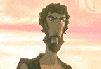
No mention of Moses' sons, Gershom and Eliezer
Queen finds the baby rather than the daughter of the pharaoh. Rameses and Moses are raised as 'brothers' and develop a very close relationship as opposed to a rivalry as 'cousins'.
According to the Bible Aaron spoke for Moses but this film didn't want to take away from Moses so they allow him to speak for himself. Aaron, therefore, became the sceptic who represents the doubt and cynicism of the Hebrews.
Rameses' wife, Nefertari, incites him to go against Moses whereas Hotep and Huy, the court magicians, take on this role.
POE has more special effects than any other animated film
A pharaoh would have had many more children (Rameses himself had over 100) but they choose to keep the story simple and focus on Moses and Rameses
Actor Val Kilmer endured 30 recording sessions to capture the voice of Moses (and God), more than any other actor involved in an animated project
Animators couldn't use traditional expansive gestures and exaggerated expressions to convey characters' emotions. In two scenes, when Miriam reveals the truth and at the Burning Bush, Moses doesn't speak a lot, he mostly listens so it was difficult for animators to show his emotions - used subtle head movements to make the character as believable as possible.

The animators worked on the Moses character for 5 months before production, perfecting the character design, action, gesture and dialogue
A drawing of Seti on the palace walls foreshadows a pose Rameses will assume when telling Moses that he will not free the Hebrews.
POE required more than 1000 backgrounds in an unusually diverse array of scenery: empty desert landscapes, lush water gardens in Seti's palace, intimate interior of Jethro's tent, monumental Egyptian temples, arid hills of Midian to the dank bed of the Red Sea.
Due to their complexity, the following scenes were completely computer animated:
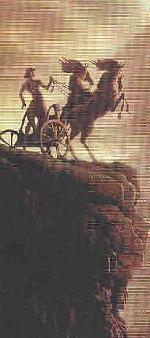
Chariot race
Burning bush
Plague sequence
Songs are not showstoppers -- ie: characters / action doesn't stop and bring the action to a halt, the song moves the action along.
The outline boards are selected illustrations that represent the main events in the story and give the filmmakers a visual, easy-to-follow picture of the story.
The storyboards are a series of black and white drawings that include every scene (organized in sequence or in a group of scenes) and give the filmmakers a detailed look at the story. POE required over two years of storyboarding
Storyboard and the outline boards are valuable tools for planning; all work that followed (either musical or animated) refers back to the these visual representations of the story
Kelly Kimball, was the first full-time staff costume designer on an animated feature.
Final line animators take the animators sketches and clean up the rough drawings and then send them to the computer artist to be colored. The final line animators has to make sure a character stays consistently true to the design without loosing the animators individual style
The chariot race between those mischievous princes Moses and Rameses is tour de force of dynamic cinematography. What makes it possible is the Exposure tool, a software program developed at DreamWorks that enables the animators to marry hand-drawn 2-D images and computer-generated 3-D objects seamlessly in a single space, and to maneuver the camera like live-action filmmakers
Executive Producer Jeffrey Katzenberg took his directors and animators on a two-week trek to Egypt and the Sinai to experience ancient sites and customs first hand
Animators incorporated a lot of actors Jeff Goldblum's natural "physical gestures" into the character of Aaron
The grandeur of the Red Sea is achieved by showing relationships between small and large objects," explains artist Sam Michlap. "How big is a wave? How big are those exposed rocks? How big is a person next to them? If you don't ground the image of the miracle in something that the viewer understands, it becomes nothing."
"We tried to create a number of minor Hebrew characters, almost like bit players whom the viewers will get to know through the story. The audience will recognize, say, an old woman who comforts a little girl. When the characters are finally free, the viewers will feel some attachment to the people and their ordeal ...I don't think that's ever been done in an animated feature," explains director Steve Hickner.
Behavioural software was used for scenes contain a lot of movement or multiple characters or objects which would take animators too long to draw by hand. The software allowed animators to recreate a character or a group of characters multiple times and all in different sizes and colours to represent a large crowd or many objects (ie: the Exodus and the locusts during the plagues).

The DreamWorks team developed new software called an Exposure Tool which allows computer artists to pull all the elements together and to choreograph all the moves at one time, within a unified environment
The Burning Bush is presented as a slowdowned smoldering flame. It produces an effect on the surrounding rocks that looks much like sunlight reflecting on water, an effect that the artists dubbed "caustic lighting." The light pulses in a rhythm that is partially synchronized to the voice track, and the colour of the lighting changes to reflect the meaning of the words that God speaks
Animator Rodlphe Guenoden: "In this movie, there are silences between the characters instead of the usual ping-pong dialogue, where you cut to each character as he says a line. You've got the time to grasp the emotions and the relationships between the characters; not just what they're saying, but in what they're feeling or thinking. I've been waiting to do that kind of thing for a long time."
To draw the older Moses, the filmmakers needed an "animator who was an exceptional actor and draftsman and who could work with a large crew," says director Steve Hickner. This was important because the older Moses is in a lot of scenes in the movie and required thousands of drawings
A colour artist, using a computer, adds colour to the cleaned up character drawings (by hand, this is time consuming as colour changes depending on the scene ie: character moves into the shadow)

Original ending was when Moses looks at Rameses and says "Goodbye brother." Steve Hickner came up with the idea of Tzipporah turning Moses around to face the Hebrews and say "Look at your people, Moses.They are free."
"We need to live that moment with Moses," wrote Hickner. "We need to feel his joy at succeeding. We need to go out of the theatre not with the bittersweet sorrow of lost friendship, but with the triumph of a people getting freedom at last."
"Please put that memo in your archives," Katzenberg told Hickner. "Someday when you pick the top 10 decisions out of the million that went into making the movie, this will be one of the more important and, in my opinion, the most brilliant."

