The International Space Station

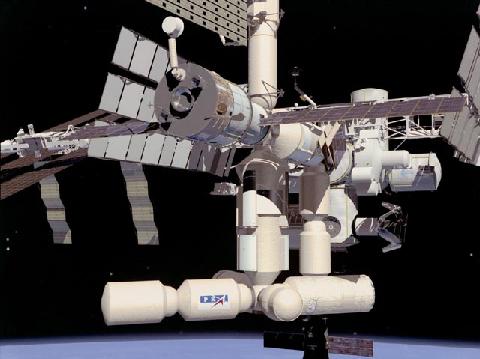
This is an artist's concept of what the new space station will look like
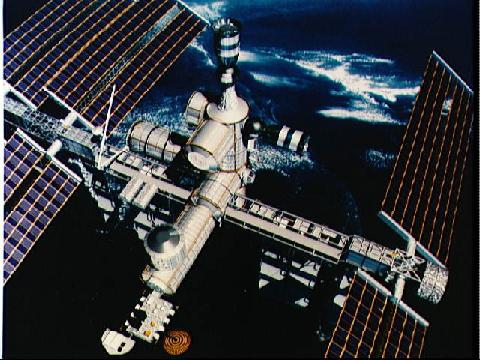
This is a computer drawing of the space station


The International Space Station, or ISS, represents a global partnership of 16 nations. This project is an engineering, scientific and technological marvel ushering in a new era of human space exploration. The million-pound space station will include six laboratories and provide more space for research than any spacecraft ever built. Internal volume of the space station will be roughly equal to the passenger cabin volume of a 747 jumbo jet.
More that 40 space flights over five years and at least three space vehicles-the Space shuttle, the Russian Soyuz rocket and the Russian Proton rocket-will deliver the various space station components to Earth orbit. Assembly of the more than 100 compponents will require a combination of human space walks and robot technolgies.
Nine flights, which includes six space shuttle missions, have already occurred in the International Space Station era. The first flight was a Russian Proton rocket that lifted off in November 1998 and placed the Zarya module in orbit. In early December of that same year, the STS-88 (Space Transportation System-shuttle) mission saw the Space Shuttle Endeavour attach the Unity module to Zarya initiating the first ISS assembly sequence. The third ISS mission was STS-96 in June 1999 with Discovery supplying the modules with tool and cranes.
The fourth flight to the space station was STS-101, shich launched May 19, 2000. The seven-member crew of STS-101 performed maintenance tasks and delivered supplies in preparation for the arrival of the Zvezda Service Module and station's first permanent crew.
This past week (Feb 2001) the space shuttle delivered the Destiny module, which will provide the space station with lab space