History
|
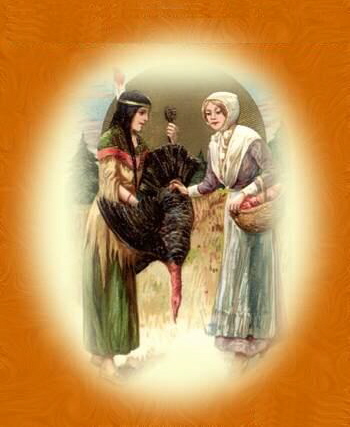
The Pilgrims
set ground at Plymouth Rock on December 11, 1620. Their first winter was
devastating. At the beginning of the following fall, they had lost 46 of
the original 102 who sailed on the Mayflower. But the harvest of 1621 was
a bountiful one. And the remaining colonists decided to celebrate with
a feast -- including 91 Indians who had helped the Pilgrims survive their
first year. It is believed that the Pilgrims would not have made it through
the year without the help of the natives. The feast was more of a traditional
English harvest festival than a true "thanksgiving" observance. It lasted
three days.
Another modern staple at almost every Thanksgiving table is pumpkin pie. But it is unlikely that the first feast included that treat. The supply of flour had been long diminished, so there was no bread or pastries of any kind. However, they did eat boiled pumpkin, and they produced a type of fried bread from their corn crop. There was also no milk, cider, potatoes, or butter. There was no domestic cattle for dairy products, and the newly-discovered potato was still considered by many Europeans to be poisonous. But the feast did include fish, berries, watercress, lobster, dried fruit, clams, venison, and plums. This "thanksgiving"
feast was not repeated the following year. But in 1623, during a severe
drought, the pilgrims gathered in a prayer service, praying for rain. When
a long, steady rain followed the very next day, Governor Bradford proclaimed
another day of Thanksgiving, again inviting their Indian friends. It wasn't
until June of 1676 that another Day of Thanksgiving was proclaimed.
October of 1777
marked the first time that all 13 colonies joined in a thanksgiving celebration.
It also commemorated the patriotic victory over the British at Saratoga.
But it was a one-time affair.
Thanksgiving was proclaimed by every president after Lincoln. The date was changed a couple of times, most recently by Franklin Roosevelt, who set it up one week to the next-to-last Thursday in order to create a longer Christmas shopping season. Public uproar against this decision caused the president to move Thanksgiving back to its original date two years later. And in 1941, Thanksgiving was finally sanctioned by Congress as a legal holiday, as the fourth Thursday in November. |
 |
 |
 |
 |
 |