
BODY AND AERODYNAMICS |
Body and Aerodynamics
|
Part 1: Planning
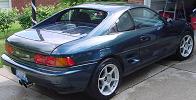
The Goal Bodywork on an import especially is always dangerous ground for those who care about taste. Its rare indeed to see an aftermarket body panel on virtually any car on the road that is both functional and aesthetically appealing. The ricer fad has grown out of control, and you cant help but sit back and laugh at some of these people. What were they thinking!?? News flash! Clear taillights look terrible! Combat bodykits look ridiculous! The quest here is to come up with a setup that is not only aesthetically pleasing, but aerodynamically functional as well. I do care about looks, but the most important things to me here are drag and downforce. The MR2 is pretty good aerodynamically, with a .31 drag coefficient, but this can always be improved. Virtually all cars on the road today produce lift rather than downforce, and it is absolutely critical for high speed stability that this be minimized My goal is to reduce drag, create positive downforce, and keep the car looking good. Looks are subjective of course, but there are some general aesthetic guidelines to follow.
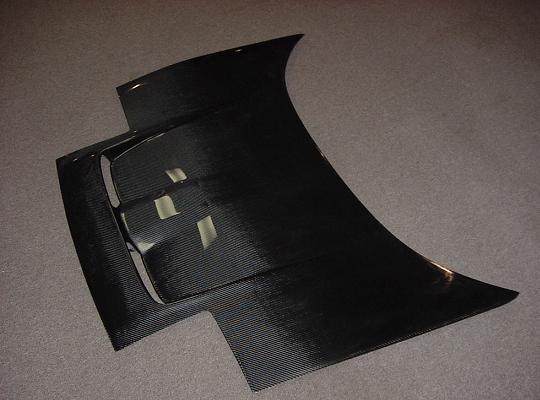
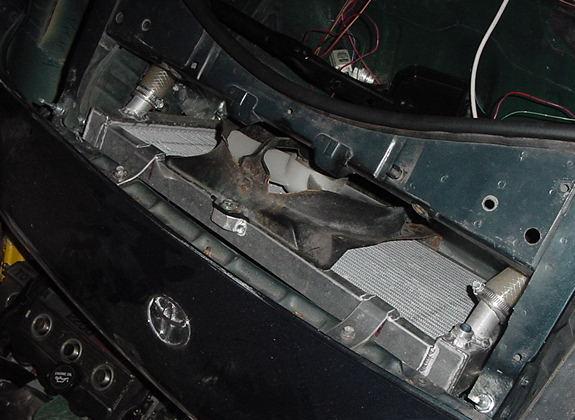
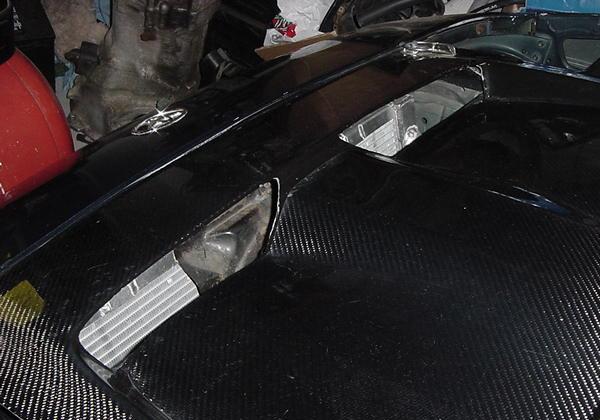
Hood/Radiator The biggest aerodynamic fault on the MR2 in my opinion is the airflow through the radiator. The stock design, as with most cars on the road, takes the radiator air through the nose, and dumps it under the car, about the worst conceivable place to vent the air. Some ultra high performance and racing cars utilize a far superior design, venting the radiator air through holes in the hood, thereby minimizing airflow under the car. The Lotus Elise is a good example, both because it vents the radiator air out the hood, and it actually produces real downforce. I purchased a Border-style vented carbon fiber hood, and since my radiator had a leak anyways, I had a custom aluminum radiator made up with custom mounts, allowing it to be angled to allow airflow upward rather than downward, and out the vented hood. The hood weighs 7.0lbs, its incredibly light, and the holes in it allow most of the radiator air to go out the hood. I closed off the underside of the car preventing any significant amount of the air to go under the car. The only problem is the hood doesn't have large enough vents for all the airflow and it seems to flex up a bit at high speed. I widened the holes in the hood as much as I could for the time being, and I plan on improving this design in the coming months by creating brake ducts to the front brakes, allowing much of the airflow to be used to cool the brakes, and I will be sealing off the air passage under the car better, and creating a flat underpanel under the front of the car to minimize drag.
Rear window The second biggest aerodynamic fault on the MR2 in my opinion is the rear window design. The notchback design causes turbulence, resulting in increased drag and reduced effectiveness of spoilers/wings on the rear. My solution to this problem will be something I've never actually seen done to an MR2 in the states. I found this picture which shows pretty much exactly what I plan to do, but I know nothing of the car or its owner. I will use some plexiglass for the center portion, and some mesh on the sides to allow proper airflow out of the engine bay. This design should allow very smooth airflow over the back of the car, plus I think it looks pretty dang good!
Underbody Diffuser Many race cars and a few select street cars have underbody diffusers. Here is a good site on what a diffuser is and why its important. Basically a small amount of air flows under the car, and a diffuser is an increasing size channel toward the rear of the car. The small amount of air that went under the front of the car now has a bigger volume to fill, and this creates a small vacuum literally sucking the car to the road at speed. The beauty of a diffuser is that it creates all this downforce with virtually no additional drag like wings and spoilers create. These diffusers are incredibly effective on race cars that can sit an inch above the ground, but on street cars that require a more manageable ride height, their effectiveness isn't quite as great. They are still effective however, and I will be creating one for my car. I'll eventually lower the car a bit more so this is all more effective. The whole underbody of the car will be made as smooth as possible, for the minimum amount of turbulence and drag.
Headlights I decided to eliminate the stock pop-up headlight design in favor of a flush mount setup. This cuts down on a lot of weight and complexity, and improves aerodynamics during night driving. I have the streetweapon flushmount kit, and I'm deciding which headlights to install now.
Sunroof and Antenna I'm a big fan of hardtops, I hate the weight and the loss of an inch of headroom that goes with a sunroof, and I think hardtops look much cleaner. I'm eliminating the antenna as well, as I hate listening to the radio, and it looks ugly on the roof there. I'm going to have the roof re-done a bit in a body shop, to weld in a flat piece of metal to cover the hole where the sunroof and antenna used to be, and to fix up some hail damage. I'll also be removing the sunroof frame and all the assorted garbage that goes with that.
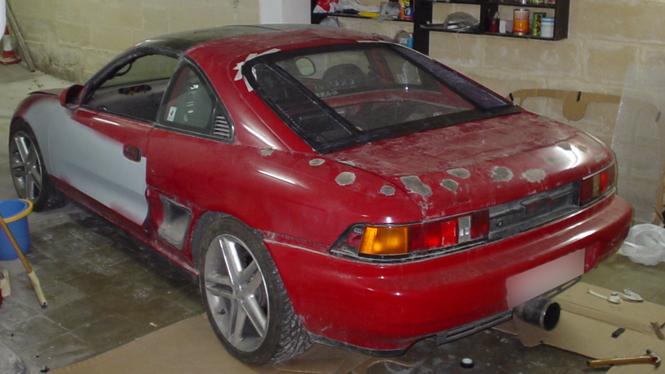
Aesthetic Improvements There are a few things I plan to do more for looks than anything. First, I want to remove the side moldings as I find them ugly, and fill them in flush with the body. If I decide to make fiberglass or CF doors, I'll just make them with no moldings. I already installed the '94+ taillights, as they look much better than the '91-'93's. As for body kit pieces, I like the Toms front bumper, but I'd like it to be a little lower, closer to the ground. I'm not entirely sure what I want to do yet. I'm pretty sure I'll be repainting the car black, preferably a pearl color so its got more of a deep look to it and is harder to see scratches and imperfections. |