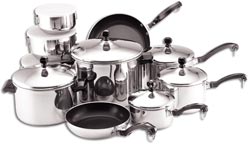
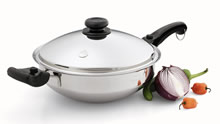
While almost any container can effectively cook your favorite soup, there are many specialty pots and pans that help ease the tedious work that must be done in the kitchen.
Basic Pots & Pans Chart
Here's a small table about the most common pots & pans that are used in the kitchen.
| Braiser Pot | 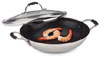
|
This is a traditional everyday pan. This is a perfect dish for foods that start on the stovetop and end in the oven. |
| Broiler Pot | 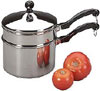
|
This double-pot is used to gently and throughly cook foods. The bottom pot is partly filled with water, so that your food in the second pot will cook evenly and slowly. This is perfect for chocolates! |
| Chef Pot | 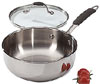
|
The chef pot has a flat bottom for even heating. The sides are gently sloped to make whisking and stirring a breeze. |
| Pasta Pot | 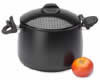
|
The pasta pot is shaped the same as a stock pot, but has holes in the lid. This elminates the need for a colinder for draining pasta, vegetables, meats... anything you wish to drain! |
| Pressure Cooker | 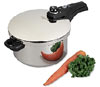
|
Pressure cookers cook foods quickly at higher temperatures, WITHOUT burning! You can cut down cooking time by 75% by using a pressure cooker. |
| Sauce Pan | 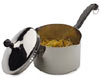
|
Sauce pans are essential in the kitchen. These can be used to cook leftovers, cook sticky grains (like oatmeal), or cook delicate sauces. Make sure you pick a sauce pan made out of a high heat conductor, so the pan will heat evenly. |
| Saute Pan | 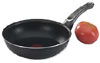
|
The saute pan has higher sides and a larger base than the skillet, allowing more food to heat quicker. Don't get a non-stick saute pan - the non-stick material will come off with the constant high temperature that it applied to it. |
| Skillet Pan | 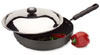
|
The skillet is a generic saute pan, and can be used for nearly anything you need to do in the kitchen. |
| Stock Pot | 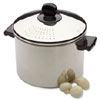
|
This is known as the "big cahoona" of soup cooking. The stock pot has a thick bottom, to allow long simmering without scorching. Also, the limited surface area locks in flavors while eliminating evaporation of your soup's broth. Make sure the pot is stainless steel with an aluminum bottom. |
Here are some pointers as to what metal your pot should be.
-
Aluminum
This heats up evenly and quickly, but stains easily and can react with your food. This is an inexpensive option for general cooking. -
Copper
Copper also heats fast and evenly, but may react with your food, discolors from water, and dents/scratches easily. But this is a good option for cooking delicate sauces. -
Stainless Steel
This is the king of pot metals. It won'ts corrode, tarnish, or scratch. It's lightweight, durable, and easy to clean. But this metal doesn't heat as quickly as other metals. -
Cast Iron
This is some thick, heavy, and durable stuff! But it will react with acidic foods, and doesn't heat very fast. This is a good choice for browning and frying. -
Nonstick
This is a breeze to clean, and won't stick to low fat foods. Unfortantely, this will scratch easily.
Back to Soup Tools
copyright 2006 R.Pflughaupt
last updated 02/09/2006