|
|
|
|
| Khaleel's Home | Some Saudi Links | Map of the Kingdom | Saudi Time Line | Tell Comments |
|
 |
|
 |
|
 |
Country profile: Saudi Arabia
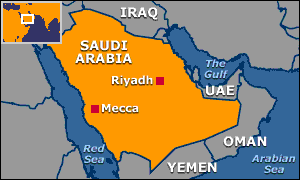
One of the most devout and insular countries in the Middle East, Saudi Arabia has emerged from being an underdeveloped desert kingdom to become one of the wealthiest nations in the region thanks to vast oil resources.
OVERVIEW |

|
Named after the ruling Al Sa'ud family, who first came to power in the 18th century, the country includes the Hijaz region - the birthplace of Muhammad and the cradle of Islam. This fact, combined with the Al Sa'uds' espousal of a strict interpretation of Sunni Islam known as Wahhabism, has led it to develop a strongly religious self-identity.
Saudi Arabia was established in 1932 by King Abd al-Aziz - known as the Lion of Najd - who took over Hijaz from the Hashimite family and united the country under his family's rule. Since his death in 1953, he has been succeeded by various sons.
Internal stability has meant successive leaders have been able to concentrate on modernisation and developing the country's role as a regional power. In 1990 King Fahd invited US-led troops to enter the country following the invasion of Kuwait by Iraq. Saudi Arabia served as the base from which Kuwait was eventually liberated.
FACTS |
|
| SAUDI FACTS |
| Population: 21m |
| Capital: Riyadh |
| Major language: Arabic |
| Major religion: Islam |
| Form of government: Monarchy |
| Monetary unit: 1 Riyal = 100 halalah |
| Main exports: Oil, gas, cereals |
| Internet domain: .sa |
| Time zone: gmt +3hrs |
| International dialling code: +966 |
LEADERS |
|
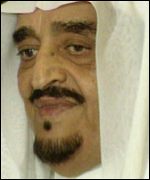 King Fahd |
Son of the kingdom's founder, Fahd became king after the death of his brother, King Khalid in June 1982. He was already experienced in politics when he became king. In 1986, he added the title "Custodian of the Two Holy Mosques" to his name to affirm his commitment to Islam. He has shown support for all Muslims, encouraging donations and assistance from Saudi people to Muslims wordwide, including Kosovo. A supporter of the Palestinian cause, he is committed to helping restore stability to the region. In spite of his traditional values, he has supported modernisation and his rule has seen many improvements in education, healthcare and the economy.
MEDIA |
|
Saudi Arabia has one of the most sophisticated and yet restricted media scenes in the Middle East.
The state Broadcasting Service of the Kingdom of Saudi Arabia (BSKSA) is responsible for all broadcasting in the Kingdom and is directly controlled by the Ministry of Information.
Satellite dishes are banned but more than half of Saudi households are believed to have them. People in the country's east have a wide choice of programming as they can pick up signals from more liberal Gulf neighbours.
PressThe government owns the Saudi Press Agency (SPA) and newspapers tend to follow SPA's lead on whether or not to publish news on sensitive subjects.
TelevisionSaudi TV is available on the internet.
Radio
Unauthorised internet access has been possible through Bahrain and UAE. About 21,000 subscribers gain access via Bahrain and 5,000 via UAE. By unofficial estimates, two-thirds of internet users are women, possibly because of restrictions on their movements.
In April 1999, Saudi Arabia reportedly had 112,500 internet users and 45,000 online subscribers. This represents an increase in subscribers of 140% since December 1998.
Internet links:

| Khaleel's Home | Some Saudi Links | Map of the Kingdom | Saudi Time Line | Tell Comments |

 |
|
 PROFILE
SAUDI ARABIA
PROFILE
SAUDI ARABIA