
It is easy to say that we trim the sails to the wind, and that we 'sheet-in' when we are close hauled and we 'ease-out' when we reach or sail off the wind. This is true, but there is much more to sail trim than sheeting the sail. There are many ways to control sail shape. If we learn how to control the shape of our sails and pay careful attention to how sail shape affects our speed, we will learn how to go faster.The goal of sail trim is to maximize the lift the sail provides while minimizing the drag it produces. Ideally, the sail trimmer will be able to look at the sail and recognize the characteristics which make the sail fast for the particular conditions. The following discussion will help you understand the fundamentals of sail shape, and the various methods of controlling sail shape.
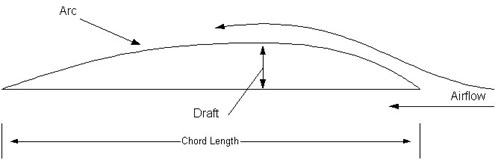
Draft is the depth of the arc produced by the sail. Because the air traveling over the outside of the sail (along the arc) travels further (and therefore faster), the Bernoulli effect produces lift. The draft determines how much further the air must travel and therefore has a great effect on lift. Draft also produces drag. The greater the speed of the airflow, the greater the drag produced by draft. At some point, the drag produced by the sail out weighs the benefit of the lift it produces. Because the drag increases as the apparent wind increases, sail trimmers want their sails to have deep full shapes in light winds and flatter shapes in heavy winds. The amount of draft is controlled by sheet tension. We are familiar with using the genoa sheet to control the angle of the sail to the wind, but as we become close-hauled, small adjustments in sheet tension affect the draft of the sail. A very tight jib sheet will reduce draft; easing the sheet will add draft.