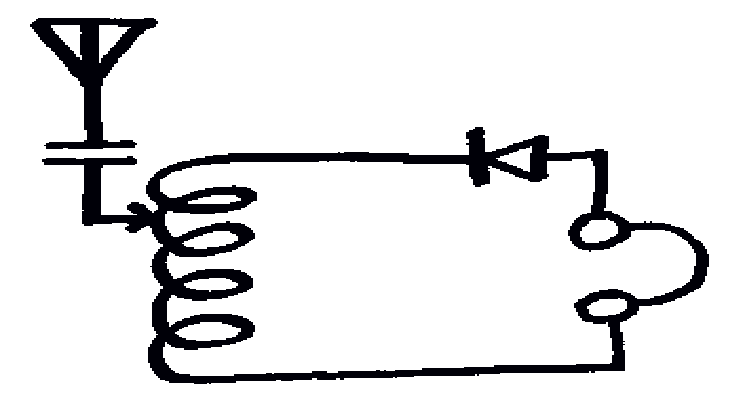
We now know enough about capacitors to use them in our radio. We can use a small capacitor between the antenna and the coil to lower the capacitance of the antenna. This will allow the coil to tune to stations that are higher in frequency. The capacitor is in series with the capacitance of the antenna, so the total capacitance is lower.
The circuit now looks like this:
Building a crystal radio out of household items.
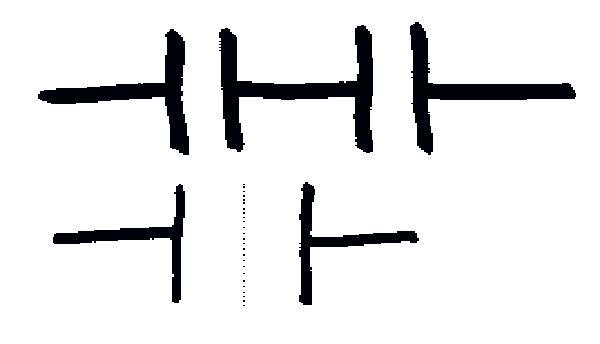
If we connect the capacitors in series, it has the effect of making the plates of the capacitor be farther apart. This can be seen in the illustration below. The bottom plate of one capacitor is connected to the top plate of the other. Electrically, this is the same as making the two plates into one plate in the middle of a capacitor that has twice the distance between the outer plates. The phantom inner plate has no effect, and is drawn as a dotted line in the bottom illustration.
Building your own capacitors


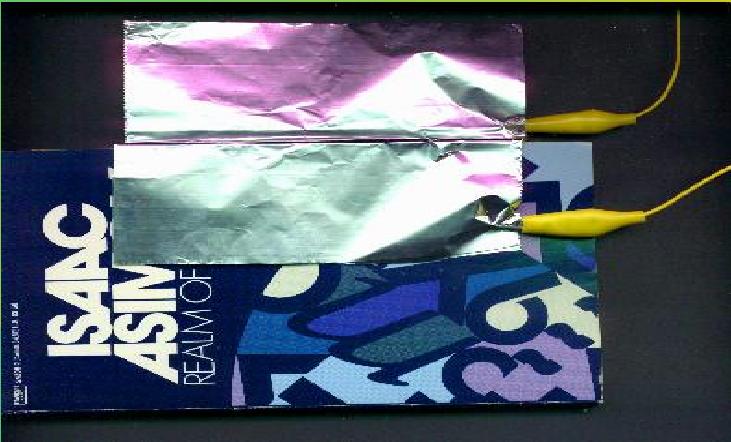
Capacitors are easy to build in the kitchen out of aluminum foil. In fact, our first capacitor will simply be two sheets of foil tucked into a paperback book, with one page separating them, as if they were two bookmarks.
This quick capacitor has advantages and disadvantages. It is quick and easy to build, it can be easily adjusted to vary the capacitance by simply sliding one of the foil strips out of the book a little at a time, thus reducing the capacitance. On the other hand, it is bulky, and comes apart easily, and will change its capacitance when you press down on the book, squeezing the pages closer together. Lastly, it can change capacitance slightly on humid days as the pages of the book absorb moisture.


With only a little more effort, we can make a durable, stable, capacitor using foil and a little waxed paper or plastic wrap.


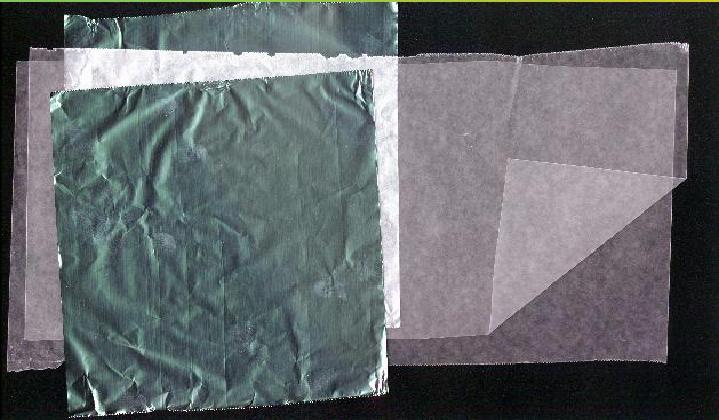
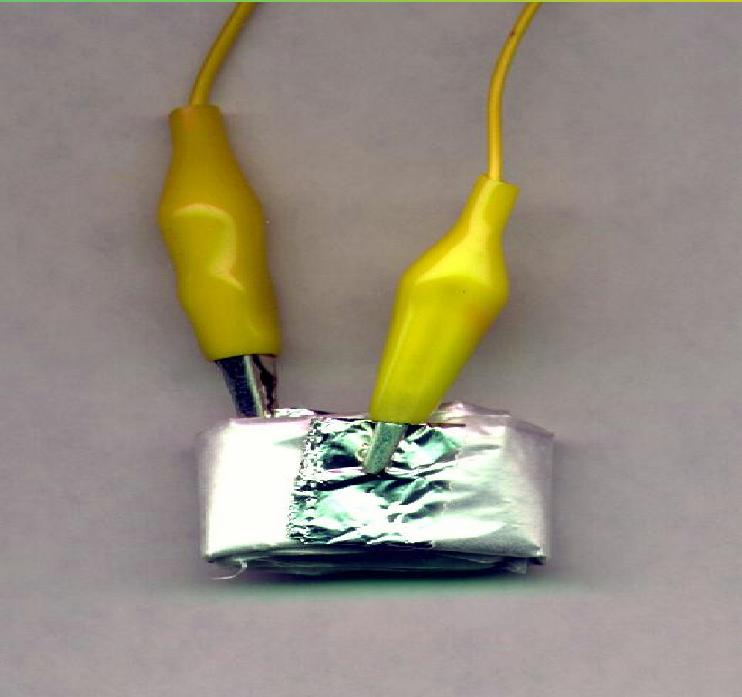
We start by laying down a sheet of waxed paper. On top of that we lay a sheet of foil. We leave the foil hanging over the top of the waxed paper, so we will have something to which we can attach a wire. We lay another piece of waxed paper over the first piece and the foil. We then lay another piece of foil on the top, overlapping it at the bottom for our other wire. We make sure that the foil sheets are always separated by the waxed paper, so they do not make an electrical connection.
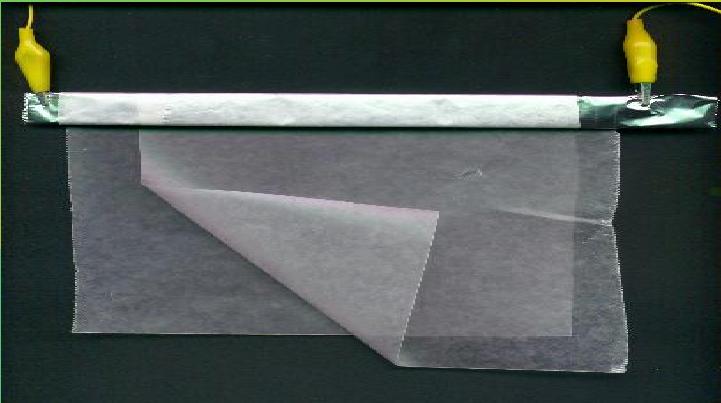
Now we roll the whole thing up like a jelly roll
Now we trim up the paper with some scissors, and we can even roll it up the other way to make it smaller.
This capacitor is not adjustable like our first one, but we can make several of them, each a different size, and connect the one we want. We can even combine them in parallel or in series to change their capacitance.

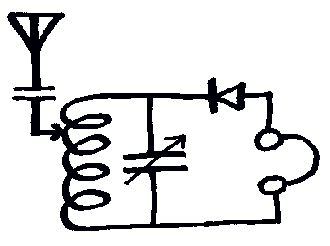
We can use the small fixed capacitor to tune the antenna, and another variable capacitor (like our book capacitor) to tune the coil. We put the variable capacitor in parallel with the coil, to make a tank circuit. The small fixed capacitor lowers the antenna's capacitance, making the circuit tune to a higher frequency. But the variable capacitor adds more capacitance to the circuit, making it tune to a lower frequency. Now we can tune the radio with the taps on the coil, and by sliding the foil in and out of the book.
The circuit now looks like this:
Notice how the variable capacitor has an arrow through it to indicate that it can change its capacitance.
Hosted by www.Geocities.ws

1