Okay, so they're not Kafka and Camus! That doesn't mean you won't be reading a great story when you read one of these books. I highly recommend all of them even to the discerning English majors out there. (And yes, I have actually read all of the books on this page. Except, of course, for the books I haven't read.)
Science Fiction
 -Red Mars,
 Green Mars, and
 Blue Mars by Kim Stanley Robinson-
This series of books is in the category of "hard" sci-fi, in that it incorporates modern technology and is set in the near future. Of course, the whole series spans about 100 years, but what makes it great is that all of the important characters are incredibly long-lived (thanks to some special futuristic medicine that increases lifespan) and therefore present all the way to the end of the last book. The subject of the series, is, quite obviously, the exploration and colonization of Mars. Idiots will wonder what the heck these books are about. No space battles? No aliens?? Nope. Just lots of good writing and a little bit of science.
The protagonists screw up all the time. Essentially, they are human in a very inhuman environment. This conflict makes for a great story.
- Rogue Star,
-
Rogue Star,
- Firestar,
-
Firestar,
- Lodestar, and
-
Lodestar, and
- Falling Stars by Michael Flynn-
More hard sci-fi. While not quite on par with Kim Stanley Robinson's writing ability, Michael Flynn has created with this series a very intriguing story about a wealthy corporate figurehead who tries to promote space development because of her fear of an asteroid impact (the reason for this fear is rather long-winded, but believeable). For the first two books (and most of the third), there are no (significant) asteroids. But any fool knows that there's going to be an asteroid impact at some point before the series ends. Too bad I haven't read the last book, Falling Stars, yet, or I would be able to elaborate on what happens. As soon as I read it I'll tell you.
I finished Falling Stars a couple of days ago. I must say, this series didn't end quite the way I thought it would! It turns out that aliens sent the asteroids, and that there are five of them on the way to Earth! (Oh, however will humanity survive???) I really liked the way everything turned out. The writing was good, as was the science. Flynn even incorporated current scientific figures into the writing (like Robert Zubrin, the author of The Case for Mars), and in the naming of ships (the Yeager and the Jackie Cochran, well they aren't current but you know). An excellent ending to an excellent series. If you read these, a word of advice: don't let the third book keep you from reading the fourth. Lodestar wasn't up to par with the other books, but Flynn makes up for it at the end.
- Beholder's Eye,
-
Beholder's Eye,
- Changing Vision, and
  Hidden in Sight
by Julie E. Czerneda-
These books aren't classic sci-fi, nor are they written in the same style as relatively well-known writers like Kim Stanley Robinson and Orsen Scott Card. But these books are just entertaining, and the idea behind them is quite original.
The protagonist is a shape-shifter named Esen, who is part of a small group of beings like her (I believe there are only five or six at the beginning of the first book). Anyways, their goal/mission/purpose is to shift into the resident beings on different planets, spend a while there (maybe up to 100 years...they have plenty of time to do so since they live forever) and study the culture. Then they leave, and that culture is forever preserved within the mind of the shifter, even after the culture dies out.
Then one of Esen's kind comes into our galaxy, and this particular being, which represents the original state of Esen's species, is belligerent and lethal to anything living. So the first book is about Esen's efforts to stop this being. She also has a side-kick of sorts in the form of a human man, whose name is Paul. He's cool.
Anyway, that is the gist of what this series is like. I haven't read the third book, Hidden in Sight yet, but I will. And I'm sure, like the first two books, it is an excellent read.
Hidden in Sight is a good read also, and wraps up the story rather nicely, though it leaves some room for a sequel, should the author choose. Anyway, in this book, one of Esen's long-lost web-kin returns! And she turns out to be more of an enemy than a friend. At the same time there is a battle of sorts going on between Esen's web-kin and a member of a militaristic human culture called the Kraal. It's a fairly complex story, much more so than the ones before it. And while it doesn't stand out from the other two books, it certainly is a book (and series) that I recommend highly.
- Ender's Game by Orsen Scott Card-
I think all gifted and talented kids (and adults) should read this book. If I had read this book when I was young(er) I would've idolized Ender and the other little genius kids. Chances are I would've tried a bit harder in school. Maybe not....who knows.
Anyway, this book is about a group of child geniuses whose intellectual abilities are utilized by the military to fight a "war" against an "invading" alien species. Note my use of quotes in the previous sentence. Now I don't want to give too much away, but let's just say that all of the worry about Earth being obliterated by outsiders in this book is...well...a bunch of crap. And when the kids find out that there is no real threat...they get kind of pissed off.
This book is also a good metaphor for the United States. The U.S. is wasting its efforts on "fighting terrorism" in that most of the "threats" and most of the xenophobia from the government is not necessary for our country's protection. But I digress. Check out Ender's Game. Is goot.
- Solaris by Stanislav Lem-
A neat idea. It's about some guys on a space station in orbit around a planet. But the planet is alive and apparently likes to screw with the guys trying to study it. It's not riveting, but it is a classic and very original. If you saw the movie "Solaris" with George Clooney and thought it sucked, it's because you didn't read the friggin' book beforehand. Read the book. THEN see the movie. It makes life so much easier.
- Contact by Carl Sagan-
As with Solaris, this is a book that you must read BEFORE you see the movie! I actually did the opposite, but that's only because I didn't know the book existed until after I saw the movie. Which is a shame, because it would've made the movie so much more enjoyable....but I digress.
This book is about a woman/astronomer who, when listening for radio signals from deep space, finds a signal from aliens. It is set in the present-day. She and a bunch of scientists realize that the signal carries with it instructions for building a machine of some kind. Well, it turns out that the machine is a travel device, and it takes the group of humans (as opposed to just one person in the movie) to the star Cygnus X-1, a very powerful black hole (in the movie actress Jodie Foster goes to the nearby star Lyra...a much more boring destination, in my opinion). Lots of stuff happens, but it's a great read. And the movie is incredible. It's what started my love of astronomy (which is now one of my majors)!
- Hyperion and
 The Fall of Hyperion by Dan Simmons-
Ooooo....this is one of those complex pairs of books that is just a really really really goot. The first book sets up the second book in a manner similar to the Canterbury Tales (in that everybody sits around and tells their own story to the group). The main plot is hard to describe...in general, it's about a far-future human culture that has traversed the galaxy and uses controlled black holes to travel directly from one world to another. Quite cool. But then it turns out that those dern computers want to obliterate everything, so they come up with this guy called the Shrike. He kicketh some ass.
So the story is about the conflict between the comps and the humans, but it is told from the eyes of multiple protagonists (although there is one guy who is kind of the main protagonist). The first book brings up a lot of questions, and I mean a LOT of questions, but when you find out that it all gets resolved in the second book you realize you MUST READ The Fall of Hyperion just so you can sleep easy at night. And read it you must.
Star Wars: X-Wing Series by Michael Stackpole (Books 1-4, 8) and Aaron Allston (Books 5-7, 9)
The best Star Wars-based novel series of all time! Nuff said.
 Book 1: Rogue Squadron: An excellent read, introducing the famous Rogue Squadron as seen in the "Star Wars" films. This is the best Star Wars book I ever read, honestly--the writing is engaging and the characters entertaining.
- Book 2: Wedge's Gamble: Rogue Squadron infiltrates the Imperial city of Coruscant in order to gain information vital to the Rebellion. This was the first book in the series I read (by accident), and it got me hooked. But if you haven't started this series already, I strongly suggest starting with Book No. 1.
- Book 3: The Krytos Trap: The Rebels finally get control of Coruscant, famed Rogue pilot Tycho Celchu goes on trial for treason, and another pilot, Corran Horn, finds that he has the Force! To add to that, a mysterious illness is afflicting the citizens of Coruscant!
- Book 4: The Bacta War: Imperial leader Ysanne Isard is in control of Thyferra, a world with a huge supply of bacta, the substance that can cure the ailing citizens of Coruscant. Rogue Squadron must free Thyferra and bring aid to the newly-conquered Rebel world.
- Book 5: Wraith Squadron: Wedge Antilles forms a new squadron of pilots with the "dregs" of other groups; his ragtag Wraith Squadron is a new covert-action force for the Rebellion. Their first mission: survive an attack on their base during training and defeat an Imperial admiral!
- Book 6: Iron Fist: Wraith Squadron's second mission is covered in this book. The team is tasked with stopping a powerful warlord from joining the ranks of the Empire. Infiltration and intelligence-gathering, along with lots of hot-shot pilots and starfighting, can be found in this book.
- Book 7: Solo Command: Rogue Squadron joins forces with Wraith Squadron under the command of Wedge Antilles. They are to stop the ruthless Warlord Zsinj from wreaking havoc on the Rebellion and the galaxy.
- Book 8: Isard's Revenge: As you can probably guess from the title, Ysanne Isard returns somehow from the dead to fight the Rebels yet again. This book is probably the weakest of the entire series, but it's still an excellent read.
- Book 9: Starfighters of Adumar: Rogue Squadron travels to the neutral world of Adumar who is in the midst of deciding whether to join the Imperials or the Rebels. The only problem is, in their culture, they prize military prowess above all else, so negotiating parties are comprised solely of fighter pilots. The Rogues must battle and win in order to gain the allegiance of an entire world. Talk about pressure. I fabulous ending to the series!
- Gravity by Tess Gerritsen-
This book is set in the present-day, and is the story of a group of astronauts aboard the International Space Station who are conducting experiments for a "typical" Shuttle mission. One of the experimental containers holds a lifeform discovered at the bottom of the ocean; it is able to inhabit organisms and acquire their best traits, allowing the lifeform to become even more resistant to harsh environments.
Well, one of the astronauts gets infected with this lifeform, called a Chimera, and things get pretty ugly after that. Considering that I read this book a short time after the Columbia disaster, it was somewhat startling to read about shuttles blowing up/crashing and astronauts dying and whatnot. But the story is excellent, and very morbid. It has a happy ending for the protagonist, though, and because the writer knows her stuff (she used to be a doctor), the situations that come up and the ways the crew of the Shuttle deal with them are quite believable. I ate this book up!
- The Collapsium by Wil McCarthy-
At first the author of this book really turned me off to this story, for a number of reasons. First of all, the characters seemed like your typical archetypes: the brilliant but socially inept scientist, the beautiful and sought-after Queen, the alter-ego of the scientist, namely your typical "mad" scientist. Also, the author makes the assumption that everyone out there is familiar with some of the more intimate details of modern physics. I have to say that if I hadn't just finished a class on that particular subject I would've been infuriated with the amount of information going over my head in this book.
About half-way through, though, the story started to get interesting. The Marlon Sykes character was a bit of a stretch, but the fact that he ends up being the bad guy was actually a surprise. And the physics in the book did make it a learning experience...though some of his ideas are wild, it is good to know that it's all based on current theories. I was debating as to whether I should read the sequel to this book or not. I think I will. McCarthy, while not turning out characters the likes of Kim Stanley Robinson, has made up for it (mostly) by making a likeable story.
- Spin State by Chris Moriarty-
I read this book because I was in the mood for some sci-fi that had lots of modern physics in it. And while this book didn't turn out to be what I expected, it ended up being something better. The story is about Major Catherine Li, an artificial human who serves the United Nations military in the 24th century. In order to transport from place to place, the military uses Bose-Einstein condensates harvested from the planet Compson's World. Compson's World is the only place where this product can be mined and therefore it is a very important planet. When a prominent scientist named Hannah Sharifi dies on Compson's World, Major Li is sent to investigate. What she finds is a positively huge conspiracy involving one of her most trusted associates within the U.N.
While the author makes some assumptions about the reader (that you know what Bose-Einstein condensates are, for instance), you really don't need much knowledge of physics to get the gyst of her ideas. But knowing some modern physics makes it a little more interesting. Also, having an open mind is a must for this story. One of the amazon.com reviews I read about this book proclaimed disgust at the several lesbian moments in the book, along with Major Li's involvement with an A.I.
Seriously people, who gives a crap? As if gay rights is going to be an issue several hundred years from now!
Anyways, this book is a great story, and fairly long (which is nice for good books). The writing is excellent, and the characters--especially the A.I. named Cohen--seem remarkably real. I believe Chris Moriarty is on the verge of becoming another Kim Stanley Robinson.
- Trading in Danger by Elizabeth Moon-
This book is about Kylara Vatta, daughter of the leaders of a very prestigious interstellar transport company. Going against the family tradition of working in their transport business, Kylara ("Ky") decides to go into the military instead. But her plans for a great military career are dashed when one of her fellow students betrays her and she is kicked out of the Military Academy. She goes back to her parents, and they let her into the family business, even though Ky knows it is probably not what she wants to do for the rest of her life. Her father gives her command of an old, decrepit ship and orders her, as her first task for the company, to take the ship to the scrapyard.
Well, getting command of her own ship kind of goes to Ky's head, and she does her best to find a way to salvage the ship rather than letting it go to scrap. When she takes on a personal mission to try to raise some extra money to pay for ship repairs, Ky and her crew end up in a system caught in the beginnings of an interplanetary war. The rest of the book is about how Ky and her people get themselves out of trouble without dying in the process.
What I liked about this book was that the main character is about my age (early twenties) and even though she is relatively inexperienced she proves herself in tough situations. Also, the author does a good job of making the situations she faces realistic; in other words, Ky doesn't have any of those lucky coincidences that seem to dominate most movies/stories these days. She gets out in one piece because she makes it happen that way. So anyways, this is a good story, with good writing and good characters. It doesn't have much (if any) hard science in it, but it does have a lot of military overtones and I can't wait to read the second book, Marque and Reprisal because I hear it's even better.
- Stardoc: A Novel by S. L. Viehl
I read this book in about 5 days. For a full-time college student, reading a 400-page novel in that amount of time has to say something about the book...and if there's one thing to say about Stardoc, it's that the story is addicting. The book is about a doctor named Cherijo Grey Veil, who lives on Earth with her maniacal father until finally she can't tolerate him anymore and runs away. She chooses to work as a trauma doctor on a far-flung planet on the edge of civilization called Kevarzangia Two. On K-2, as it is called, she is required to treat mostly aliens, since Terrans are in the strict minority. She is really out of her element since she has never treated anyone but humans before!
Later on she finds out that she is a geneticallly-inhanced clone of her father (talk about a screwed up family) and has to deal with her father's ranting for her to come back home. My big beef with this book is the lack of character of the protagonist: she is the most obnoxious, demanding, self-centered and sarcastic (not in a good way) character I have ever read about. If I knew her in real life I would kick her ass for real. But anyways, she meets a telepathic human named Duncan Reever, who in my opinion is the best character in the book, despite the fact that he (for some reason) is pretty much head over heals for Cherijo.
There are some other intrigues in this book, including Cherijo's marriage to a big blue guy named Kao Torin, an outbreak of a deadly sentient microbe on K-2 that kills most of the population (including Kao), and her father's placing a bounty on her head after she escapes his intrusion into her life on K-2. I'm going to read the second book, Beyond Varallan, but honestly if the main character doesn't end her non-stop snide comments to literally everybody (including poor Duncan) I may not continue reading the other books in this series because it's just too much to tolerate. We'll see.
- Stardoc II: Beyond Varallan by S. L. Viehl
This book continues exactly where the previous novel left off, that is, with Cherijo's running from the League, a group of folks send by her dad to capture her. This was a good book in that the story was exciting, I was never bored with what was going on, and I look forward to reading the next book. The bad thing(s) is/are, that a) Cherijo was even more sarcastic and pissy in this book (sure, she was drugged, but still) than in the last one, b) it seems like every man in the universe is chasing after her, for what reason I don't know, but it gets old after a while, c) Cherijo gets beaten/poisoned/beat up/etc even more in this book than in the last one, and apparently that doesn't bother her at all--for instance, when she thinks at one point that she has been raped, she doesn't seem to care!!--and d) it ends on a cliffhanger which I think is kind of cheap. And Duncan has turned into a bad guy (after getting married to Cherijo! Why??) which is really strange.
But, despite my many beefs with this series, I am hooked, I admit it. I'm going to get the third book after I read some of the other books on my to-read list.
- Marque and Reprisal by Elizabeth Moon
Well, this book definitely lived up to the standards set by the first book, Trading in Danger. Marque and Reprisal is the continuing story of Ky Vatta and her ship, now called the Gary Tobai. Ky's life is changed forever when she discovers that most of her immediate family, along with the vast majority of the Vatta cargo company's ships, have been destroyed. It is obvious that someone is out to get Vatta, Ltd., for some personal reason. There's lots of action in this book, which is great, because you can never have too many explosions. The characters are also a very well-written. Ky handles herself very well for a new captain, and I definitely have a great deal more respect for her than for the sillier characters I've read about in other books (i.e., Stardoc).
The title leaves you wondering until you get about 2/3's of the way through the book, and you actually find out what a "marque" is (as FYI, it's a letter given by the government authorizing a party to act covertly on behalf of that government). Anyway, other folks that appear in the book are Stella (Ky's cousin) and Rafe (Ky's cousin's old flame, who is actually a covert agent for Interstellar Communication, a company that has a monopoly on all the...you guessed it....interstellar communications).
One quick note: if you're looking for lots of cool science, look elsewhere. That is probably the one good thing this book lacks. But Elizabeth Moon's writing style is excellent, and I'm going to read some of her other work ASAP. Hopefully there will be a third Vatta book, so I can read it too!
- The Hitchhiker's Guide to the Galaxy by Douglas Adams
What can I say? A classic. The part with the falling whale was pure genius.
- Endurance: A Stardoc Novel by S. L. Viehl
- Shockball: A Stardoc Novel by S. L. Viehl
- Eternity Row: A Stardoc Novel by S. L. Viehl
- Expendable by James Alan Gardener
This book just kicked all kinds of ass. It's about a highly-trained explorer named Festina Ramos whose job is to make first contact with different worlds. Her job is a very dangerous one, and she was chosen for it because she is part of an under-class of individuals who are all flawed in some way. In Festina's case, she has a large purple splotch on the side of her face.
Anyway, Festina is assigned to land on a planet from which a number of explorers have been sent, but none have returned. Her job is to accompany a retiring admiral to what is planned to be his death on that planet. Things turn out differently, however, when Festina lands on the planet and finds that it is a replica of old Earth. Then a huge plot unfolds, and Festina finds a big group of explorers on the planet, along with the planet's natives (a group of folks who look like they're made of glass).
This book was just really good. I like it when there's a protagonist I can relate to, who seems like a believable character. Plus, Festina prevails not because of lucky coincidence or convenience (which too many authors use these days), but because of good thinking and hard work. And my favorite part is at the end, when Festina finds a special material that will cover up her facial blemish permanently...and chooses not to use it. How awesome.
- Moving Mars: A Novel by Greg Bear
This book starts out a little slow, but if you keep at it, I promise you won't be disappointed. It's about a lady named Casseia Majumdar, who is from a rich BM (binding multiple...essentially a family/business unit on Mars) and has aspirations to be a politician. Well, the BM's are the largest policital/economic units on the planet...there is no official government at all.
After a long-winded (and pointless) trip to Earth, Casseia becomes involved more and more with Martian politics, and marries a guy who studies areology (Martian geology). After some political upheaval and other events, she ends up becoming the vice-president of a new Martian planetary government. Then some crazy shit happens when Earth declares war on Mars (you have to read the book to find out exactly why). Casseia's old flame, Charles, is a physicist who found out how to instantaneously transport matter from one location to another (a huge reason why Earth attacks Mars: they are freaked out by Charles and his physics buddies). He ends up sacrificing himself to save Mars, and Casseia ends up as Mars' new president (briefly), and you suddenly discover in the last 50 or so pages why the book is called "Moving Mars"... Just take it in a very literal sense...
- Engaging the Enemy by Elizabeth Moon-
This is the third book in the series by Elizabeth Moon about a young member of a rich interstellar trading family named Kylara Vatta. Almost all of her family is murdered and, coincidently at the same time (but not really), the space-based communications monopoly called ISC has catastrophic malfunctions in all of its systems all over space. Clearly it's sabotage. This book covers Kylara's continuing efforts to revive her family's business and find the people who killed her family. It is becoming more and more apparent that the killers of her family are likely the same space pirates who sabotaged the communications systems. Ky assigns her coustin Stella the job of reviving the family business while she herself travels in search of the pirates, who seem to be gathering strength in various solar systems.
While it has more action and combat than the other books in the series, it lacks the character development that I hope to see in later installments. Still, it was a very good--and quick--read.
-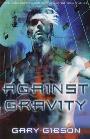 Against Gravity by Gary Gibson-
(Check out amazon.com for my review of this book!)
This book is about Kendrick Gallmon, a former captive in a military experimental complex called The Maze, who works as a journalist following his escape from his former prison. While in The Maze, Gallmon was "infected" with nano-implants which are slowly beginning to take over his body. Over the course of the novel, he discovers clues leading to a massive operation involving Max Draeger, the supposed creator of The Maze and designer of the technology now destroying Kendrick's body.
Gallmon and Draeger end up working together, briefly, to get passage to a giant abandoned space station in orbit, the Archimedes. The Archimedes, which was abandoned because it became overrun with nano-technology (the same as that in Gallmon's body), holds an AI that has supposedly found one of the most powerful forces in the universe. The Omega Point, a point in space and time at which one has unlimited energy, has been found by the AI, and now Draeger is going after it. Gallmon's only interest in going to the station is to find proof that Draeger was responsible for creating The Maze; his knowledge of the Omega Point, however, leads him on a different path than the one he'd planned for himself.
This is an excellent book in so many ways. I really enjoyed Gary Gibson's writing style; his descriptions were so vivid, I felt as if I was there in the Maze myself. I also enjoyed the characters, who for the most part seemed very realistic; each had their own flaws and inner conflicts they had to struggle with. Finally, the science aspect of the story was the best part, and the part that drew me to the book in the first place. HIGHLY recommended!!!!
Dystopias
(If you don't know what a dystopia is, let me tell you. It's a novel about a possible future in which individuality, emotion, or some such intrinsically human quality is stifled in an effort to create a more homogenous, stable society. If you have read one or more of the novels below you will know what I'm talking about. Also, good movie examples of dystopias are "Equlibrium," "THX 1138," "Logan's Run," and "Gattaca.")
- Cats Cradle by Kurt Vonnegut-
While not your typical dystopia, I put this book in the "dystopia" category because of the way it ends. It's not your typical read...Kurt Vonnegut's style of writing is very blunt, sarcastic, and, to some, abrasive. But I really enjoyed this book because he uses his sharp wit the way a chef would use a knife--with skill. The characters in the book are interesting too, especially the protagonist (whose name is Jonah, but his name is only mentioned once), and their response to a catastrophic, apocalyptic event that affects the whole Earth is not what you would expect.
- 1984 by George Orwell-
- Fahrenheit 451 by Ray Bradbury-
- Brave New World by Adolus Huxley-
- Anthem by Ayn Rand-
- The Giver by Lois Lowry-
East Asian
- Snow Country by Yasunari Kawabata-
This book is very Japanese in the style in which it is written. That kind of makes sense (duh) since it was written by a Japanese author! It's about this guy who goes to this winter resort and as an affair with a geisha who lives there. There's not too much drama, but when I said this book was very Japanese in its style, here's what I meant: the book is a story that has been stripped down to the bare essentials. There is beautiful language and description, but absolutely no delving into the emotions and feelings of the characters, as is often done with Western writing.
I thought this book was great; quite a change from my usual sci-fi/mountaineering literary choices, but a good change. It was like watching the characters on TV: I could see the characters and what they were doing. I could see the environment and how beautiful it was. But I couldn't see the characters' minds or thoughts, so I had to make assumptions as to what they were thinking/feeling. I'm sure if I were a more literary-minded person I would've found about 80,000 subtle allusions, metaphors, and double entendres. But if a dummy like me can appreciate it then I'm sure you can too.
- The Joy Luck Club by Amy Tan-
I read this book so long ago that I can barely remember that much about it. It's about these four mothers and their four daughters, and their lives. They are all Chinese, and the main conflict in the story is the difference between the Americanized daughters and their traditional Chinese mothers. They all have lots of problems, but the daughters think that the mothers don't know anything about real problems, so they get infuriated with the mothers and the mothers waggle their fingers at the daughters and so on.
The thing is, you also read about the lives of the mothers when they were young, and find out that their lives were both similar and different that their daughters' lives. But mostly similar. It is a story that's probably easy for most people to relate to, even if they're not Chinese. Looking at the characters in that book (and from my personal experiences), though, I kind of feel I have more in common with Chinese people than other Hispanics. Oh well. Read this book.
- Memoirs of a Geisha by Arthur S. Golden-
I wouldn't recommend this book to anyone trying to learn about the secret lives of geisha. I saw a show a while back, which I can't remember the name of, but it was about the geisha upon whom this book was based. Apparently her name was not supposed to be given at any point in the book, to keep her from losing face in Japan, but the author gave it anyway. She has since been (or so she says) advised to commit suicide, to move away from where she lives, and has been called all sorts of bad things because of the secrets she divulged for the purpose of this book. She also said that the author altered the facts she gave him in order to make the story more exciting/appealing/etc.
Now I don't know if any of that is true. He says that the facts about the lives of geisha are all correct (this coming from the gaijin), and that he was not told to keep her name a secret. So it's all a bunch of he said-she said crap, and I frankly don't know who to believe. They both could be lying for all I know.
So I recommend this book not because I think it is accurate in its portrayal of geisha, but because it is a charming story, with a happy ending that I didn't think would happen. It's nice to see a young girl with nothing become something great. And of course, it's all aboot Japan, which, true or not, makes it a heck of a lot more interesting to read than other books.
Stories of Hardship, Exploration, or Endurance(or some combination thereof)
- The Climb by Anatoli Boukreev-
This book is part of the five or so books out there written by members of the 1996 Everest expeditions, in which numerous lives were lost and an untold number of mistakes were made by expedition leaders and members alike. This event led to the downturn of guided expeditions, in which healthy, but relatively inexperienced mountaineers were led into one of the harshest environments on the planet. It was only a matter of time before inexperience took its toll in lives.
The Climb was written by the second-in-command to team leader Scott Fisher (who died on Everest), Anatoli Boukreev. Now Anatoli admits, and it is rather obvious from other books by both him and others, that he was not the nicest person to be around (he died a few years back on Annapurna in an avalanche). But he was very attentive to detail, and knew his stuff. He was, when he died, probably one of the most (if not the most) experienced and talented mountaineer in the world.
This book chronicles his point of view of the events that occurred in 1996. It was written largely as a response to Jon Krakauer's Into Thin Air, in which Anatoli is typecast as the antagonist--the "bad guy" if you will.
I think that is an unfair role towards a person who saved multiple lives on Everest. Anyway, if you read or plan to read Into Thin Air, read this one too. Just so you can get both sides of the story. Me, I'm all for Anatoli.
- Annapurna--A Woman's Place by Arlene Blum-
This is the least known of them all. This story is about the first all-woman expedition in mountaineering history, and it chronicles the trials these women faced not only in climbing Annapurna, but in organizing the expedition and the personal troubles of each member of the group.
I read this book on a trip my senior year of high school, and I finished it in one day. Now if I say I finished a book in one day then you really should read it!
The writing is incredible, and, unlike most other mountain climbing books, it really delves into the lives of the protagonists, before, during, and after their battles in the mountains. And for me, personally, I enjoy reading about women doing great things. I guess it's because I relate to the characters a bit more than I would in other books. But for men and women alike, this book is excellent! And there's a 20th anniversary edition in stores now, so if you've got the money, go buy it! Or check it out from the library like I did. We poor people gots to read too.
- Icebound: A Doctor's Incredible Battle for Survival at the South Pole by Jerri Nielsen-
This was an awesome book. I always wondered what it was like to live in a place like Antarctica (which to me seems not all that different from Mars. Relatively speaking.), and this book afforded that opportunity nicely. What makes it even more interesting is that I (and you too, probably) saw Jerri Nielsen's story unfold on the news, as reporters gave information to the nation about her status and whatnot.
So this book is about a woman/doctor who lives in Antarctica with astronomers, geologists, and other "winter overs": people who spend the winter in Antarctica, not just the summer like all the other pussys, and practice their science in an environment ideally suited for preserving geologic samples, providing good seeing for astronomical observations, etc. Jerri treated the various illnesses that her companions faced. One day, she found a lump in her breast, and it turned out to be cancer. Quite an irony for the doctor to be the one stricken with a fatal illness. Anyway, this is an incredible story. It is clear that she doesn't handle her family life very well, but she is an admirable character despite that flaw.
- Above the Clouds by Anatoli Bourkeev-
I read this soon after reading The Climb. It's hard to believe that someone as unapproachable as Anatoli seemed to be had a girlfriend. But had one he did, and she was the one who put together his diaries in the form of this book after he died. Anatoli was quite a good writer, even though a lot of the good writing seen in the book was probably as much from a good Russian translator as Anatoli's writing ability. But I don't know what I'm talking about. So anyway, this is just a book with lots and lots of expedition stories in it. They are all very good. It's fascinating to see how he develops in terms of both his physical ability and mental toughness. It is also an excellent insight into why people like him, and others, willingly go into environments as harsh as those found at the tall mountains of the world. I have my reasons, but I could not explain them as well as Anatoli did.
- The Seven Summits by Dick Bass-
This book is a runner-up to Annapurna: A Woman's Place on the list of Julie's favorite Mountaineering Books of All Time. It's about a couple of regular Joes--okay, really really filthy rich regular Joes--who decided that they wanted to climb the tallest mountain on each continent in one year. It's an excellent book. Of course they fail the first time around, because climbing seven big mountains in a year is silly, but they still end up climbing all seven regardless. Quite extraordinary. If I were that rich I would do something similar. Like climb the three highest mountains on Mars or something. Of course the highest mountain on Mars is several times taller than Everest, and breaches the Martian atmosphere at the top, but hey, I could do it!
- Into Thin Air by Jon Krakauer-
Anatoli-typecast-as-the-villain aside, I really liked this book. In fact, I read this book before I read The Climb (I read Anatoli's book because it was clear to me that Jon Krakauer could not possibly be the end-all source of knowledge about what happened that day in 1996). He is a very talented writer. Jon made me addicted to his book in a very short amount of time, and I read this book in just a few days. It pretty much covers the 1996 Everest tragedy, with as much objectivity as I think Jon could muster after something as horrific as what he experienced. If you read this book you will read it quickly, because it is that good, and if you have read any other books by Krakauer let me know how they are because I may read them at some point.
- High Exposure by David F. Breashears-
David Breashears is a film-maker/photographer who was on the 1996 Everest expedition with an IMAX camera. Now, after you have read this book, The Climb, and Into Thin Air, you need to go rent the IMAX movie that David filmed while on the 1996 expedition. It plays down the tragedy quite a bit, in my opinion, and it only includes a few of the characters one sees in the novels, but both of those facts are necessary evils Breashears obviously had to permit in order to make the best film possible.
Actually, High Exposure is not just about the 1996 Everest expedition. It is about David's progression from a rookie photographer into a well-known and famous film-maker. He seems to have that harsh personality that Anatoli Boukreev had, but probably to a lesser degree. He did the camera work for the movie "The Cliffhanger," which I never saw, and lots of other prestigious work. The neat thing about this book is that he, as a mountaineer, has the same struggles as everyone else; as a filmmaker, though, he holds an extra responsibility, especially on the Everest climb, to get great shots of the climbers and to display that environment to the public in such a way as to make the layperson appreciate it.
- It's Not About the Bike by Lance Armstrong-
I read this book after I became a cyclist, but before I became a competitive cyclist, so if I were to read it now likely I would have a different take on the story. But cycling is not really the focus of this book anyway, so perhaps I am wrong. This book is another "cancer story" like Jerri Nielsen's. But cancer is the only thing the two stories have in common.
This book is Lance's story of before, during, and after his bout with testicular cancer, and how it has affected his mental, physical, and emotional state of being. Well, maybe not so much the emotional, but definitely the first two. From what I hear from the folks in Austin, Texas, Lance isn't the nicest guy, but you have to give your kudos to someone who beats cancer, and then beats Jan Ullrich a million times at the Tour de France. He is an incredible cyclist. So if you're a cyclist, or you had/have cancer, or neither or both, you should read this book.
- Rough Ride by Paul Kimmage
I had quite a few misconceptions about the "glamorous" world of competitive cycling, most of which were dashed by reading this book. In Rough Ride, Paul Kimmage tells the tale of his years-long career as a professional cyclist in Europe, including several Tours de France, among other races. There are also several insights into drug use in the sport, which was no surprise to me (but was to the general public at the time the book was published, making it a subject of great controversy). For me, the most surprising thing to hear was the deplorable state the pro domestiques of the peloton had to live in during their time in Europe. The dingy hotels, the constant struggle to get an extra buck or two, and so on, demoted pro cycling in my mind from a sport of fame and glory to one of quiet desperation on the part of the race participants. And while I have no less respect for individuals who are willing to endure so much for the sport they (and I) love, some of the measures they took to win races, and the conditions under which they lived, make me doubt the worth of the time and effort put into such a lifestyle.
- No Horizon is So Far by Liv Arnesen and Ann Bankcroft
A nice story about two women who crossed the Antarctic landmass in 2001. Liv Arnesen, from Norway, and Ann Bankcroft, from Minnesota, were the first to women ever to ski that far. In this book, the women discuss their early years, their experiences in polar expeditions, and go on to describe the gorgeous environment that is Antarctica. They also describe the hardships they faced, such as the descent of the Shackleton Glacier and their disappointment at not making it all the way across the Ross Ice Shelf to McMurdo, their planned destination. The only problem I have with this book was that it wasn't long enough! I flew through it, the story is only ~200 pages long (typed with a big font)! I think each of the two women needs to write separate books, and that way we can compare their views of the expedition. From what I read in No Horizon is So Far, I would think the two stories would be very different.
- Beyond the Deep by Monte Paulsen, William Stone, and Barbara am Ende
Science Fact
- The Case for Mars by Robert Zubrin-
It took me a while to read this book. It is thick with science, a lot of stuff that I as a fledgling aerospace engineer, didn't understand. But Robert Zubrin is a great guy. The stuff he's done for the sake of Mars exploration, in both promotion to government officials and in development of technologies that could actually be used on the Red Planet, is staggering. I'm all about going to Mars, obviously, and in The Case for Mars he gives a legitimate, realistic, and affordable plan for going there. He backs up his arguments with hard science, field testing of equipment, and the like. He really makes it seem possible for us to go there, and go there with current technology. I'm sure that, would his plan be implemented, there would be a few kinks in his designs that would have to be worked out. But that is the fact with any plan. And his plan is the best, most thought-out for Mars exploration that I have yet seen.
- The Mercury 13 by Martha Ackmann-
This book is about the 13 women chosen to undergo astronaut training, similar to--and actually more rigorous than--that undergone by the original Mercury 7 (male) astronauts. Actually, there were more than 13 women who went through the testing, but 13 passed. Thirteen of about 20 women passed. Now what does that tell you about women being fit for space? Back then, they thought no woman could handle space flight, for emotional, physical, and mental reasons. Yet, of a small group of women pilots chosen to undergo the testing, the majority of them passed. Expand that to the general population, and you've got quite a pool of potential astronauts. Well, okay, most women are not pilots, and most women are not in good shape, so that particular bit of logic is flawed. But the point is, it is no different than the case with men. Most men are not pilots, and most men are out of shape too.
Anyway, in this book the women are led on to believe that they may actually become astronauts. They never do, of course. But they prove that women are capable, and they broke down quite a few sexist barriers that existed in their time. Without them, it is possible NASA may not have become as open to have women in its programs as it has today. Jackie Cochran is kind of the "villain" in this book, but I doubt she was as awful as the author makes her out to be. I could be wrong, of course, but I definitely sense some prejudice in the writing. That prejudice aside, I think this book is excellent for women to read, and men too, so they can realize just how repressed half of the human race was just a few years ago (and still is, to some extent).
- First on the Moon by Neal Armstrong, Buzz Aldrin, and Michael Collins
Well, it took me over a semester, but I finally finished this book! It was a very informative look at probably the most important mission ever undertaken by NASA, and since I was about -15 years old when it took place, reading about it is the only way I could ever know the details of what happened. While going to the Moon is very interesting to read about, the layout of the book leaves something lacking. Most of it is just transcripts from Mission Control to the astronauts. I was expecting a little more description, and a lot more "behind the scenes" type of stories, since the book was, after all, written by the three guys that went to the Moon. So instead of feeling like I was there (on the Moon, that is) I felt like I was spectating like the rest of the world, which was rather disappointing.
But the histories of the astronauts, and the detail given to the stories of the wives was very interesting. Numerous backstories were given, such as that of the famous Gunter Wendt, and that made the story seem more whole. To word it better, it helped reinforce the fact that the spaceship flying in space wasn't the only thing going on during the mission. Lots of other people were involved, and some who weren't directly involved were still discussed. So this book turned out to be very informative, like I said, but still less engaging that what I was expecting.
- The Unbroken Chain by Guenter Wendt
This is the book I was expecting to read when I picked up First on the Moon. I had heard good things about this book, and Guenter Wendt in particular, but I was still surprised by how well this book was written. Guenter Wendt was the "Pad Leader": in charge of the preparation of the vehicle and, to some extent, the astronauts at Kennedy Space Center before each flight. He has an amazing history in the space program: Mercury, Gemini, Apollo, and the Shuttle. He knew all of the astronauts, assisted with their training, and was an integral part in the space program for more than forty years. He was very well-liked by the astronauts and his co-workers, and steps were taken during contractor transfers to see to it that he remained at Kennedy.
Like I said, the book was well-written. Anecdotes about pranks on the pad and descriptions of the astronauts' personalities made the space program seem so much more real. Instead of giving dates, times, and facts (which were included also, but only in a supplementary role) Guenter gives descriptions, his opinions/views, and behind-the-scenes tales that make the space program seem so much more than just a bunch of rocket-jocks and enginerds. The only problem with this book: it's too short! Only 200 pages! I highly recommend it for anyone even a little bit interested in the space program.
- Almost Heaven by Bettyann Holtzmann Kevles
My search for a story of modern women astronauts has ended--that is, the women that have flown on the Space Shuttle, ISS, and Mir. I've already read quite a bit about the FLATS (the women in the sixties who wanted to be astronauts) and their story is covered in this book too. But, in my opinion, the thing that makes this book great is the fact that it covers the lives and missions of the women who are STILL in the space program. And not just the American astronauts. The author traveled to other countries and did a great deal of research to formulate the stories of Americans, Russians, French, Japanese, and so on. And she also tells about the women who died in the Challenger and Columbia Shuttle accidents.
For instance, it was amazing when I met the famous astronaut Shannon Lucid in her office at NASA in December. And then I read this book and found out so much about her and her career...it really hit home to me how these ladies are real people, and not (apologies for the cliche`) "larger than life." The only problems with this book are some of the glaring technical or factual errors. For instance: the book says that I-10 is the road that leads south to the Johnson Space Center, when it is in fact I-45. (I-10 is an east-west-running road.) But errors like that are not too hard to overlook when the quality of writing and story-like format makes for such a good read. I hope in later editions this book will be error-free and then it will be perfect.
- Mars on Earth: The Adventures of Space Pioneers in the High Arctic by Robert Zubrin
This book covers the founding and experiences surrounding two "Mars Analog Research Stations," that is, small simulated Mars habitats here on Earth. One station was established on Devon Island, in Northern Canada; the other was established in the deserts of Utah. Robert Zubrin, the author and the main force behind the establishment of these Mars stations, details the founding of the stations and his personal experiences from being involved with several crews. These crews populated the stations for several weeks up to months at a time, and they did their best to act as if they were on the red planet for real.
For instance, the crew never goes outside without wearing actual simulated Mars EVA (extra-vehicular activity) suits. They prepare for them in the same hours-long process as those in space, and even have an "airlock" through which to get to the outside world. The crews were chosen through an application process, much like the selection for actual astronauts, and came from a variety of backgrounds. Interactions between crew members, and between crew and mission "support" (it was called this because of the great distance between Earth and Mars....mission "control" doesn't really occur since the crew is very far away) are documented as well, including the many conflicts that arise.
Another great thing about this book was the final chapter, where Zubrin synopsizes the lessons learned and recommendations to space agencies for future Mars crews, based on his experiences in the simulated habitats. A lot of his points are excellent, but the greatest value in what he has to say is regarding issues that most people haven't studied much yet (ie: crew gender/nationality differences being manifested in their interactions with each other). To be brief about it, if you read any part of this book, read the final chapter. That is where the most knowledge can be gained.
Overall, I would say this was a very well-written book. But more than that, I would say that the Mars Analog Research Stations are an excellent way to approach the many issues that will have to be dealt with on Mars (and other planets). I think this book, and the many papers/data that stemmed from the events at these habitats, will become reference material for mission planners in 10+ years, or whenever we decide to get off this planet.
- Dragonfly: NASA and the Crisis Aboard Mir by Brian Burrough
Considering that I was at NASA for the 3+ months it took me to read this book, the stories inside of the separate crews that lived aboard the space station Mir were quite compelling. I enjoyed this book for 3 reasons: 1) Despite the fact that the crews were each made of separate people, Brian Burrough did an excellent job of weaving each crewmember's story together, in addition to interweaving their stories with those experienced by the folks on the ground; 2) Everything in the book (to the extent that my knowledge of space vehicles allows) was technically correct. Quite a feat compared to some other books I have read; 3) I have met a lot of the folks in this book, including working with Aleksandr "Sasha" Lazutkin on his emergency training (yes, he's going back into space to command ISS! Go Sasha!), which gives me a new perspective on their life stories.
Anyway, to get to the point, this book details the "Phase One" program, that is, the seven missions (including astronauts Norm Thagard, John Blaha, Shanon Lucid, Jerry Linenger, Michael Foale, Dave Wolf, and Andy Thomas) undertaken to send an American astronaut to live aboard the Mir for 4 months at a time. The purpose of the Phase One program was to prepare the U.S. and Russia for the joint, long-duration missions that were to be carried out on the International Space Station. The problems that were encountered by crewmembers were numerous: a fire onboard (caused by a lithium hydroxide canister malfunctioning), the first depressurization in space (caused by the collision of a Progress vehicle with the U.S.-sponsored Spektr science module), a number of life support system failures (Vozdukh, Elektron, and others...the same failures have been experienced on ISS as well), complete vehicle control/power losses (imagine the Mir spiraling uncontrolled in space), several shutdowns of the Mir's main computer (causing a loss of control of the vehicle, causing power losses), continuous coolant (ethylene glycol) leaks and condensation throughout the vehicle (including one big blob of coolant that landed on Sasha Lazutkin's face) and immense psychological and physical pressures on the astronauts/cosmonauts living aboard (3 hours of sleep a night, constant vehicle shutdowns followed by the requisite maintenence tasks, and multiple docking system failures).
By the end of the book you are able to see the huge differences between the Russian centralized methods of operation versus the U.S.' more spread-out operational scheme. In addition, you as the reader become frustrated (as the actual crewmembers did) at the constant problems--and sometimes glaring errors--experienced on orbit. At the end of the book, Brian Burrough gives his own scathing criticism of the Mir program, which is justified considering the events leading up to the writing of the book. I, personally, still think the Phase One program had its merits, and taught each countries' space agencies how to deal with problems never faced in space before. Even though Burroughs states that much of the experience/lessons learned on Mir were lost/ignored, I disagree. Multiple Mir commanders/U.S. astronauts have gone on to serve on ISS (or will in the future), and several of them were in the Phase One program (Mike Foale, Sasha Lazutkin, and Sergei Krikalev as ground support...these are the ones I can think of off the top of my head), carrying with them to ISS the first-hand knowledge they learned from living aboard Mir. I should also note, despite the fact that this book was a recount of factual events, it was told in the manner of a story, making it for a very interesting, engaging, informative, and worthwhile read. Highly recommended!
Books I Haven't Read (yet) But You Should Read Anyway
- Spin Control by Chris Moriarty
- On Basilisk Station by David Weber*
- Escape from Kathmandu by Kim Stanley Robinson
- Command Decision by Elizabeth Moon*
- Rocket Dreams by Marina Benjamin
- Meteorites, Ice, and Antarctica by William A. Cassidy
- Leaving Earth: Space Stations, Rival Superpowers, and the Quest for Interplanetary Travel by Robert Zimmerman
- Elegant Universe by Brian Greene*
- The Continuing Story of the International Space Station by Peter Bond
Space Books:
Flight: My Life in Mission Control by Chris Kraft
Failure is Not an Option by Gene Kranz
- Light This Candle by Neal Thompson
- First Man: The Life of Neil Armstrong by James Hansen
Leap of Faith : An Astronaut's Journey into the Unknown by Gordon Cooper
John Glenn: A Memoir by John Glenn
For Spacious Skies: The Uncommon Journey of a Mercury Astronaut by Scott Carpenter
Deke! An Autobiography by Deke Slayton
Rocketman : Astronaut Pete Conrad's Incredible Ride to the Moon and Beyond by Nancy Conrad
Carrying the Fire: An Astronaut's Journeys by Michael Collins
The All-American Boys by Walter Cunningham
The Last Man on the Moon : Astronaut Eugene Cernan and America's Race in Space by Gene Cernan, Donald A. Davis
We Have Capture: Tom Stafford and the Space Race by Thomas P. Stafford, Michael Cassutt
Two Sides of the Moon : Our Story of the Cold War Space Race by David Scott, Alexei Leonov
Countdown: An Autobiography by Frank Borman, Robert J. Serling
Moonwalker by Charlie Duke
Schirra's Space by Wally Schirra, Richard N. Billings
The Way of the Explorer by Edgar D. Mitchell, Dwight Williams
To rule the night;: The discovery voyage of astronaut Jim Irwin, by James B Irwin
Off the Planet: Surviving Five Perilous Months Aboard the Space Station Mir by Jerry M. Linenger
Waystation to the Stars by Mike Foale
*= currently reading
Main Page