|
|
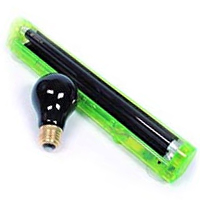
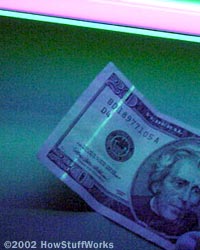
Black Lights look like an incandescent light bulb or fluorescent light and they work similarly as well. Black Lights produce a "glow in the dark" effect. These lights work the same as fluorescent lights except for a few differences. The major difference is the phosphor coating. Phosphors are substances and when they are exposed to light, they emit light. In Fluorescent lights, the phosphor coating absorbs UV light and emits visible light. However in Black lights, the harmful UV lighting (UV-B and UV-C) is absorbed and UV-A is emitted. Since the tube that the light bulb is enclosed in is black, when the UV-A light is emitted, the black coloring of the tube blocks out most of the visible light. It only? allows some violet and blue colors to pass through. This is why black lights emit a purplish color when turned on. Also if you notice, when a black light is on, some clothing and objects appear to be glowing. This is because objects that contain phosphors will glow under a black light (black lights contain phosphors also). When this effect occurs it is referred to as "fluorescence". The UV light (energy) is absorbed through a surface and is transformed to be released as visible light. An example of this is light colored clothing. Laundry detergent contains phosphors. When a light shirt is exposed to sunlight (keep in mind that UV is emitted from the sun) it reacts with the phosphors in your shirt (from the laundry detergent).This causes your shirt to visibly "glow" in black light. Dark shirts do not glow because the dark pigments in the shirt absorb the UV rays. Black lights allow you to view some things and make them visible when they would ordinarily be invisible. |
|