




|
|
|
|
Elements of a Comprehensive RF Protection Program:
| |||||||||||||||||||||||||||||||||||||||||||||||||||||||||||||||||||||||||||||||||||||||||||||||||||||||||||||||||||||||||||||||||||||||||||||||||||||||||||||
 | Manufacturers of RF source equipment are responsible for making
equipment that complies with applicable standards, and for providing
information on the hazards of operating and servicing the equipment. The
information must be sufficient to alert the end-user of potential hazards
and necessary controls applicable to using the equipment. Manufacturers are
therefore required to make detailed RF emission measurements of their
products. Appropriate RF survey results should be provided to the end-user
for comparison purposes. |
| For many low-power products, such as cellular phones, no
additional measurements are required by the end-user. |
| For other products, the users should conduct RF
"screening" measurements of equipment emissions after
installation, major maintenance, and any modifications which could effect RF
emissions. Significant deviations from previous measurements should be
resolved. |
Element 2: RF hazard identification and periodic
surveillance by a competent person who can effectively assess RF exposures.
| Screening measurements are normally sufficient to identify
potentially hazardous RF areas which will require some control strategy,
such as to determine where a fence should be located. More complex
measurements are necessary if the employer intends to allow exposures to
employees approaching RF standards. For example, detailed measurements are
necessary if whole-body and/or time-weighted averaging of exposures is
necessary to bring exposures into compliance. |
| RF fields can induce currents in nearby conducting objects, such
as a metal barrier or fence used to restrict access to RF hazard areas.
These must be evaluated to ensure they do not constitute RF shock and burn
hazards. Although detail measurements can be made, the
"measurement" of startling/annoying RI spark discharge can usually
be made by a quick touch. |
Element 3: Identification and Control of RF Hazard
Areas.
| Controlling exposure time and the distance between the RF source
and the operator are important in maintaining workers' exposures below
recommended levels. When necessary due to excessive leakage, "RF hazard
areas" must be identified to alert workers of areas that are not to be
occupied during RF application. The location of the hazard areas must be
based on exposure measurements made during maximum field generation and duty
factor (i.e., ratio of RF "on" time during any 6 minute period,
assuming intermittent exposure). |
| Access to RF hazard areas should be controlled with standard
Lockout/Tagout procedures (ref. 29 CFR 1910.147) to ensure workers are not
occupying these areas during the application of RF energy. It maybe possible
to use continuous monitors and/or personal monitors in lieu of, or to
supplement, more traditional Lockout/Tagout procedures which lockout the RF
power source. |
| The RF hazard areas shall be clearly marked with appropriate
signs, barricades, floor markings, etc. such that any worker who has access
to the facility will be alerted not to occupy the hazardous locations. Signs
shall be of standard design and shape (ref ANSI C95. 1), and of sufficient
size to be recognizable and readable from a safe distance. |
| Screening measurements can be used to determine where to locate
signs to alert workers approaching an RF hazard area, including the
appropriate warning message on the sign (e.g., Notice, Caution, Danger). |
| The evacuation of hazard areas prior to RF application must be
strictly enforced. For example, a procedure which requires an RF sealer
operator to first load the sealer, step back 2 meters to get outside the RF
hazard area prior to activating the RF energy, and then walk back to unload
the sealer will be difficult to enforce. The additional time required and
increased operator fatigue will discourage operators from following such
procedures, particularly for workers who are paid on a piecework production
basis. |
Element 4: Implementation of controls to reduce RF
exposures to levels in compliance with applicable guidelines (e.g., ANSI, ICNIRP),
including the establishment of safe work practice procedures.
| Reliance on averaging is normally not "recommended when
establishing basic control strategies because it obligates the employer to
conduct "measurement" of employee activity to ensure the averaging
is applicable, such as timing an employee's access inside an area which can
not be occupied for 6 minutes without exceeding the allowable time-weighted
exposure. Where possible, controls should be establish under the assumption
that standards are not time-weighted, i.e., assume the standards are ceiling
limits which are not to be exceeded. |
| Measurements are necessary during the development of work
practices to ensure the practices are effective in preventing excessive
exposures. Detailed measurements are required if exposures are approaching
guideline limits as discussed above. |
| Appropriate work practices must be followed during the repair and
maintenance of RF equipment. Occasionally, cabinet panels must be removed by
service personnel to allow access for maintenance. Failure to replace a
panel properly may result in excessive RF leakage. RF screening measurements
can be used to determine which panels can be removed during operation
(assuming other hazards, such as electrical shock, are controlled), and to
ensure the shielding is reinstalled properly. |
| Detailed measurements must be made by the manufacturers' of RF
personal protective equipment (PPE) to show its effectiveness and
limitations. Limited measurements are necessary by the user to ensure the
PPE is applicable and effective for the specific worksite conditions. |
Element 5: RF safety and health training to ensure
that all employees understand the RF hazards to which they may be exposed and
the means by which the hazards are controlled.
| Measurement of worker exposures is necessary so that this
information can be provided as part of employee hazard training. The scope
of training, including reviews of potential biological effects, will be
dependent on measured exposure levels. |
Element 6: Employee involvement in the structure
and operation of the program and in decisions that affect their safety and
health, to make full use of their insight and to encourage their understanding
and commitment to the safe work practices established.
| RF screening measurements should be made in the presence of
employees to facilitate understanding and confidence in the program. |
Element 7: Implementation of an appropriate
medical surveillance program.
| RF measurements are necessary "to determine the need and
scope of medical surveillance. For example, medical. surveillance may
consists of a means to report the occurrence of RF burns, implanted medical
devices (e.g., copper IUD), or the sensation of non-routine heating as a
means of identifying potential problem areas. A medical exam maybe
appropriate for "accidental" exposures defined as an exposure
above some measured trigger level. |
| Although not required for compliance with existing standards, RF
exposure data is necessary to enhance epidemiology studies of RF biological
effects. |
Element 8: Periodic (e.g., annual) reviews of the
effectiveness of the program so that deficiencies can be identified and
resolved.
| Periodic RF screening measurements are necessary to ensure
conditions have not changed and that the RF Protection Program continues to
be effective in preventing excessive RF exposures. |
Element 9: Assignment of responsibilities,
including the necessary authority and resources to implement and enforce all
aspects of the RF protection program.
| Although this element does not directly require RF measurements,
it is included for completeness of the list of RF Program elements. Without
the commitment to the Program, as demonstrated by the assignment of
necessary responsibility, authority and resources, the previous elements
will not be effective. |
As described above, a variety of RF measurements are necessary for an effective RF Protection Program. Usually RF screening measurements are adequate unless control strategies allow exposures approaching RF limits. Detailed RF measurements are required of manufacturers of RF products (e.g., RF transmitters, PPE, RF meters) to document their effectiveness and limitations. The effectiveness of the RF Protection Program depends primarily on an employer's understanding and commitment to the listed Program elements, rather than on sophisticated RF survey equipment or measurement procedures.
RF Management At Antenna Sites
With the publication of the SCC28 standard as ANSI/IEEE C95.1-1992, a number of new elements were added to prior ANSI standards. These changes included modification of the exposure limits and the classification of exposure environments as Occupational/Controlled and General Population/Uncontrolled. Exposure limits in the new guidelines adopted by the FCC are specified in terms of Maximum Permissible Exposure (MPE) as a function of frequency; MPE's are given in units of electric and magnetic field strength and power densities. For exposure to multiple frequencies, the fraction (or percentage) of the MPE produced by each frequency is determined and these fractions (or percentages) must not exceed unity (or 100 percent).
|
Frequency (MHz) |
Measured Power Density |
MPE (Occupational/Controlled) |
|
155.025 |
.25 mW/cm2 |
25% |
|
465.0125 |
.54 mW/cm2 |
35% |
|
955.0125 |
.48 mW/cm2 |
15% |
|
851.0125 |
.28 mW/cm2 |
10% |
|
|
||
|
Total Exposure |
|
85% |
2.2.1 Spatial-peak
The maximum RF energy across the area of the human body (about six (6) ft high) that an individual can be exposed to, is considered the Whole Body Peak (WBP). This level should be considered as the highest level that is found in the area of interest. If during the evaluation of an area for exposure there are no WBP exposures above the MPE being considered, the area is considered below the limits and requires no additional evaluation.
2.2.2 Spatial-averaging
If, during the evaluation of an area for potential exposure, it is determined that there are areas where peak levels (WBP) will exceed the MPE, then spatial-averaging is required. Spatial-averaging considers the whole area of the human body in the evaluation of exposure. If there is an area that has RF fields above the applicable MPE, additional vertical measurements should be taken to understand the levels between ground level and two (2) meters (about six (6) ft high.(1)) The average of these vertical measurements is the Spatial-averaged exposure, which is used to evaluate compliance with the MPE.
2.2.3 Time-averaging
MPE's in the guidelines are in terms of a time-averaged exposure, typically either 6-minute for Occupational/Controlled MPE or 30-minutes for General Population/Uncontrolled MPE. The averaging times are used to regulate the energy absorption rate in an individual exposed to RF fields so that the total energy delivered over the averaging time does not exceed FCC guidelines. This permits short duration exposure to much higher level fields as long as the average value over the prescribed time remains within the MPE.
|
The software runs on Excel 5.0 for Windows 3.1 and NT and Excel 7 for Windows 95. The information needed to create a model and generate a zoning map is:
| Transmitter Power into Antenna |
| Frequency |
| Antenna mount designation |
| Antenna location on roof |
| Antenna Characteristics |
* Gain
* Aperture Length
* Mounting Height
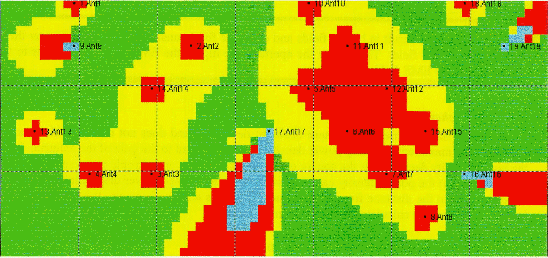
EME Zone map of a complex rooftop antenna site
After the exposure levels are determined an evaluation and classification should be performed. The classifying of the exposure allows site managers to understand the complete situation and develop procedures to ensure exposure to employees and contractors is maintained below the acceptable limits.
Classifying exposure focuses on comparing the levels found against the Occupational/Controlled MPE. As the term indicates, MPE is the maximum permissible exposure an individual should encounter. To further classify areas, a standard color coding can be adopted to clearly show the EME levels.
On a site where RF transmitters and their associated antennas are located, usually, it is necessary to restrict the access of the general population. This area frequently is bounded by walls, fences, and other natural or man made structures. Within this area three zones (Green, Yellow, and Red) will be used to determine the requirements for compliance to the FCC guidelines.
|
2.4.1
Green Zone |
The green zone is any area where the time (as appropriate) and spatial-average is below 20% of the Occupational/Controlled MPE. The areas so classified afford the highest level of protection for individuals working in RF fields. There is no time limit and no special EME safety practices are required for these areas. Individuals working in this zone may need only basic EME awareness. This can be conveyed with signs, plaques, or awareness videos to provide the information necessary to create an awareness and understanding of the environment.
|
Equipment rooms and areas around the base of towers should always be required to have fields low enough to allow a green classification. The verification and certification of this low level may be required on some sites. If locations are discovered in excess of these levels, changes and modifications must be incorporated to maintain green zone status. Some methods to maintain green zone levels are:
| Proper maintenance of RF transmitters. This includes ensuring all
shields are maintained properly and installed correctly. |
| Not allowing transmit antennas inside equipment rooms or near the
ground level of sites. |
| Ensuring all microwave dishes are directed away from facilities. |
| Proper use and installation of transmission lines and connectors.
When waveguide carrying high power is used, verification of fitting
integrity must be performed to ensure there is no RF leakage. |
|
2.4.2 Yellow
Zone |
The yellow zone is any area where the spatial-average is between 20% - 100% Occupational/Controlled MPE. While the fields in this area are within acceptable limits, caution must be exercised because nearby locations may exceed the limits. Therefore, individuals in these areas should have heightened awareness and understanding of their potential for exposure. Normally, there will never be a yellow zone without another zone of higher level in the vicinity. Personnel without EME awareness training should not frequent this area regularly. Only personnel with the proper knowledge and understanding of EME compliance procedures should be allowed to work in areas designated as yellow zones. Caution signs should be posted to inform personnel of the EME situation.
|
|
2.4.3 Red Zone |
The red zone is any area where the spatial-averaged levels fall above 100% of Occupational/Controlled MPE. When locations are found to require red zoning, special procedures, engineering, or restricted access must be implemented to ensure compliance. Some procedures that can be implemented are:
| Restrict Access |
| Lock-out/Tag-out of transmitters during maintenance of antenna
system |
| Control of antenna types used for site design |
| Re-engineer site to reduce EME fields |
| Measure and consider uptime |
The level of RF energy to which one is exposed is called Exposure. The quantity of exposure depends on the duration and strength of the field. In most cases the characteristics of a site will determine the EME exposure potential. Understanding these characteristics will aid in predicting and preventing levels that exceed the FCC Guidelines and allow the site manager to establish the proper procedures for workers who frequent these areas.
2.5.1 Buildings
Building sites are normally in dense, metropolitan cities. The buildings used are normally the highest structures in the city and offer the unique opportunity of height without the need for a long feedline. The facility which houses the radio transmitters is normally close to the antennas which reduces the loss between the antenna and transmitter, allowing maximum power to the antenna. While this maximum power provides extended range it increases the EME levels around the antennas. The main determinants of EME are frequency, power into the antenna, and aperture height. The greater the power, the higher the EME field. The shorter the aperture, the higher the EME field for a given power.
On buildings, the antennas are generally mounted on the roof. This mounting arrangement is normally laid out on a single plane and distributed in a grid arrangement, within the confines of the roof. The mounting is normally on a pipe structure and the separation can be as close as three (3) feet in some cases. This arrangement provides for maximum mounting density, but it may leave little space for the workers performing maintenance. Any worker attempting to change an antenna, repair a cable, or perform general maintenance may be exposed to high levels of RF energy from other antennas surrounding the work area. Proper engineering design should be used to prevent this situation. By reducing all the fields on a building the potential for high exposure is eliminated and provides the best compliance resolution.
2.5.2 Towers
Towers are antenna supporting structures that can be found in various locations ranging from central metropolitan, to isolated rural locations. Normally, the towers are designed to elevate the antennas in accordance with the intended coverage area. This can vary from a hundred feet for cellular to two thousand feet for two-way communications. Regardless of the height of the supporting structure, the characteristics are the same. The application of the antennas that are being supported determine these characteristics. Cellular towers usually have directional antennas mounted on a single face to define a sector. There may be several faces and several directional antennas per face. A two-way tower can have several antennas mounted in a star configuration to maximize the density of antennas at a position on the tower. Additionally there can be several star mounts on a single tower.
With respect to EME, the cellular configuration presents less exposure to people working on the tower than the two-way tower configuration because the RF radiation of the directional antenna is aimed away from the tower. There is a significant power difference between the front and the back side of the antenna. This difference is called front-to-back ratio. While the front-to-back ratio can be as great as 25 dB in the far field it is less well developed in the near field. There is still reduction of the exposure of the worker in the near field behind, as compared to the front of the antenna, but the amount may be considerably less than the advertised far field front-to-back ratio.
The situation on two-way towers is significantly
different. As workers climb up the tower they may encounter several antenna
mounts at various locations on the tower. These mounting areas can contain
various types of transmitters ranging from paging transmitters with hundreds of
watts of power to large antennas for transmitters in the 35 MHz frequency range.
While the antennas and the resulting mounting arrangement can be considerably
different, in some conditions the EME levels may approach or exceed the FCC
guidelines. In the case of the paging transmitter, the antenna will normally be
an omni configuration with an aperture length of four (4) to fifteen (15) feet.
The antenna will be mounted from four (4) to six (6) feet from the tower. Fields
directly adjacent to the aperture will present the highest levels. Because of
this, workers should use caution while working or stopping directly in front of
these antennas unless the transmitters are deactivated. If the antenna is
grouped with other antennas at the same level more than one transmitter may need
to be deactivated. Another important characteristic of paging is the duty cycle
of the transmitter.
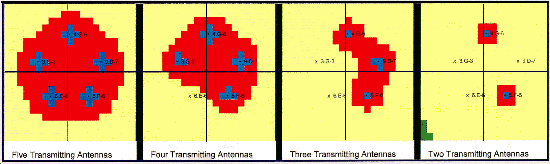 EME ZONE map of a
tower mounted star cluster mount or candelabra (Resolution 1 sq.ft)
EME ZONE map of a
tower mounted star cluster mount or candelabra (Resolution 1 sq.ft)
Figure 2
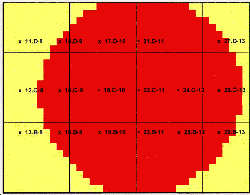
Star cluster mounts (see Figure 2) or candelabras present a significant issue in the management of EME on towers. If there are five (5) to eight (8) antennas mounted in a circle and these antennas are located five (5) feet from the tower there is the potential for an EME level in the center that exceeds the limits. Because the center is the tower, workers must ensure they understand the fields while entering this area. Figure 2 shows the computed effects of several transmitters using the EME modeling program described above. Each square pixel represents one (1) square foot of resolution. This simulates the effects of five PD-10017 antennas with 100 W into the antenna at 900 MHz. A worker entering this area may be exposed to EME levels above the applicable MPE and should take appropriate steps, such as moving quickly through the area to assure compliance with recognized exposure guidelines. What makes this situation difficult to manage is the fact that the field and the resultant high EME levels from all the antenna fields overlap and add. While this situation can exist, the fields are reduced by the cable loss associated with the height of the candelabra, and are therefore more manageable. Most candelabras are mounted on top of a tower.
Because of the cable loss associated with towers, the power into the antenna is significantly lower than buildings and mountain-top sites. This loss between the transmitter and antenna reduces the power and ultimately the fields produced. Higher frequencies have higher line loss, which significantly reduces the power at the antenna. This fact is very important and proves to significantly reduce the fields produced on tall towers.
|
One common technique for reducing the RF levels expected on large roof tops is to elevate the antennas above the roof. Elevating the antennas raises the EME fields above the roof and reduces the power density to which an individual at roof level will be exposed. The results of elevating antennas are illustrated in Chart 3. These data are based on the EME fields produced by an 850 MHz SMR antenna. Ten 150 watt transmitters through a combiner drive the antenna. The resultant 550 watts of power is fed into a 13 foot omni antenna. This type of antenna configuration is not unusual on rooftops.
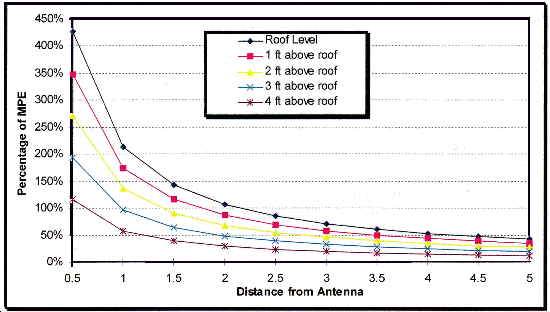 Exposure Vs Antenna Height Above Roof
Chart 3
The resultant exposure possible can be above the MPE when the antenna is mounted at the roof level. From the chart, fields in excess of 200% of the Occupational/Controlled MPE are encountered within one (1) ft of the antenna. While this seems extremely close, a technician walking down the center of an antenna grid with four (4) foot centers will be two feet from any antenna at any time. Two feet from this antenna mounted at roof level it is possible for the exposure to be over 100% of the same MPE. If this situation is compounded with several antennas having the same power density, the levels in this walking area could be above the MPE. For this reason every effort should be given to reducing the fields at the roof level. The most effective technique for reducing the fields on a building, while maintaining constant radiated power, is raising the antenna. Raising the antenna four (4) feet above the roof reduces the EME field strength at the roof level to about 50% of the MPE at one (1) foot from where the antenna was. If the antenna is raised six (6) feet above the roof the fields are reduced more than 90%.
|
Tower contractors climbing the tower must pass through fields created by active antennas on the tower. Antennas mounted on short sidearms or mounted directly to the tower produce high levels of exposure to tower climbers. It is a good engineering practice to mount omnidirectional antennas a minimum of five feet from the tower.
Areas with broadcast transmitters can have fields created by grating lobes from the antenna or fields developed directly by the main radiating beam. On broadcast-only sites these are the only field that must be considered in EME analysis. On collocated sites, the EME fields are a combination of the fields generated by two-way transmitters and broadcast stations. If the exposure from each contributor is considered independently and then added, the total MPE situation can be evaluated. The fields from the broadcast transmitter act like a blanket covering the area. If the fields from a preexisting broadcast station create a level of 15% Occupational/Controlled MPE there is only 85% of the MPE budget remaining. This requires the levels from the two-way transmitters to be lower than what otherwise would be required to maintain compliance. In some conditions extra cooperation between the broadcasters and two-way licensees may be necessary to ensure site compliance. In the areas that receive grating lobes from the broadcast transmitters, careful measurements must be done before compliance can be analyzed.
Consideration must be given to anyone working on antenna systems. If a person must climb into the fields of the broadcast antenna, coordination ahead of time must be done to reduce the transmitter power. Special consideration and care should be utilized when a person is required to climb through a field known to exceed 100% Occupational/Controlled MPE. On some sites the broadcast towers are mounted adjacent to the two-way tower. In this situation the fields from the broadcast transmitter will be very intense on the two-way tower. Maintenance activities must be coordinated when the broadcast station is collocated. The FCC requires broadcasters to cooperate during maintenance situations; however, they may elect special times to conduct maintenance.
Directional antennas in the horizontal plane present a focused pattern for maximum coverage into a specific area. Even in the near field the levels in the beam of the antenna can be significantly higher than behind or on either side. Consideration must be given to the area and location the antenna is directed. Directional high-powered transmitting antennas should be located where the energy in excess of the Occupation/Control MPE is directed away from any area frequented by workers. Additionally directional antennas should not be installed where they can produce fields higher than the General Population/Uncontrolled MPE in uncontrolled areas.
Antenna selection is important because it is directly linked to EME levels. The requirement for more antennas within a given horizontal space has created new designs of antennas. Within one radome several antennas can now be stacked on top of each other. The standard configurations are double (two), triple (three) and Quad (four) co-linear arrays. Aperture length directly affects the power density created. In the near field, a fifteen foot antenna driven with 500 Watts will have one third the power density of an antenna five feet long. Remember that near the antenna, the power density is related to the surface area of a cylinder placed over the antenna. A cylinder having one-third the height will have one-third the surface area and, hence will result in three times the power density. This is complicated even more when the five foot antenna is placed with other antennas in a common radome. This allows the power density, created by each antenna, to combine and increase the potential exposure of an individual. The technique of using triple and quad antennas is becoming increasingly popular as the space on mountain tops and towers becomes scarcer. Paging transmitters, sectored antenna systems, and digital networks represent only a few of the services requiring individual antennas. There is a finite antenna density that can be accomplished within a given area. Creative methods of combining or increasing the antenna structures must be developed. Consideration should be given to connecting lower power transmitters to the bottom portion of triple and quad radome antennas.
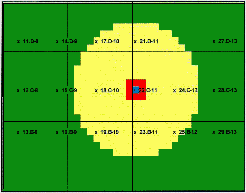
While the RF fields from one antenna maybe below the MPE allowed, the combination of fields from several antennas can produce levels exceeding the Occupation/Control MPE. This can be easily seen in figure 4 and figure 5 which show the fields produced by one antenna and the fields produced by five antennas mounted at roof level with all transmitters keyed simultaneously.
|
Composite
RF Fields with one antenna transmitting |
Composite RF Fields with five
antennas transmitting |
|
Figure 4 |
Figure 5 |
The combined fields produce levels exceeding the MPE allowed in all areas surrounding the antennas. In these situations, some means of controlling exposure must be used. These techniques may include RF protective clothing, re-engineering the antenna system, or power shutdown or reduction when working in the area. While power shutdown or reduction may appear to be an effective technique, either may be impractical for wireless communications services. It is normally reserved for broadcast transmitters. One preferred method of addressing this is to elevate the antennas above the roof area.
Complex antenna sites have a "personality" that makes them unique. The personality of the site is not only determined by the RF power, frequency, and manufacturer of the equipment, but by the operational characteristics. The RF level and frequency can be determined by understanding the equipment specifications, but operational characteristics can only be quantified by monitoring the usage. Because of the high number of pagers, paging transmitters will have a very high transmitter duty cycle. Trunking (SMR) transmitter activity will depend on customer loading density. This can range from transmitters rarely transmitting, to transmitters rarely not transmitting. Private customer equipment will have a very diverse usage characteristic that can not be predicted. The important point in understanding the characteristics of different services is that they can seldom be predicted.
Additionally, characteristics for transmitters will change due to cultural elements. Transmitters located in Las Vegas will have considerably different uptime characteristics than transmitters located in San Antonio, Texas or New York City. Tests have shown that a site will vary significantly from one time period to another. Sample measurements on a roof of a large building showed a variation in transmitter activity of over 30% between 11:00 a.m. and 2:00 p.m.
Uptime relates to all of the transmitter activity of a site. Uptime can seldom be predicted or characterized precisely, and thus usually must be measured. The amount of Uptime directly affects the EME exposure levels on a site.
In the consideration of site activity, there is an upper level of 100% uptime, or when all transmitters are keyed and actually energized. Actual usage would be the most accurate consideration, but least practical to implement. Actual usage varies greatly overtime and antenna. Each antenna has an uptime characteristic based on density of combining, transmitter usage, and activity.
While the use of Uptime could provide a better approach to predicting the actual levels that could be encountered, it proves to be impractical. Determining the Uptime characteristics can be very complex and change with time. Only by constantly monitoring and adjusting the model can uptime be used. Uptime cannot be theoretically calculated, it must be measured. Measurement of uptime involves high speed scanning of frequencies over a long period of time. Only after thousands of activity observations taken over days of monitoring will the worst case, actual, and instantaneous uptime be understood. This complex procedure creates uncertainty. Practically the uptime that should be used in the analysis of complex sites usually is 100% or total uptime.
Any evaluation is only as accurate as the data used to make the evaluation. Antenna site documentation is important and should be done in a standardized manner. For the analysis of EME fields there are two methods of documentation. One proves to be considerably more exact but both allow an engineer to understand the EME situation and apply the proper compliance procedures, if necessary.
3.7.1 Actual Documentation
Actual documentation provides an accurate picture of the site situation. Actual documentation can be used by engineers for purposes other than EME analysis. Proper documentation requires a detailed description of transmitters, cable, antennas, and location on the tower; that will require the following:
| Transmitter frequency by antenna mount |
| Antenna Location and standoff |
| Power out of transmitter |
| Uptime characteristics |
| Network loss between transmitter and antenna |
| Areas frequented by personnel |
| Antenna characteristics and specifications |
| Layout of antenna field (roof or tower) |
3.7.2 Categorization Documentation
Determining which transmitter is connected to which antenna on a site via which coaxial cable can be very expensive and in many cases is not necessary. Categorization documentation involves determining the lowest loss coax and the highest-powered transmitter in any particular band. It is then assumed that all antennas for that band have this combination attached. By understanding the frequency, spacing, height and antenna characteristics of all antennas on the tower an approximation of the worst case EME situation can be determined. If this preliminary investigation proves to be compliant, then the actual situation will be compliant. Thus, this worst case scenario evaluation will assist in determining if a more detailed evaluation is required. This method of EME analysis requires a trained site auditor to only determine the components affecting EME compliance. This procedure will not provide the exact levels of the fields, but can be used to determine sites that require additional investigation using actual documentation.
|
|
The way an antenna site is managed, controlled, and operated directly relates to the quality of the site. All of the customers on a site not only have physical investments, but also rely on uninterrupted service. The requirements placed on all contractors, customers, and employees determine the quality of a site.
A very specific part of worker contracting is verification of qualification and training. All contractors should have a basic understanding of EME awareness and show an understanding of site standards. All contractors are expected to be experts in their field and to be on top of changes in governmental regulations. Without regular training a contractor cannot expect to be on top of changing hardware, technology, and government regulations.
Antenna sites must have physical access control. The minimum requirement is locked gates to prevent vehicular access and locks on the facility. In most situations towers should have specific access control. Access to the site should not allow access to the tower. Tower climbing prevention should be accomplished with fencing around the tower, climb prevention on the tower, or locking barriers on the tower. Unauthorized climbing must be prevented to insure individuals climbing the towers understand the EME situation, are qualified, and possess the correct climbing equipment. The facility should be equipped with card access, where appropriate, to provide a direct history of traffic at the site. Card access will provide specific information on who comes and goes from the site.
Any policy controlling site administration must be enforced before compliance can be assured. Every effort should be given to ensuring all contractors understand, comply and support the policies of the site. Violation of policy should be grounds for disqualification of a contractor. It is a privilege to work on a site and the policies must be followed.
There should be site books or a site folder located at each facility. These documents will outline the policies and procedures for the site including a contact roster for emergencies and notifications. Additionally, any specific site situations or policies can also be contained in the site book.
There are situations where occupancy and management of a site involves other agencies or entities. This may be a situation where a site is located on a building, collocated with broadcast companies, shared mountain top, etc. In each of these situations, others can make decisions that can affect the safety and operation of the site. Every effort should be given to developing consolidated procedures that require the compliance of all parties. This protects their interests and safety as well as contractors and employees using the site. Control measures should be coordinated to allow safe tower maintenance. When other transmitters are involved, power reduction, lock-out/tag-out, or restricted time for maintenance may have to be used to assure RF exposure is controlled.
General procedures relate to normal practices that are common to all sites. These can be found posted at all sites on the "Guidelines for working in radiofrequency environments" placard, (see example in section 5.1). These guidelines are:
4.6.1 All personnel should have electromagnetic energy (EME) awareness training
All workers entering a RF controlled area should understand their potential exposure and steps they can take to reduce their EME exposure. Awareness is a requirement of all workers. This includes not only field engineers, maintenance technicians and site designers, but also others such as site acquisition personnel, building management and service oriented personnel. For example electrical, telephone, elevator and air conditioning mechanics as well as roof repair, painting and window washing crews. The FCC report and Order specifically indicates the requirement to make personnel at a transmitter site "fully aware" of their risk of exposure. Awareness training increases worker sensitivity to potential exposure, thereby assisting proper compliance within exposure limits. Awareness can be given in different formats, some may be video, formal classroom, and informal discussions.
4.6.2 All personnel entering this site must be authorized
Only personnel who have been trained and understand the EME situation and other safety requirements associated with site work should be allowed access without escorts. When untrained individuals access the sites, trained escorts are required.
4.6.3 Obey all posted signs
This guideline emphasizes the importance of observing and understanding the instructions on posted signs at the transmitter site. All safety signs play an important role in any safety program and just as any of these signs convey a specific message related directly to safe work in a particular environment, postings at transmitter sites are no different. For example, certain areas may be designated "NO ACCESS" unless certain antennas are shut down. It is important that these signs be understood and obeyed, to assure EME exposure below the FCC guidelines. The requirement for RF protective clothing for workers is another precaution that could be identified on signs designating areas of potential exposure in excess of FCC limits.
4.6.4 Assume all antennas are active
Because most telecommunications transmissions are intermittent, the status of many transmitters that may be operating at a particular site will be unknown. It is important to assume that all antennas may be energized and to maintain a safe working distance from each of them. Only with special instruments to detect the presence of RF energy can it be determined a particular antenna is not energized at any given moment. While EME measurement surveys may have been performed on the site, these surveys do not assure that a specific antenna is not active at a given time.
4.6.5 Before working on antennas, notify owners and disable appropriate transmitters
Before working on an antenna, workers must insure that all attached transmitters are deactivated. Most antennas at a transmitter site are being used for important communications. They may be used for emergency and safety purposes like fire protection, rescue dispatch and police communications. Although all attached transmitters must be turned off before touching and working on an antenna, in no instance should this be attempted before contacting the owners or operators. Coordinating with the individuals responsible for use of the transmitter will make sure that turning off the equipment will not cause a serious disruption of the service. Sometimes, this coordination may mean that the work will have to be performed at night or in the early hours of the morning. Lockout/Tagout tags should be used to make sure someone else does not inadvertently turn on the transmitter while work on the antenna is being performed.
4.6.6 Maintain minimum 3 feet clearance from all antennas
Studies have shown that the EME fields close to two-way radio transmitting antennas can be strong enough to exceed the limits specified by the FCC guidelines. A three foot clearance is a practical approach to assure that exposure remains within FCC limits. This insures a distance is always maintained unless work is required on an antenna. Work on a specific antenna should only be accomplished after the attached transmitters have been turned off. A small increase in distance from an antenna can have a substantial effect on reducing the EME exposure. This is particularly important when working near other active antennas. This also applies when doing work on roof or tower mounted equipment like air conditioners, tower lights or window washing rigs.
4.6.7 Do not stop in front of antennas
When moving about at the transmitter site workers should avoid stopping near any antenna; they should continue on until they reach an area that is removed from their immediate vicinity. If they are going to take a break from work, or have lunch, they should select a place on the roof that will provide as much distance between them and the nearest antennas as practical. When climbing a tower, workers should select rest points away from antennas. Workers should always try to keep below or behind antennas to minimize their exposure to the main beam of the antenna. By continuing to move past high EME fields the average exposure will be minimized.
4.6.8 Use personal RF monitors while working near antennas
Special care must be exercised when working on or very near antennas. Although the EME fields cannot be sensed directly, transmitter activity can be detected close to an antenna with a personal RF monitor. Wearing such a monitor will allow workers to ensure that all connected transmitters have been turned off before they begin maintenance. As they approach an antenna, if the monitor alarms, they should get away horn the antenna, determine which transmitters are still on and disable them.
4.6.9 Never operate transmitters without shields during normal operation
Some work at antenna sites involves trouble-shooting and repair of the radio transmitters. The shields within transmitter power amplifiers are there to prevent strong RF fields from radiating out of the transmitter cabinet. Operating the transmitter without shields could cause interference and exposure of the technician performing the service to EME levels in excess of the FCC guidelines. While shields must be removed for many maintenance tasks, they should always be properly reinstalled before returning the transmitter to normal operation.
4.6.10 Do not operate base station antennas in equipment room
Transmitting antennas should never be operated inside the equipment rooms, even for short term testing. This includes mobile magnet mount antennas attached to the top of transmitter cabinets as temporary installations. Using transmit antennas inside equipment rooms can increase the exposure to EME levels above FCC guidelines and create undesirable radiofrequency interference.
Site specific procedures that are unique to a particular site may need to be available to assure compliance to the FCC Guidelines. These can include:
| Special access |
| Potential high EME exposure situations |
| Special maintenance procedures for antenna repair |
| Maintenance procedures unique to the site |
| Special security procedures |
| Special reporting procedures related to other tenants and owners |
The conduct of contractors should be controlled
and coordinated by the antenna site manager. All contractors, whether customer
controlled or contracted directly with the management, must follow specific
procedures. These procedures relate to safe operations that will be followed
during installation and maintenance of antenna systems. Site procedures will
prevail over contractor accepted practices and standards. Contractors must
follow the guidelines for the site.
|
Various signs may be required on antenna sites. The minimum requirement is to post an EME caution and/or warning signs, as appropriate, wherever EME levels can exceed those associated with a green zone. This sign should be posted in a location that can be easily viewed by individuals that enter the areas of concern. Some areas that may be effected are building tops, towers, areas around broadcast, etc. This assures notice and understanding that the area has active RF transmitters. The sign should conform to the ANSI standards.
Posting of signs provides a convenient method to convey to individuals important information. While signs can be effective if used properly they can convey the wrong message and create undue alarm if used incorrectly. For this reason different signs are recommended for specific applications. These signs represent the best methodology available in conveying important information.
The
standards used in creating these signs are:
Signal word - This word designates the degree of safety alerting, e.g. Warning, Caution, and Notice.
Symbol - The advisory symbol for identifying incident electromagnetic energy consists of black wavefronts radiating from a stylized point source. This symbol is defined in NEMA/ANSI Z535.3-1991.
Text Message - The text message should convey three things:
·
What the safety issue is
·
What action should be considered
·
What authority the issue is
based upon
These are used to designate the possible issues that can be encountered at an antenna site. These signs have specific implementation guidelines as outlined below. Improper implementation could result in inaccurate information being conveyed or unnecessary alarm being created.
Examples of signs that have been implemented in the United States are shown below.
The site guidelines are posted inside the equipment room to make all workers aware of the normal requirements for site operation. The major intent is to insure that compliance is maintained at the site. Having the sign visually available informs and reminds all personnel and others who have proper access, of the rules for the site. This also qualifies as awareness information.
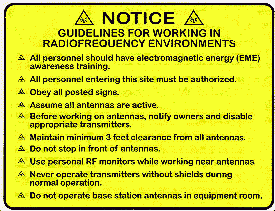
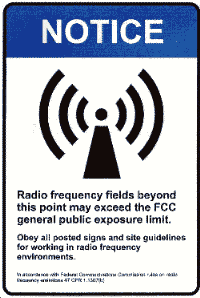
The notice sign is used to distinguish the
boundary between the General Population/Uncontrolled and the
Occupational/Controlled areas. This boundary will usually be the fence for the
property, gate entrance, or roof door to the equipment room. The limits
associated with this notification must be less than the Occupational/Controlled
MPE. All sites have standard guidelines posted that must be obeyed and
understood by all workers. These guidelines will ensure the area is maintained
below Occupational/Controlled MPE. EME awareness training is recommended for all
workers.
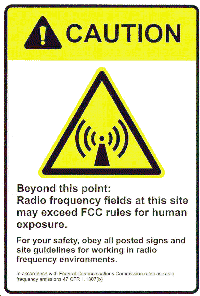
The caution sign identifies RF controlled areas
where RF exposure can exceed the Occupational/Controlled MPE. Generic guidelines
apply in all situations and will be posted at all sites; however, site specific
guidelines may be associated with some areas to ensure work is always performed
in compliance with the FCC guidelines. Such site specific guidelines may require
reduction of RF power before work begins or the use of RF protective clothing.
In no case should workers enter and work in these areas without understanding
and obeying the necessary procedures. All authorized workers for RF controlled
areas must have EME awareness training.
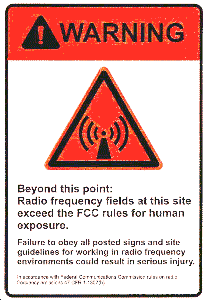
The warning sign denotes the boundary of areas with RF levels substantially above the FCC limits, normally defined as those greater than ten (10) times the Occupational/Controlled MPE.
Telecommunication contractors and employees
should not enter these areas unless special procedures are followed. These
situations typically are associated with broadcast transmitters operating at
high powers. If work is required in these areas the broadcast transmitter must
be shut down for the duration of the maintenance. Engineering evaluation must be
performed to determine the proper special procedures required before this area
can be entered.
|
There may be situations where field analysis shows areas that are not in compliance with the Occupational/Controlled MPE. After all options are considered and if the situation cannot be controlled with engineering or work practice solutions, implementation of Personal Protective Equipment (PPE) may be the only solution. An example of this type of situation maybe a rooftop that has collocated broadcast in the vicinity of a heavily congested antenna field. In certain situations where building architectural concerns are a priority there may be no simple solution available to reduce the fields. The only solution may be the use of RF protective clothing as a means to reduce EME exposure.
RF protective clothing was introduced into the United States several years ago by a German manufacturer (NSP)(3) and sold under the name NaptexTM. The suit consists of work coveralls with an integral hood for head protection. The suit is constructed of a polyester yarn, which is wound coaxially around stainless steel fibers. This provides uniform consistency of material and attenuating metal. Tests (4), (5) have shown that the suit can effectively provide between 10 dB and 12 dB of reduction in EME absorption within the body at virtually any frequency over the telecommunications spectrum. This would indicate that use of the suit could compensate for exposure to EME fields as great as 1000% above the FCC Occupational/Controlled MPE values. Additional testing has shown the use of the suit without the hood in fields under 300% of the Occupational/Controlled MPE values at 900 MHz provides compliance with the peak SAR limits of 8 W/kg. The acceptable levels that the hoodless suit can be safely used increase as the frequency is reduced. Contractors should be notified if RF Protective Clothing or the hood is required for compliance.
Work on specific antennas should only be accomplished after the appropriate transmitters have been turned off and locked out. This prevents anyone from accidentally activating the transmitters while others are performing maintenance. However, with the large number of transmitters combined into single antennas it becomes considerably more difficult to confirm that all transmitters are deactivated. The ideal method would be to have a RF light on the top of the antenna. The light would be off to confirm that there was no RF activity. A more practical approach would be to use a personal monitor. A personal monitor is an RF threshold detector that alarms when RF exceeds the threshold of the device, normally 50% Occupational/Controlled MPE. These devices are designed to detect a wide range of frequencies and can be used in most environments. When approaching an antenna that requires maintenance, the monitor should be placed near the antenna for a period of time, about 30 seconds should suffice. If the antenna is still active the monitor will alarm. This will show that there are still transmitters active, or if an alarm does not sounds, will confirm that all transmitters were deactivated. This provides a positive confirmation and allows the worker to insure they are working on inactive antennas.
Some manufactures of personal monitors propose they can be worn to indicate compliance. This use should be considered carefully because, when the device is used in accordance with its instructions, compliance is only confined at the location of the monitor. If for example, the monitor is worn on the belt of a tower climber, the possibility of entering high fields without the monitor being activated exists. When climbing the head and shoulders can enter high fields without the monitor mounted on the belt alarming. This could provide a false indication of safety.

Footnote (1) ANSI/IEEE C95.1-1992 standard uses a height of 2.0 meters
Footnote (2) Trademark RoofViewTM and TowerCalcTM are licensed to Richard Tell Associates, Inc., Las Vegas NV. Additional information can be found on Website: www.radhaz.com/TowerCalc.htm (Back to text)
Footnote (3) See NSP World Wide Web site: www.nspworldwide.com (Back to text)
Footnote (4) Tell, R. A. (1995). Engineering Services for Measurement and Analysis of Radiofrequency (RF) Fields. Technical report for the Federal Communication Commission, Office of Engineering and Technology, Washington, DC, FCC/OET RTA 95-01 [NTIS order no. PB95-253829]. (Back to text)
Footnote (5) Tell, R. A. (1996). SAR Evaluation of the Naptex suit for use in VHF and UHF bands. Presented at the International RF Safety Workshop, Schwangau, Germany, September 25-26.(Back to text)

Network Services Division
Communications & Tower Fall Protection Guidelines
When climbing the tower during construction activities, employees must be protected from falls using a fall arrest system meeting the criteria of 1926.502 or a ladder assist safety device meeting the requirements of 1926.1053(a). These are acceptable methods of accessing tower work stations regardless of height. All employees climbing or otherwise accessing towers must be trained in the recognition and avoidance of fall hazards and in the use of the fall protection systems to be used, pursuant to 1926.21 or where applicable, 1926.1060.
Specific Requirements. Employees may be hoisted on the hoist line to reach work stations at heights greater than 200 feet only if all of the following conditions are met. The Agency believes that strict adherence to the guidelines set forth in this Appendix will provide employers with the appropriate safety measures for access during tower erection. Riding the hoist line to work stations at heights less than 200 feet is not permitted.
1. Training. Before an employee is allowed to perform any job related to hoisting employees aloft for tower work, the employee shall receive training on safe access pursuant to these guidelines. The operator of the hoist shall have a thorough understanding of these guidelines pertaining to hoisting employees on the hoist line.
2. Equipment.
3. Trial Lift and Proof Testing.
(1) Hoist wire ropes are determined
to be free of damage in accordance with the provisions of 29 CFR 1926.550;
(2) Multiple part lines are not twisted around each other; and,
(3) The proof testing requirements have been satisfied.
4. Pre-Lift Meeting.
(1) be attended by the hoist
operator, employees to be lifted, and the crew chief;
(2) review the procedures to be followed and all appropriate requirements
contained in this guideline; and
(3) be repeated for any employee newly assigned to the operation.
5. Documentation.
6. Hoisting an Employee to the Work Station.
(1) No more than two employees may be
hoisted at a time;
(2) The employee's harness shall be attached to the hook by a lanyard meeting
the strength requirements of 29 CFR 1926.502;
(3) Only locking-type snap hooks shall be used; and
(4) The harness shall be equipped with two side rings and at least one front and
one back D ring.
7. Communication Between the Hoist Operator and Hoisted Employees.
8. Weather Conditions/Energized Power Lines.
|
Power line voltage |
Minimum safe |
|
50 or below |
10 |
|
Above 50 to 200 |
15 |
|
Above 200 to 350 |
20 |
|
Above 350 to 500 |
25 |
|
Above 500 to 750 |
35 |
|
Above 750 to 1,000 |
45 |
9. Hydraulic Hoists (Drum Hoists).
10. Hoist Mounting.
11. Drums.
12. Brakes and Clutches.
13. Hoist Controls.
14. Wire Rope and Rigging
(1) Be made with swaged-type
fittings; and,
(2) Be field fabricated by a qualified person or factory made.
15. Hoist Operator.
(1) The daily inspection has been
conducted;
(2) All controls are in the "off" position; and,
(3) All personnel are in the clear.
16. Hoist Inspections.
(1) Each day before use all hoists
shall be visually inspected by a qualified person.
(2) All hoists shall be inspected thoroughly at three month intervals by a
qualified person, as will any hoists that have been idle for more than one month
but less than six months. Such inspection will include a hands-on operation of
all moving parts to ensure that they are intact and will properly function
before being put into service.
(1) A hoist that has been idle for a
period of over six (6) months shall be given an annual inspection which includes
the hoist being completely disassembled, cleaned and inspected. Parts such as
pins, bearings, shafts, gears, brake plates, etc. found worn, cracked, corroded,
distorted or otherwise non-functional must be replaced before the hoist is used.
(2) Hoists with infrequent to moderate usage (hoists that have been used for
fifty (50) hours or less per month and normally operate at considerably less
than the hoist rated capacity based on the average use over a month) may go up
to thirty-six (36) months between tear down inspections if serviced under a
preventive maintenance program (as specified by the manufacturer) that includes
annual hydraulic oil sample analysis. An oil sample analysis, meaning a
laboratory analysis, is used to evaluate the mechanical integrity of the hoist.
Oil in these hoists shall be changed at least on an annual basis, just after the
oil analysis is performed. Hoists not subjected to recommended oil sample
analysis shall undergo an annual tear-down inspection.
(3) Hoists that experience heavy usage (hoists that are used for more than fifty
(50) hours per month) may go up to twenty-four (24) months between tear-down
inspections if serviced under a preventive maintenance program as in (2) above.
(4) Any rebuilt hoist assembly must be line pull tested to the rated load. The
hoist drum must be rotated several times in both raising and lowering directions
under full-rated load, while checking for smooth operation.
IEEE-USA
recognizes public concern for safety of microwave exposure from cellular
communications, and other radio transmission towers and base stations.
Guidelines for limiting exposure has been published by the American National
Standards Institute, the Institute of Electrical and Electronics Engineers, and
other national and international organizations. These guidelines were
developed to protect workers and the general population from harmful exposure to
radio frequency electromagnetic fields. Based on present knowledge,
prolonged exposure at or below the levels recommended in these guidelines is
considered safe for human health. Measurements near typical cellular base
stations have shown that exposure levels normally encountered by the public are
well below limits recommended by all national and international safety
standards. Furthermore, public exposure near cellular base stations
is not significantly different from the usual "RF background" levels
in urban areas, which are produced by radio and television broadcast stations
present in every modern community. Therefore, one can conclude that
exposure from properly operating cellular base stations is safe for the general
population.
There may be
circumstances where workers could be exposed to fields greater than the
standards specify. In those cases, generally on rooftops, access can be
and should be restricted.
This statement was
developed by the IEEE-USA Committee on Man and Radiation, and represents the
considered judgment of a group of U.S. IEEE members with expertise in the
subject field. The IEEE-USA promotes the career and technology policy
interests of the 250,000 electrical, electronics, and computer engineers who are
U.S. members of the IEEE. It has
been reviewed and adopted for use as a standard for Civil Engineering by Anthony
Peyton in association with Safety Consultant, Bob Buntin (Buntin &
Associates).
The maximum total
effective radiated power (ERP) of a system would depend on the number of
channels authorized at a site. Typically, there are 16 transmitting
channels (discrete-frequencies) per cellular antenna. As many as six
transmitting antennas (for a total of 96 discrete frequencies) could be used at
a given site, but this number is unlikely. Furthermore, all channels would
not be expected to be operating simultaneously, thus reducing overall emission
levels.
The Federal
Communications Commission (FCC) authorizes up to two cellular telephone
companies in each service area. Although the FCC permits an ERP up to 500
watts per channel (depending on the geographical area and tower height), the
majority of the cell-site in urban and suburban areas operate at ERPs of 100
watts or less per channel. In large cities the cells are small and the ERP
is usually 10 watts per channel. The transmitters associated with "microcells,"
usually located within buildings, railroad stations, etc., operate at ERPs lower
than 1 watt. The system is self-limiting in the sense that as the system
expands and cells are subdivided, the transmitter power is reduced to prevent
interference with remote cells. As with other antennas used for
telecommunications the energy from a cell-site antenna is directed toward the
horizon in a relatively narrow beam in the vertical plane.
As one moves away
from the antenna, the power density decreases as the inverse square of the
distance, and consequently, the exposure at ground-level in the vicinity of an
antenna tower is relatively low compared with the exposure very close to the
antenna itself. Measurements made around typical cell-site antenna towers
have shown that ground-level power densities are well below limits for the
general population recommended by recognized organizations, such as the American
National Standards Institute (ANSI-C95.1, 1982), the IEEE (IEEE-C95.1, 1991),
the National Council on Radiation Protection and Measurements (NCRP, 1986) and
the International Radiation Protection Association (IRPA, 1988), which range
from 2.75-2.97 milliwatts per square centimeter (mW/cm2) for occupational
exposure to 0.41-0.45 mW/cm2 for general population exposure at cellular radio
frequencies of 825-890 MHz.
The maximum
exposure levels found near the base of typical cell-site antenna towers are, in
fact, lower than all national and international recommended safety limits.
These maximum exposure levels occur only at the limited distances close to the
base of the tower. For example, data submitted to the FCC showed a maximum
measured ground-level power density at the base of a 45 meter tower to be of the
order of 0.00002 mW/cm2 per radio channel, corresponding to 0.002 mW/cm2 for a
96 channel, 100 watts ERP per channel, fully implemented system. The
antennas were omni-directional colinear arrays. The maximum was found to
occur typically at distances between 18 and 25 meters from the base of the
tower. At other points within 90 meters the levels were considerably
lower; on average less than 0.0001 mW/cm2 for 96 channels. Similar
measurements made in the vicinity of higher towers yielded correspondingly lower
values. Measurements show that the power density at distances greater than
60 meters from all commonly used directional and omni-directional cell-site
antennas is less than 0.010 mW/cm2 including points in the main beam. RF
radiation from nearby cellular base stations does not significantly increase the
reported "RF background" levels in urban areas (Tell and Mantiply,
1980).
Because of
building attenuation, the power density levels inside of nearby buildings at
corresponding distances from a cell-site antenna would be from 10 to 100 times
smaller than outside (depending on building construction). Thus the
maximum levels inside of buildings located near the base of a typical 45 meter
cell-site antenna tower will be between 0.0002 and 0.00002 mW/cm2.
Measurements made directly in the beam of a roof-mounted omni-directional
antenna with sixteen radio channels indicated that the power density was less
than 1 mW/cm2 at a distance of 3 meters from the antenna and less than 0.010 mW/cm2
beyond 50 meters. Thus, in certain areas on the rooftop, depending
on the proximity to the antenna, the exposure levels can be higher than those
allowed by the safety standards. Access to these areas should be
restricted. Measurements show that in rooms directly below roof-mounted
installations, the power density levels are considerably lower than roof
locations, depending on the construction. For typical construction (e.g.,
wood or cement block) the attenuation is about a factor of 10. The power
density behind sector (directional) antennas is hundreds to thousands of times
lower than in front, and hence, levels are negligible in rooms directly behind
walls where sector antennas are mounted on the sides of buildings.
In conclusion,
measurements and calculations have verified that the power densities associated
with cellular radio cell-site antennas to which the public may be exposed are
not significantly different from "RF background" levels in urban areas
which are produced by radio and television broadcast stations present in every
modern community, and are well below the limits recommended by national and
international safety standards. Based on this comparison, cellular
communications base station emissions are safe for the general population.
There are circumstances where workers could be exposed to fields greater than
the standards specify. In those cases, generally on rooftops, access
should be restricted.
REFERENCES:
1.
ANSI-C95.1, (1982), (American National Standard Safety Levels with Respect to
Human Exposure to Radiofrequency Electromagnetic Fields, 300 kHz to
100 GHz). IEEE Standards Dept., Piscataway, New Jersey
2.
IEEE-C95.1. (1991), Safety Levels with Respect to Human Exposure to Radio
Frequency Electromagnetic Fields, 3 kHz to 300 GHz. IEEE Standards Department,
Piscataway, New Jersey.
3.
IEEE-USA Entity Position Statement, (1990), Human exposure to microwaves and
other radiofrequency electromagnetic fields. IEEE United States
Activities Board, COMAR, Washington, DC.
4. IRPA.
(1988), (Guidelines on Limits of Exposure to Radiofrequency Electromagnetic
Fields in the Frequency Range from 100 kHz to 300 GHz). Health Physics,
54(1):115-123.
5.
NCRP. (1986), (Biological Effects and Exposure Criteria for Radiofrequency
Electromagnetic Fields). Report 86, (Bethesda, MD: National Council
on Radiation Protection and Measurements) pp.1-382.
6.
Tell, R.A. and Mantiply, E.D., (1980), "Population exposure to VHF and UHF
broadcast radiation in the United States," Proc. IEEE
68(1):6-12.
The Institute of Electrical and Electronics Engineers,
Inc.--United States of America
1828 L Street, N.W., Suite 1202
Washington, DC 20036-5104
Phone: 202-785-0017, Fax: 202-785-0835.
EMPLOYEE WORK PLACE
RIGHTS:
"RIGHT TO
KNOW"
The Occupational
Safety and Health Act of 1970 created the OCCUPATIONAL SAFETY AND HEALTH
ADMINISTRATION (OSHA) within
the Department Of Labor, and encouraged employees and employers to reduce work
place hazards and accidents and to implement safety and health programs.
The creation of this branch of
The Department Of Labor yields many new responsibilities and rights to the
employee. Below, they have been
listed for your review and compliance.
*REVIEW copies of appropriate
standards, rules, regulations and requirements that the employer has available
at the work place.
*REQUEST information from the
employer on safety and health hazards in the work place, a safety and health
manual, and the proper procedures to follow in the event of an accident or
injury.
*HAVE access to all appropriate
Material Safety Data Sheets, (MSDS's), pertaining to chemicals and substances
located on the jobsite.
* REQUEST that a regular safety and health inspection be conducted.
*HAVE an appointed employee representative attend the inspection.
*REQUEST that an OSHA Compliance
Officer conduct a safety tour inspection whenever the above proves inadequate or
ineffective.
*RESPOND accurately and
truthfully to questions from either The Company Safety Representative, or an
OSHA Compliance Officer.
* REVIEW the OSHA FORMÄ200, Log
and Summary Of Occupational Injuries And Illnesses, at a reasonable time and in
a reasonable manner.
*PRESENT objections to the
abatement period set by OSHA for correcting any violations issued to your
employer by writing to the OSHA Director within 15 days from the date that the
employer receives the citation.
*SUBMIT a written request to the
National Institute For Safety And Health (NIOSHA) for information on whether a
substance in the work place has toxic effects in the concentration being used,
and have your name (s) withheld from your employer.
*BE notified by the employer if
application is made for a variance in an OSHA standard and testify at a variance
hearing, and appeal the final decision.
*BE advised of OSHA actions
regarding a complaint and request a formal review of any decisions not to
inspect or issue a citation.
*FILE a Section 11 (c) discrimination complaint if you are punished for
exercising your rights or f
or the refusal to work in an unsafe or unhealthy manner.
*YOU HAVE the responsibility to
review and practice, through daily job place awareness and application, the
guidelines established in your EMPLOYEE SAFETY AND HEALTH MANUAL.
|
Send mail to with
questions or comments about this web site.
|










 The FCC Maximum Permissible Exposure
(MPE) is time and spatially averaged. It is therefore permissible to
exceed the numeric values of the MPE for brief periods of time and
in some locations of space as long as the average exposure does not
exceed the limits over the time and space indicated.
The FCC Maximum Permissible Exposure
(MPE) is time and spatially averaged. It is therefore permissible to
exceed the numeric values of the MPE for brief periods of time and
in some locations of space as long as the average exposure does not
exceed the limits over the time and space indicated.