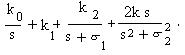
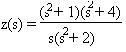
| EC-203 Electronic Devices and Circuits (B.Tech 3rd Semester, 2122) Time : 3 Hours Maximum Marks : 60 NOTE:- This paper consist of Three Sections. Section A is compulsory. Do any Four questions from Section B and any two questions from Section C Section-A Marks : 2 Each 1 (a) Define maximum power transfer theorem. (b) Define convolution theorem. (c) Define ideal and practical current source. (d) Waht are the limitations of K-type of filters? (e) What are the resistrictions on the location of poles and zeros for driving point functions? (f) What are values of inductances and capacitances in m derived band pass filters? (g) Discuss shifting therem in s domain. (h) Synthezis as y(s) : |
| ANALYSIS AND SYNTHESIS OF NETWORK |
| PAPER NO.1 |
| You can also watch NETWORK papers of electronics and instrumentation engg. which are similar to ANALYSIS AND SYNTHESIS OF NETWORK |
 |
 |
 |
|
| PUT ON 18TH DEC., 2K2 |
| (i) The waveform of current flowing through the inductor of 6 mh is as shown : |
 |
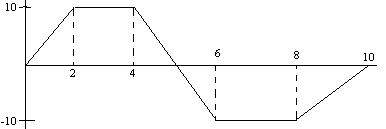 |
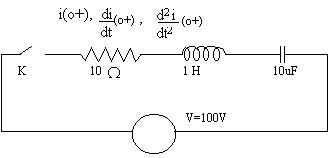
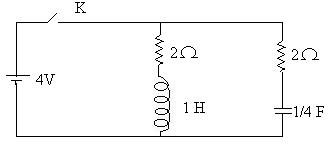
| Determine and sketch waveforms for power and voltage. (j) Assume that prier to closing of switch k (at t = 0) there was no voltage across capacitince nor in inductor. Find : |
 |
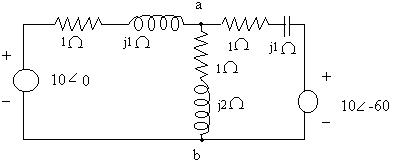
| Section-B Marks : 5 Each 2. Apply thevenin theorem to find current in ab of the following circuit : |
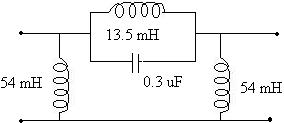
| Also verify the same using Nodal Method. 3. Determine the value of m, resonant frequency and design impedence for the following filter: |
 |
 |
| 4. realize the driving point impedence as Cavers first and secound form |
| 5. Derive expression for attenuation, propagation cofficient and characteristic impedence for T section filter. 6. The switch k is opened at time t=0, steady state conditions have been established earlier to switching operation. Find expression for decay of current. |
| Section-C Marks : 10 Each 7. Define and classify filters. Giving important properties, explain K type filters. Also explin composite filters. 8. What are important parameters for realizable transfer/driving point functions ? Explin in detail. 9. Write short on the following: (a) Time domain behaviour from Poles and Zeros (b) Network functions for two terminal pair network. |
 |
 |