|
What would you do if you were a super-stealthy secret agent working for the government in order to stop the world from ending? That is a question that gamers have been trying to answer for twenty years now, ever since Hideo Kojima burst onto the stealth scene with the first Metal Gear in 1985. Since then, Metal Gear has gone on to countless sequels and, with the advent of the first-person shooter, squad based geopolitical thrillers like Rainbow Six and other Tom Clancy titles have exploded in popularity. Whether it�s 007, Solid Snake, or Ding Chavez, gamers seemingly love being a secret military badass.
So it�s only natural that UbiSoft took stealth gaming to an entirely new level with the Splinter Cell series and its� hero Sam Fisher. From the series� signature lighting techniques and amazing visuals, to the great likeability Sam Fisher exudes (with the help of actor Michael Ironside providing Fisher�s gruff, tough voice), gamers fell in love with the first Splinter Cell. Maybe it sold better because the Tom Clancy name was on it, maybe that didn�t matter, but the strong success gave way for the second globetrotting installment, Pandora Tomorrow.
And even with another studio halfway across the world (the original was made by Ubisoft Montreal, while Pandora was developed by the Shanghai branch) at the helm, Pandora took everything to the next level. Most notable among the game�s achievements was the revolutionary spy-versus-mercenaries online mode, which successfully translated the high-tech, high-tension gameplay of the single-player game to a compelling online experience.
So it was only natural when a third game snuck into E3 2004, featuring drop-dead gorgeous visuals and promises of not one, not two, but three modes of stealth-filled goodness! That is, the single-player mode, the triumphant return of the spies-vs-mercs online mode (this time with shinier visuals), and a new, but equally innovative co-op mode. Three games, three modes, and three graphical masterpieces, all in just under four years. Would fans be burnt out on the series, bored with the fundamental aspects of Fisher�s escapades? There was a definite possibility of that happening...
But Ubisoft Montreal (back in control of the series) was dead set on that not happening. In order to make sure of that, the team added many tweaks and new gadgets to the game, in turn refining the whole experience into a fine wine of a game. Without a doubt, this is the best Splinter Cell title to date, even with its few problems and glitches. For those of you who aren�t already dashing out to your nearest game store, are sitting on the fence about this series, or perhaps stealth gaming as a whole, allow me to explain.
You are Sam Fisher, a super-secret government operative working for an organization called Third Echelon. Third Echelon is a top-secret specials ops group focused on eliminating global terrorism from the front lines. Thing is, no one but your commanding officers know you exist, so working in the shadows and infiltrating enemy turf oh-so-quietly is key. After stopping Indonesian bio-terrorists and Eastern European madmen from disrupting order in previous games, the rough, tough Fisher is sent out to discover the reasons behind recent (in the game�s setting of 2011, at least) tensions between Korea, China and Japan after the latter�s creation of an anti-information-warfare department. The twist-filled plotline all starts in Peru with the kidnapping of a scientist and his knowledge of special algorithms that fall into enemy hands. Following the trail of intelligence, Sam travels all around the Pacific in order to get to the bottom of everything. What follows is a story that rivals the best spy thrillers of film with its� twists, revelations, pace, and depth.
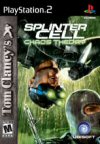
Among the returning gadgets and acrobatics Sam possesses from past titles (pistol, sticky cameras, gas grenades, night and thermal visions, etc.), are two major new items and two upgrades to Fisher�s gadgetry. First and most obviously (if you check out the cover art) is the combat knife Sam wields. This opens up a bevy of new ways to go through the levels, though none of them is necessary for completing the game. Among its uses are slicing through tents or paper walls, tapping phone lines, breaking locks (in case picking them is too time consuming for you), and most importantly, adding the option of killing enemies. Yes, Sam no longer has to abide by the laws of peace (well, most of the time) and now has the option of sticking a knife through unsuspecting enemy bodies. As a way of rewarding stealthier gamers, killing an enemy makes more noise and lowers mission ratings, but the option is still there. Second on the new item list is an OCP that comes with your pistol, allowing you to jam radios, lights, and cameras for a limited time, and yet another way to sneak about without making much noise. Using the OCP allows you to save bullets and is a better way of distracting enemies than flat out shooting lights. Coinciding with the abilities of the OCP is a new visor that shows electronic devices that can (usually) be tampered with via the OCP. A nifty, if underutilized, tool to say the least. Finally, using Sam�s binoculars just got a whole lot better, because the newly added EEV allows you to hack terrorist�s computers and servers, which leads you into an involved, entertaining mini-game against a timer to find the right, hack-able address. Just another improvement that adds extra enjoyment to the essentially trial-and-error gameplay.
That said, all of the adjustments Ubisoft made to the structure make for an overall better game free of frustration. What used to be a three-strikes-you�re-out penalty policy no longer forces you to restart the mission, allowing for less pressure on the player if they accidentally slip up. There�s still the added difficulty of the tough AI and the increasingly beefed up defenses they employ as you botch the missions, but the threat of not having to completely restart a mission allows you to breath easier when such things occur. Also abolished from past installments are the asinine checkpoints that were far too spread out and poorly placed. In Chaos Theory, you can now save at anytime, anywhere. This also furthers the ability to experiment with the stage�s multiple pathways and allows players to save their game before a tough spot and resume right where they were previously should they die during a stretch. Unfortunately, the game never gives you a heads up to this addition at the start of the game, which, if you aren�t careful, will seriously inconvenience you should you die early on. Trust me, that little tip is from personal experience.
The expanded scope of the gameplay doesn�t stop there. The other major addition to the experience is a new sound meter that resides next to the typical light/dark sensor. One marker shows how much noise the environment and its� ambiance is making, the other marker indicating how much noise Sam makes. Should your personal noise level exceed that of the environment, no matter how enshrined by darkness you may be, enemies nearby will be alerted. It may bring back some added tension that the quick-save feature relieved you of, but it serves to add another layer onto the realism and, from an enjoyment perspective, is not as annoying as it may first appear.
One thing I often held against last year�s PS2 version of Pandora Tomorrow was its (at the time) pointless addition of a mission rating system. Well now I am prepared to eat my words, as the same system has been implemented for all versions of Chaos Theory, and is really not as degrading as I thought it would be. In fact, it adds incentive to complete the game more stealthily, rating you on things such as alarms triggered and guards captured, while deducting from your rating for every soldier you kill or body you leave out to be discovered. As a whole, the developer�s improvements to the overall gameplay experience serves to add more realism, more fun, and certainly less frustration to the game, resulting in a vastly better game than the already fantastic prequels, something that has to be commended.
Returning from Pandora Tomorrow is the series� groundbreaking spies and mercenaries online play. While I cannot draw from personal experience, the two-on-two team-based play is quite revolutionary and vastly unique to each side in action. The two spies are controlled from the typical third-person camera and have all the gadgets in the world at their disposal for usage in completing mission objectives. Conversely, the mercenaries are played from a first-person perspective and are tasked with using their wits, guns, and cooperation to take down the pesky spies and stop said spies from completing the mission. Added to Chaos Theory is the option to play without partners, which will certainly make newbies jobs a lot easier when it comes to finding playmates.
All the gameplay in the world wouldn�t matter to many gamers if the game itself didn�t look up to par, and lucky for you, Chaos Theory�s visuals are a veritable hole-in-one. Amazing texture mapping technology has been used to give everything in Chaos Theory a super-realistic look. Accentuated by soft, true-to-form lighting techniques, the visuals improve on the already incredible graphic technology in previous games. All this technology also allows enemies� faces to express fear more than ever before, as well as added finesse in Fisher�s cat-like moves that morph and contort when he stalks his "prey". And yet, despite all the visual hooplah used and all the praise going around about the visuals, I really did not see much improvement over the last game when not instinctively looking for it. I�m sure it�s there, and perhaps I�m just a bit fuzzy in recalling how Pandora looked, but when one is so engaged in the gameplay and said gameplay�s use of lighting, you really don�t care how many wrinkles in someone�s uniform the engine is able to render.
Also refined is the ambiance and audio parts of the game. This time around, Ubisoft Montreal brought it esteemed composer Amon Tobin to create a slightly different, more synthesized score for the game. Impressive on its own, you really don�t notice it in-game after a while because, as was the case with graphics, you�re too involved in the game to care. But I must give props to Mr. Tobin for what I heard of the music, as it really is top-notch and morphs with the situation you have Fisher involved in.
What really matters in the audio department is the return of the phenomenal voice work. Foreigners are given proper accents, everything is delivered convincingly, and actor Michael Ironside reprises his role as Sam Fisher back and better then ever. Among the myriad of dialogue in the game, little nods to other gaming franchises, and even games in general, are strewn throughout. The tongue-in-cheek humor is mostly present during conversations with Lambert and during enemy interrogations.
Of particular note is a discussion between Fisher and Dr. Ana Grimsdottir, warning Sam of laser traps that have been activated. Sam quips "Lasers? That�s so�so-" only to be interrupted by Grim finishing "-nineties?". Disgruntled, Sam replies "I was going to say seventies. Look, would you please stop making me feel so old!?" Such discussions add a layer of personality onto the characters that makes you relate to them on a personal level. Priceless and effective.
In the end, among all the changes to the gameplay and all the levels to traverse, the fun of the Splinter Cell series never fails to entertain. For many, the daunting complexity of stealth games can turn them away, and although that possibility still exists here, the added freedom hopefully works to make the genre more friendly to those intimidated. And for returning fans of the Splinter Cell franchise, Ubisoft has tweaked the winning formula to make this the least linear, most fun, and best installment of the series to date. An exceptional adventure with multiple solutions for completing it and three different difficulty levels just adds to the value here. If you�re a fan of stealth gaming, geo-political thrillers, or just pretty graphics, you�ll be more than satisfied with this, the best Splinter Cell to date.
|
|
|